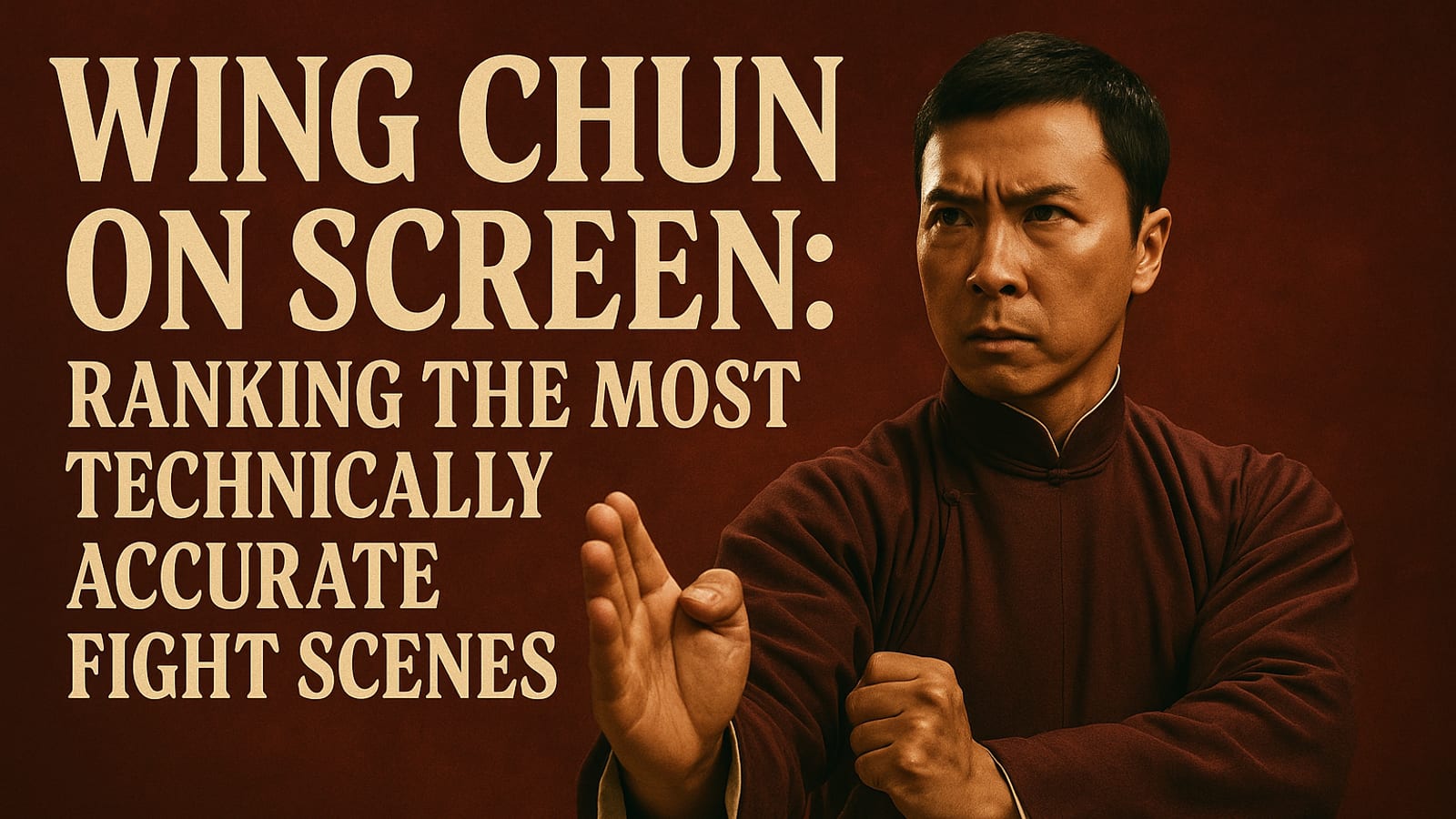
Here is a question worth sitting with: how many films have you watched that claimed to show Wing Chun but were actually showing something else entirely? I have lost count. The gap between what lands on screen and what Wing Chun actually is comes down to something specific — a misreading of its core principles. That misreading matters, because when a filmmaker gets it right, the fight looks unlike anything else. When they get it wrong, you just have fast hands and noise. Let’s talk about who got it right, who got close, and who used the name without doing the work.
Why the Principles Are the Whole Point
Wing Chun is not just a style. It is a science of movement built on a small number of ideas that reinforce each other. Centerline theory means you protect and attack along the body’s central axis — the shortest, most direct path. Economy of motion means you do not waste energy on anything that does not serve the fight. Simultaneous defense and offense means the block and the strike are the same action, not two separate steps. These are not decorative concepts. They are the structure the whole art hangs on.
Most productions that claim Wing Chun lineage abandon these principles the moment they conflict with spectacle. You get spinning kicks and wide, looping punches that look dramatic but break every rule the art is built on. A choreographer who genuinely understands Wing Chun will protect those principles even when the camera is asking for something flashier. That discipline is rare, and when you see it, you feel it before you can name it.
The Gold Standard: Ip Man (2008)
Ip Man has become the film most people reach for when Wing Chun comes up, and the dojo fight scene around the forty-five-minute mark is the reason. Watch Donnie Yen’s chain punches in that sequence. He is not performing power — he is demonstrating control. The centerline stays protected. The stance stays grounded. The footwork is quiet and purposeful. Nothing is wasted.
What makes the choreography work tactically is that it follows the logic of the art. Every block leads directly into a strike. Every strike maintains the centerline. Yen’s stunt work in this film is not just physically impressive — it is conceptually honest. The fight reads like Wing Chun because it was built from Wing Chun’s actual geometry, not a rough approximation of it.
High Fidelity: Films That Understood the Fundamentals
A handful of films have captured the essence of Wing Chun even when they take creative liberties elsewhere. The Prodigal Son (1981) is one of them. Lau Kar Leung’s understanding of the art shows in every sequence — particularly in the chain punching and the defensive positioning. The choreography keeps the geometry correct. Each movement has a reason behind it, and you can feel that intentionality in the fight.
Warriors Two (1978) earns its place here too. Sammo Hung’s choreography reflects a genuine respect for economy of motion and centerline control. Both films bend the rules occasionally for cinematic effect, but neither one loses the technical foundation underneath. That foundation is what separates craft from performance.
The Compromise: Stylized But Still Recognizable
Some films find a middle ground — they prioritize the look of Wing Chun over the letter of it, but enough survives to make the lineage legible. Enter the Dragon (1973) is the clearest example. Bruce Lee filtered Wing Chun through his own philosophy, and what you see on screen is a personal interpretation rather than a strict demonstration. But the centerline attacks are there. The rapid hand movements are there. The underlying logic is present even when the form has been reshaped.
The Grandmaster (2013) takes more artistic liberty than most, but it earns some of it. The choreography sacrifices technical precision for visual storytelling, and that trade-off is obvious to anyone who knows the art. What it preserves is the spirit — the fluid movement, the emphasis on strategic positioning, the sense that every action is connected to a principle. It is not a training film. But it is not dishonest either.
In Name Only: Films That Missed the Mark
Not every film that claims Wing Chun has done the work. Iron Fist (2017) is the most visible recent example. The supposed Wing Chun techniques disappear under excessive spinning and telegraphed moves that contradict everything the art stands for. Economy of motion is gone. The centerline is ignored. What remains is a label attached to choreography that has no relationship to the form it is claiming.
Street Fighter: The Legend of Chun-Li (2009) uses Wing Chun as branding rather than as a technical foundation. The fight scenes break the centerline repeatedly, and the stunt work prioritizes spectacle over substance. These films are not underrated hidden gems that deserve a second look. They are examples of what happens when the name gets borrowed without the knowledge that should come with it.
What Accurate Wing Chun Actually Looks Like
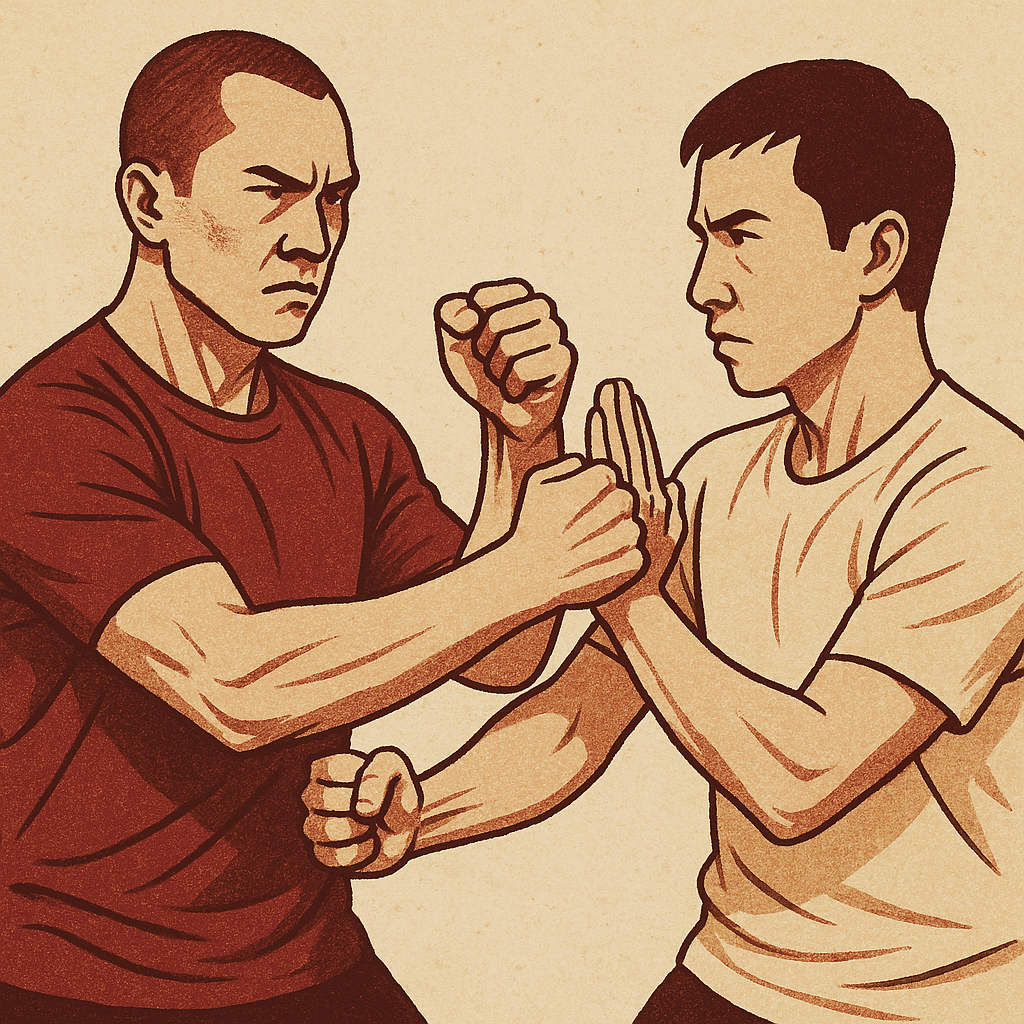
Once you know what to look for, you can read a fight scene the way you read a sentence. Centerline control is the first thing to check — are the attacks and defenses aligned along that central axis, or is the performer reaching wide and leaving themselves open? Chain punching and arm traps are about sustained pressure and control, not individual explosive moments. If the rhythm is right, you will see it.
The simultaneous defense and offense principle is the clearest marker of authentic Wing Chun choreography. Most martial arts on screen show a block followed by a strike — two beats. Wing Chun collapses those into one. When a performer executes that correctly, the fight has a different quality. It looks efficient in a way that reads almost understated, which is exactly the point.
Stance and footwork economy complete the picture. The transitions between positions should be small and stable, not dramatic. If an actor is lunging and resetting constantly, the choreography is not Wing Chun regardless of what the script says. These are the things worth watching for, whether you are brand new to the genre or have been watching since before you could read the subtitles.
If this is the kind of conversation you want more of, Old School Shaolin and Wu is built for exactly that. The films are there, the context is there, and so is a community that takes the craft seriously. Come find the scenes worth rewatching and the performers who deserved more recognition than they got.
Behind the Camera: Choreography and Training for the Real Thing
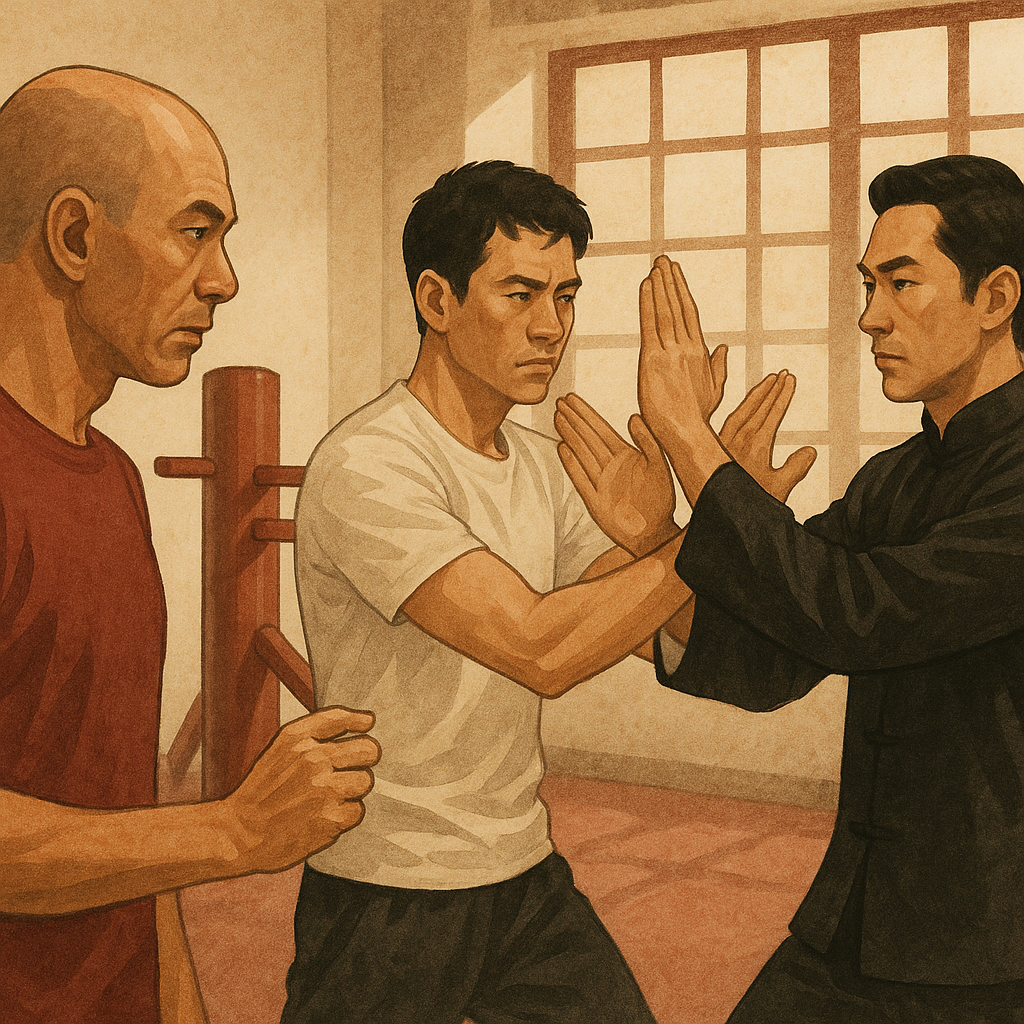
Technical accuracy in Wing Chun fight scenes does not happen by accident. It requires choreography built from genuine knowledge of the art and actors willing to put in the preparation before a single camera rolls. The behind-the-scenes work is where the difference between a film like Ip Man and a film like Iron Fist actually gets made.
The Choreographer’s Role
A skilled choreographer working in this space acts as a bridge between traditional martial arts and what the camera needs. They have to balance fidelity to Wing Chun’s principles with the demands of visual storytelling — and they have to know which compromises are acceptable and which ones break the form entirely. The best ones work directly with martial arts masters during the design process, building sequences that are technically grounded before they are made cinematic. That collaboration is visible in the finished fight. You can see it in the way Donnie Yen moves through the dojo sequence in Ip Man — precise and dynamic at the same time, because the choreography was built to allow both.
Training Regimens for Actors
Actors portraying Wing Chun practitioners who take the work seriously go through preparation that looks closer to martial arts training than to stunt rehearsal. That typically includes:
- Foundation Building: Learning basic stances, footwork, and hand techniques before anything else, so the fundamentals are in the body before the choreography begins.
- Simulating Real Scenarios: Practicing in controlled environments that reflect actual combat application, keeping the principles active rather than treating them as abstract.
- Repetition and Drills: Chain punching and defensive sequences drilled until they become instinctive, so the actor is not thinking through each movement during filming.
- Coordination with Co-actors: Building the physical rapport needed to execute complex sequences cleanly, which protects everyone on set and keeps the stunt work honest.
Case Study: Donnie Yen’s Preparation for Ip Man
Donnie Yen’s portrayal of Ip Man is the benchmark people keep returning to, and the preparation behind it explains why. Yen spent several months in intensive Wing Chun training under martial arts masters before filming began. The focus was on centerline theory — specifically on delivering rapid, controlled chain punches while maintaining balance and stability throughout. What makes his performance hold up to scrutiny is that he also studied the philosophical and historical dimensions of Wing Chun, not just the physical form. That depth shows in the stillness between the strikes as much as in the strikes themselves.
How to Evaluate Wing Chun on Screen
If you want a framework for reading these films critically, a few markers are worth tracking consistently:
- Adherence to Core Principles: Does the choreography maintain centerline theory, economy of motion, and simultaneous defense and offense, or does it abandon them when the scene needs to look bigger?
- Realism of Movements: Do the techniques align with how Wing Chun is actually practiced, or are they a loose visual approximation?
- Actor Proficiency: Is the performer executing the form, or is editing and camera angle doing the work that the body should be doing?
- Audience Engagement: Does the fight work for someone who knows the art and someone who doesn’t? The best Wing Chun choreography reads as compelling even before you understand why it is correct.
These markers give you a way into the films that goes beyond whether a scene looks exciting. They connect you to the craft underneath — and once you start seeing it, you cannot stop.

Leave a Reply