Intentional and Disciplined Themes in Music Creation
Most artists chase feeling. The ones who build lasting catalogs chase structure. Intentional, disciplined themes are not a creative luxury — they are the architecture that separates forgettable releases from work that compounds in cultural value over time. This guide shows you exactly how to build that architecture into your music creation process, track by track.
The Power of Intentional Themes in Music
A theme is not decoration. It is the load-bearing wall of your composition. It gives every lyric, chord, and production choice a reason to exist. Kendrick Lamar’s To Pimp a Butterfly did not become a cultural milestone by accident. Racial inequality and personal growth were not afterthoughts — they were the brief. Every creative decision answered back to that brief.
That is the standard. Here is how you build toward it:
- Identify Core Messages: Get specific about what you are actually saying. Personal experience, social tension, universal emotion — pick a lane and commit to it.
- Research and Inspiration: Go wide before you go deep. Literature, film, other artists’ work — find what sharpens your angle on the theme.
- Conceptualize Your Project: Lock in the mood, the sonic palette, and the key emotional beats before you write a single bar. The concept is your map.
Integrating Themes with Lyrics and Composition
Identifying a theme is the easy part. Executing it with discipline across an entire project — that is where most artists lose the thread. Consistency is not accidental. It is built through deliberate choices at every layer of the work.
- Lyric Writing: Use metaphor and imagery to carry the theme without stating it directly. Show the listener; do not explain to them.
- Musical Elements: Your instrumentation, harmony, and tempo are not neutral. Minor chords carry weight. Sparse arrangements create space. Choose deliberately.
- Structural Consistency: Recurring motifs and parallel lyrical structures signal to the listener that the work is unified. That signal builds trust.
Tools and Resources for Theme Development
The right tools do not replace creative vision. They remove friction so your vision can move faster. These are worth knowing:
- DAWs (Digital Audio Workstations): Ableton Live and FL Studio both offer advanced sequencing and sound design that support cohesive theme integration. Most offer free trials before you commit.
- Lyric Writing Software: MasterWriter and LyricStudio give you rhyme databases, synonym banks, and creative prompts to sharpen your language without breaking your flow.
- Project Management Apps: Trello or Asana keep your thematic framework visible and your project moving. Treat your album like a system, not a series of sessions.
Case Study: Thematic Success in Music
Billie Eilish’s When We All Fall Asleep, Where Do We Go? is a blueprint in disciplined theme execution. Dreams and nightmares were not just a marketing angle — they shaped the eerie soundscapes, the introspective lyrics, and the album’s entire visual identity. The result was critical acclaim and commercial dominance. That outcome did not happen despite the discipline. It happened because of it.
Step-by-Step Guide to Implementing Themes
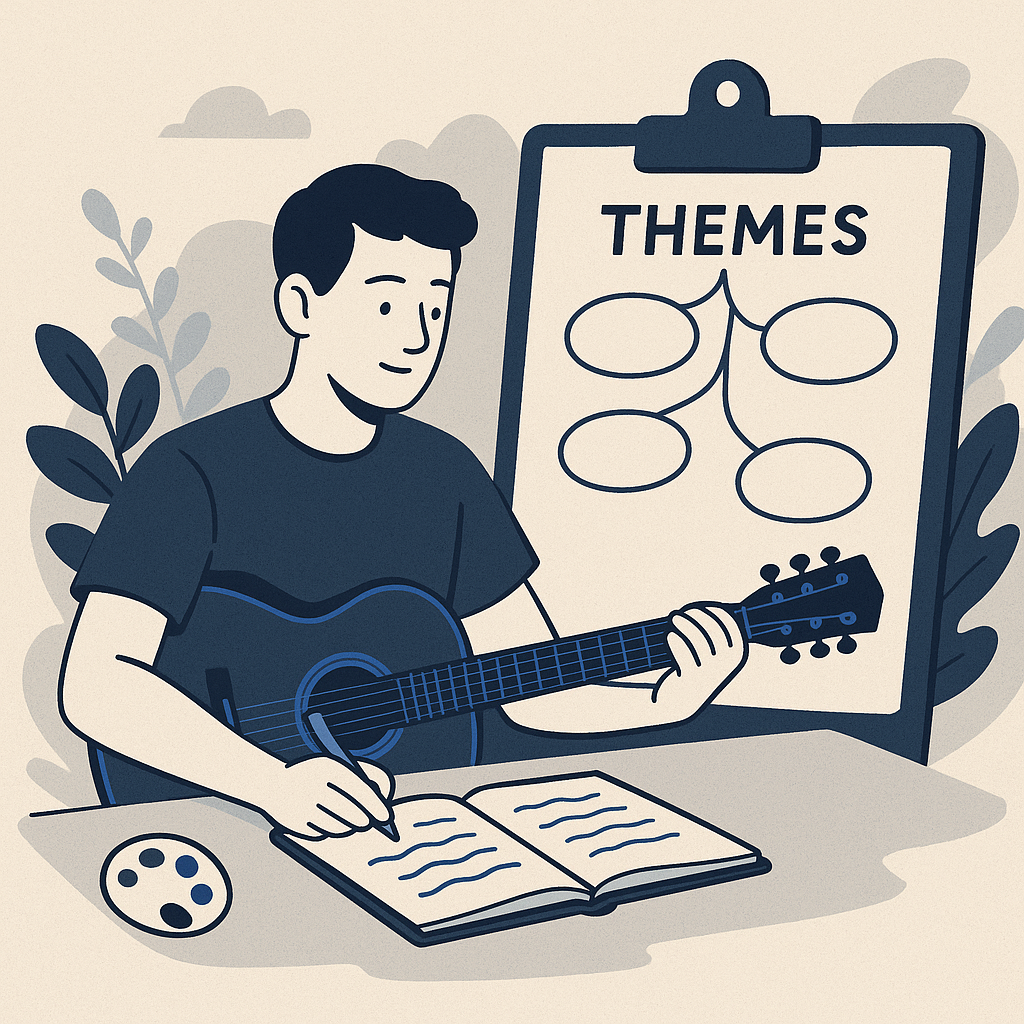
You do not need inspiration to start. You need a process. Run this one:
- Theme Selection: Brainstorm broadly, then cut ruthlessly. Select the theme that is both personally true and has reach beyond your own experience.
- Research and Gather Inspiration: Pull references from multiple media. Build a mood board, a playlist, a reading list — whatever anchors the theme in your mind.
- Outline Your Project: Map how the theme moves through each track or section. Know the arc before you record a note.
- Compose and Write: Build your compositions and lyrics against the outline. Every element should answer to the theme.
- Review and Refine: Step back regularly. Ask whether each piece still serves the whole. Cut what does not.
- Feedback and Iteration: Bring in trusted ears. Not for validation — for clarity. Iterate on what they surface.
Next Steps for Artists
Authenticity is not a soft concept. It is the variable that determines whether your theme lands or falls flat. Your specific perspective — the one nobody else has — is the differentiator. Build in silence, refine with discipline, and let the work speak. For artists looking to deepen their craft further, TruZillah offers resources and community built around serious creative development.
Pick your theme. Commit to it fully. Let it drive every decision from here. That is how music stops being a release and starts being a body of work.
Metrics for Measuring Thematic Success

Gut feeling is not a feedback loop. Once your work is out, measure what the data tells you. These are the signals that matter:
- Audience Engagement: Social interactions, comments, and shares tell you whether the theme is connecting or passing through unnoticed.
- Streaming and Download Data: A spike following release is not just a vanity metric — it signals that the theme pulled people in and held them.
- Critical Acclaim: Pay attention to what reviewers say about thematic coherence specifically. That feedback is diagnostic, not decorative.
- Fan Feedback: Direct surveys and conversations surface qualitative data that streaming numbers cannot. Use both.
- Concert and Tour Responses: Live audience reactions are real-time data on emotional resonance. Watch what lands and what does not.
Checklist for Thematic Consistency
Before you release, run this check. Every box should be a clear yes:
- ✔️ Theme Clarity: Can you state your theme in one clean sentence?
- ✔️ Lyric Alignment: Do all lyrics serve and reinforce the theme?
- ✔️ Musical Cohesion: Are your sonic choices consistently tied to the theme?
- ✔️ Visual Representation: Does your album art and promotional material reflect the same world as the music?
- ✔️ Feedback Loop: Have trusted listeners confirmed the theme reads clearly and hits hard?
FAQs on Thematic Development in Music
These questions come up consistently. Here are direct answers:
- Q: Can I use multiple themes in one project?
A: Yes — but one theme leads. Sub-themes add depth. Competing themes create confusion. Know the difference. - Q: How do I know if my theme is too niche?
A: Niche is not the problem. Inaccessibility is. Make sure your theme has a universal emotional entry point even if the subject matter is specific. - Q: What if my theme evolves during the creative process?
A: Evolution is fine. Document the shift, understand why it happened, and make sure the new direction strengthens the project rather than fractures it. - Q: How important is it for my theme to be unique?
A: Less important than how honestly you execute it. Authenticity of perspective matters more than novelty of subject.
Case Study: Reinventing Themes in Music
Radiohead’s OK Computer is the case study in disciplined thematic evolution. The band started with technology and alienation as their frame. Mid-project, they pulled human connection and introspection into the center. That shift did not dilute the work — it deepened it. The result was a multi-layered album that has remained a reference point for decades. The lesson: themes can move. What cannot move is your commitment to following where the work honestly leads.
Measure your results. Maintain your consistency. Stay open to where the theme wants to go. That combination — data plus discipline plus adaptability — is what separates work that resonates from work that simply releases.
Incorporating Cultural and Historical Contexts into Themes
Context is not background noise. It is source material. When you understand the cultural and historical forces behind your theme, your work carries weight that purely personal expression cannot reach alone. Here is how to build that in:
- Research Background: Study the historical events and cultural movements that shaped your theme. That foundation informs every lyric and production choice with earned authority.
- Authentic Soundscapes: Traditional instruments and regional musical styles are not gimmicks when used with intention. They signal respect and deepen the listener’s connection to the world you are building.
- Collaborate with Experts: Bring in historians or cultural advisors where accuracy matters. Getting it right is not optional when you are working with someone else’s story.

Leave a Reply