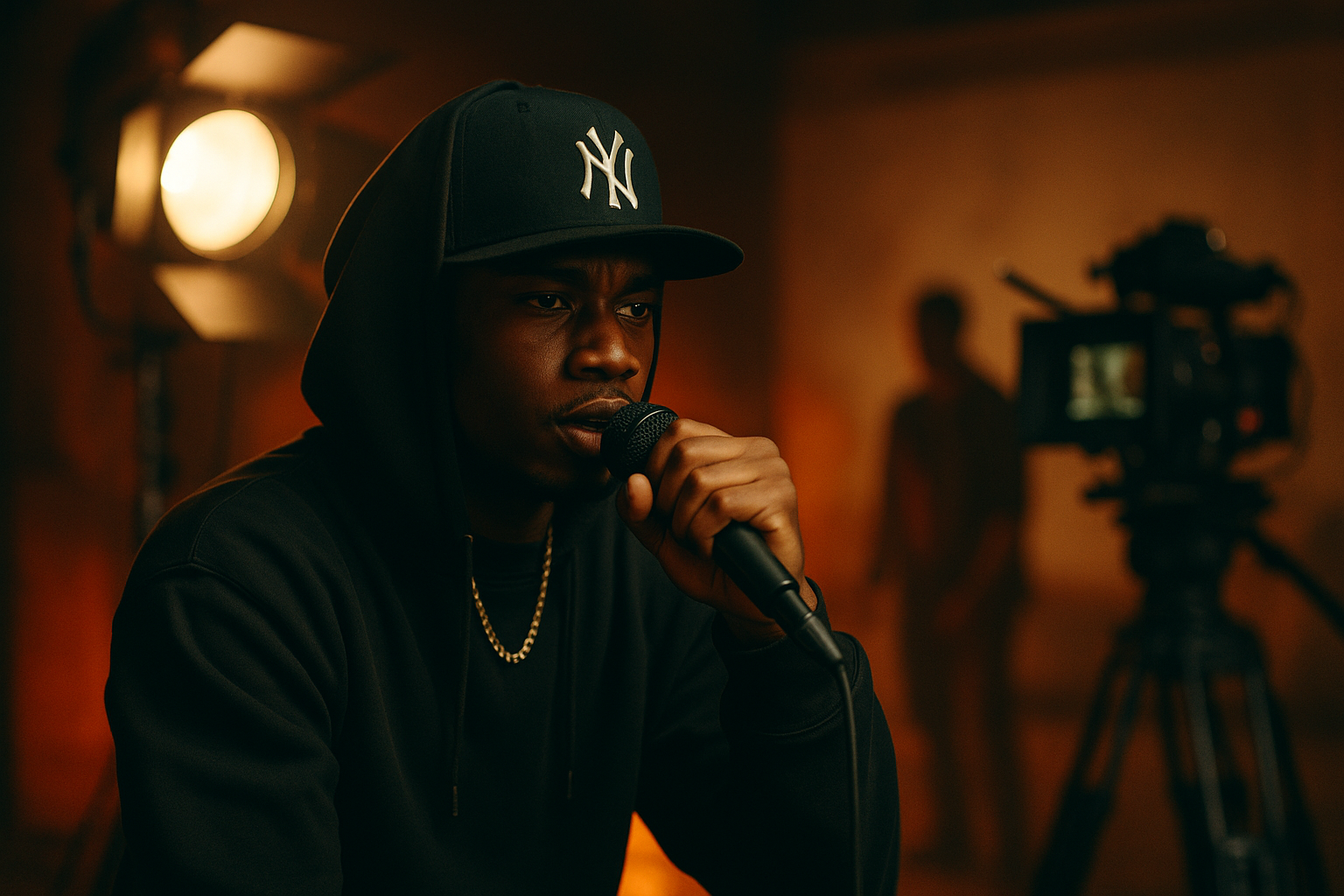
Most directors treat music as an afterthought — something dropped into post-production to fill dead air. That decision costs films their emotional punch. Cinematic hip-hop, placed correctly, doesn’t just accompany a scene. It rewires how the audience processes it. The beat becomes the subtext. The 808 becomes the heartbeat of a character who won’t say what they’re feeling out loud.
This guide breaks down exactly how cinematic hip-hop works inside film — the mechanics, the placement strategy, the production elements that make it land, and why serious filmmakers are making it a primary scoring tool in 2024 and beyond.
🎬 What Makes Hip-Hop “Cinematic” in the First Place
Not every hip-hop track belongs in a film. Cinematic hip-hop is a specific production style. It pulls from orchestral scoring, atmospheric sound design, and low-tempo composition. Think sparse piano loops layered over deep sub-bass, with intentional silence used as structure rather than dead space.
The defining characteristics that separate cinematic hip-hop from standard commercial tracks:
- Tempo below 90 BPM — slow enough to let visual storytelling breathe without competing with the cut
- Minimal or absent vocals — or vocals treated as texture rather than foreground narrative
- Dynamic range — the track builds and drops in response to emotional arcs, not just musical structure
- Layered atmospheric elements — rain, static, vinyl crackle, distant crowd noise that blur the line between score and sound design
- Harmonic tension — minor key progressions, unresolved chords that keep the viewer emotionally unsettled in exactly the right way
When those elements converge, you stop hearing music and start feeling the scene. That’s the functional difference.
🔹 The Emotional Architecture of a Scene — and Where Music Fits
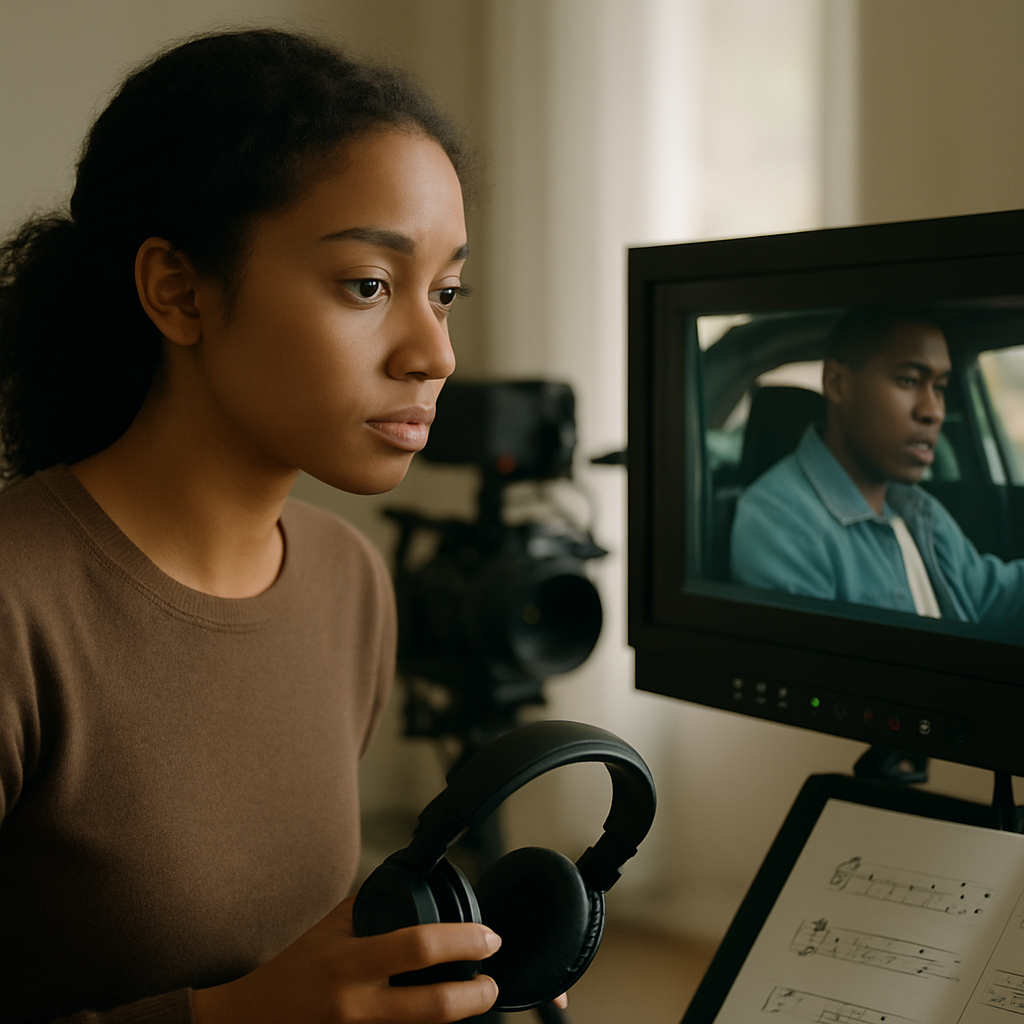
Every film scene has an emotional arc. A character enters with one internal state and exits with another — or the same state made more unbearable. Cinematic hip-hop works because its production mirrors that arc structurally.
Consider a scene where a character discovers a betrayal. The visual language shows the moment — the look, the pause, the slow turn away. But what the audience feels is largely dictated by what they hear. A standard orchestral score signals grief in a way audiences have been trained to recognize. Cinematic hip-hop does something different: it introduces ambiguity. The low-frequency rumble creates dread. The chopped sample creates disorientation. The viewer feels the betrayal rather than being instructed to feel it.
This is why filmmakers working in grittier, street-level narratives are building in silence around cinematic hip-hop as their primary scoring tool. It matches the texture of the world they’re constructing on screen.
🎵 Specific Scene Types Where Cinematic Hip-Hop Performs Best
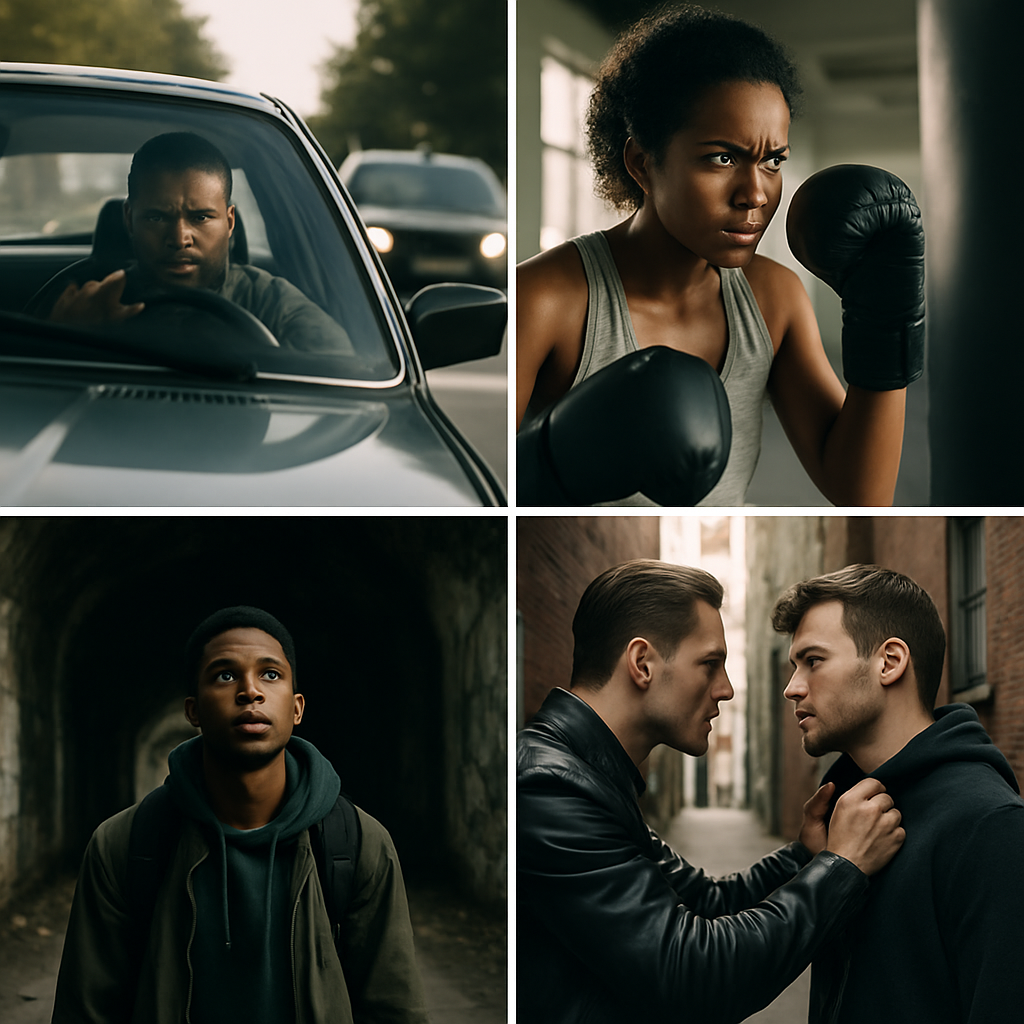
Placement matters more than the track itself. A great piece of cinematic hip-hop dropped into the wrong scene creates cognitive dissonance. Placed correctly, it multiplies the scene’s impact. Here’s where it works hardest:
1. Slow-Burn Tension Sequences
Scenes where nothing has happened yet but everything is about to — a stakeout, a confrontation building in silence, a character making a decision they can’t walk back. The rhythmic pulse of a cinematic hip-hop beat creates a ticking-clock effect without the cliché of an actual ticking clock. The groove keeps the audience’s nervous system engaged while the visuals hold still.
2. Urban Landscape Montages
Establishing shots of city environments — rooftops at dawn, empty streets after midnight, a neighborhood that tells its own story before a character speaks. Cinematic hip-hop was built for this function. The genre emerged from urban environments, and its sonic DNA carries that geography. When the music and the visual location share the same cultural origin, the authenticity is immediate and non-negotiable.
3. Character Introspection Moments
A character alone with their thoughts — driving, staring out a window, walking through a crowd they’re invisible in. These scenes are notoriously difficult to score because they need to communicate interiority without dialogue. Cinematic hip-hop’s atmospheric layering creates the sonic equivalent of a character’s internal monologue. The listener is inside the character’s head without a single word of voiceover.
4. Aftermath Scenes
Post-conflict, post-loss, post-revelation — the scene after the scene. The emotional weight has already landed. Now the film needs to let it settle. A well-placed cinematic hip-hop instrumental with deliberate space and a slow-moving harmonic progression gives the audience permission to sit in the feeling rather than being pushed toward the next plot point.
🚨 The Technical Side: How to Actually Sync Hip-Hop to Picture
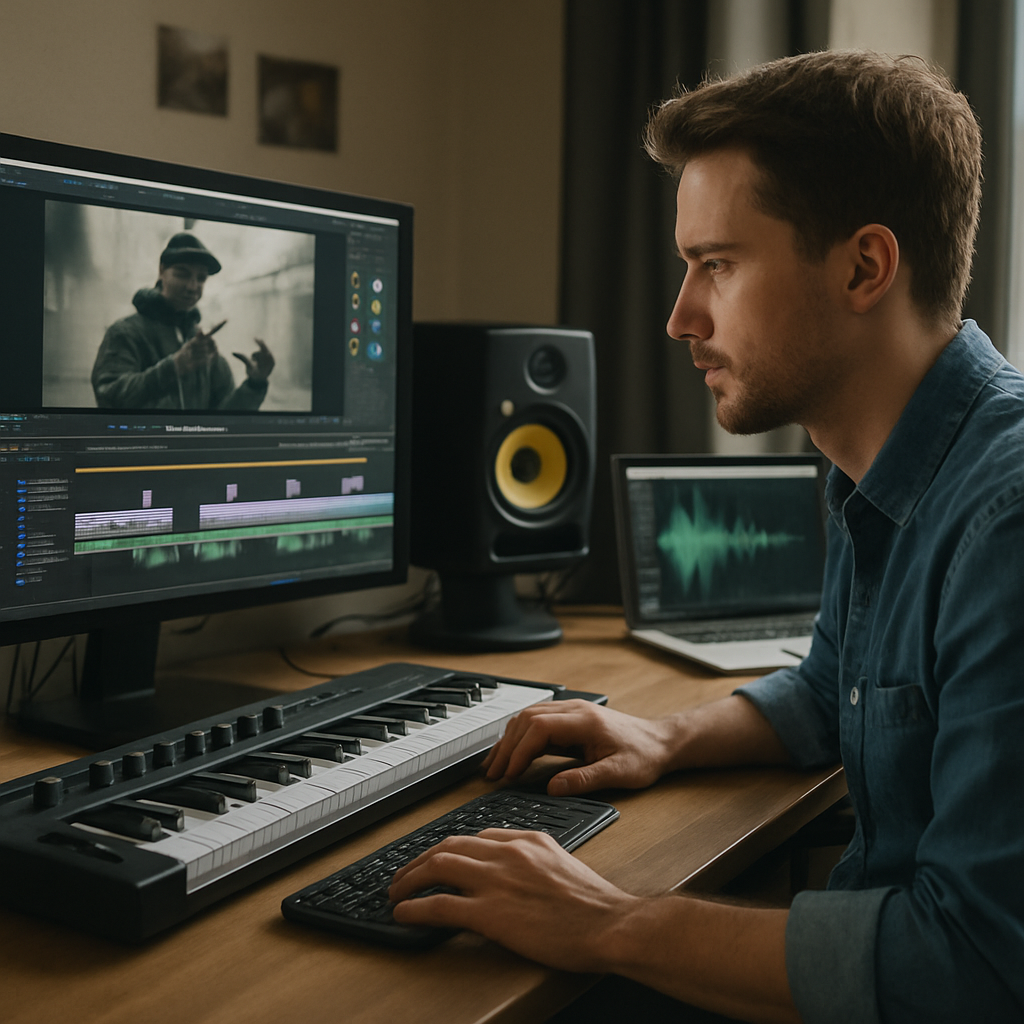
Understanding why cinematic hip-hop works is one thing. Executing the sync is where most filmmakers lose the advantage. Here’s a practical framework:
Step 1 — Cut the Scene First, Then Find the Music
Never score to a rough cut. Lock your edit as close to picture lock as possible before music placement. Cinematic hip-hop tracks have internal rhythmic logic — if your cut keeps shifting, you’ll never find the right entry and exit points. The beat has to breathe with the edit, not fight it.
Step 2 — Identify the Emotional Peak of the Scene
Every scene has one moment that carries the most weight — a look, a line, a physical action. That moment should align with the most intense element of your track. In cinematic hip-hop, that’s typically when the full drum pattern drops, or when a melodic element enters after a stripped-down intro. Map your scene’s peak to the track’s peak.
Step 3 — Use Stems, Not Full Mixes
Whenever possible, work with stem files — separate audio layers for drums, bass, melody, and atmosphere. This gives you surgical control. You can bring in just the atmospheric layer during a quiet moment, then let the full arrangement hit when the scene demands it. Independent producers working in cinematic hip-hop will often provide stems on request, especially for licensing deals.
Step 4 — Respect the Low End
Cinematic hip-hop lives in the sub-bass frequencies. In a theater or on a proper sound system, that low end is a physical experience — the audience feels it in their chest. Don’t fight it with competing sound design elements in the same frequency range. Work with your sound designer early to carve space for the music’s low end to hit clean. That’s where the emotional impact actually lives.
Step 5 — License Correctly
Independent cinematic hip-hop producers are increasingly active on sync licensing platforms. Sync fees vary widely based on project scope — a festival short operates in a completely different budget range than a streaming feature. Enter licensing conversations with your distribution scope clearly defined. Many independent artists in this space are open to backend deals or festival-only licenses at reduced rates in exchange for credit and placement.
🔹 Industry Trends Shaping Cinematic Hip-Hop in 2024
The 2024 landscape has accelerated several shifts that make cinematic hip-hop more accessible and more strategically valuable for filmmakers than at any previous point.
AI-assisted composition tools can now generate reference tracks in the cinematic hip-hop style, giving directors a way to temp-score scenes during editing before approaching real artists for final licensing. This speeds up the creative conversation — instead of describing what you want, you can play it.
Independent artist ecosystems have matured. Producers building catalogs specifically designed for sync placement are no longer rare. Artists operating in the atmospheric hip-hop and trap soul space are releasing instrumental projects with sync in mind from the first session. TruZillah is one example — building a catalog where the cinematic and the street-level coexist in the same sonic identity. That’s exactly what serious sync buyers are looking for right now.
Streaming platform original content has created enormous demand for music that feels specific rather than generic. The era of licensing a broadly appealing orchestral score is giving way to sonic identities that match the cultural specificity of the story being told. Cinematic hip-hop fills that gap for urban narratives, crime dramas, character studies, and documentary work.
✅ Putting It Together — A Practical Checklist for Filmmakers
- ✅ Identify scenes where dialogue is minimal and interiority is the goal
- ✅ Build a reference playlist of cinematic hip-hop instrumentals that match the emotional register of those scenes
- ✅ Contact producers directly for stem access — it changes what’s possible in the edit
- ✅ Map your scene’s emotional peak to the track’s arrangement peak before committing to a sync
- ✅ Negotiate licensing scope clearly upfront — festival, streaming, theatrical, and international rights are separate conversations
- ✅ Bring your sound designer in early so the music’s low end has room to land
Final Word
Cinematic hip-hop isn’t a trend. It’s a production language that has been developing for years and has reached a level of sophistication that makes it a legitimate first-choice scoring option for the right kind of film. The genre carries cultural specificity, emotional complexity, and sonic architecture that generic library music cannot replicate.
If you’re a filmmaker working on a project where the world is gritty, the characters are complicated, and the story lives in the space between what’s said and what’s felt — this is your toolkit. Learn the placement mechanics. Build relationships with independent artists who build in silence and release with intention. Stop treating music as an afterthought.
The scene doesn’t start when the camera rolls. It starts when the first frequency hits the room.
Want to hear what cinematic hip-hop sounds like when it’s built for sync from the ground up? Visit TruZillah.com and explore a catalog built exactly for this purpose.

Leave a Reply