The Voices Behind the Legendary Five Deadly Venoms English Dub
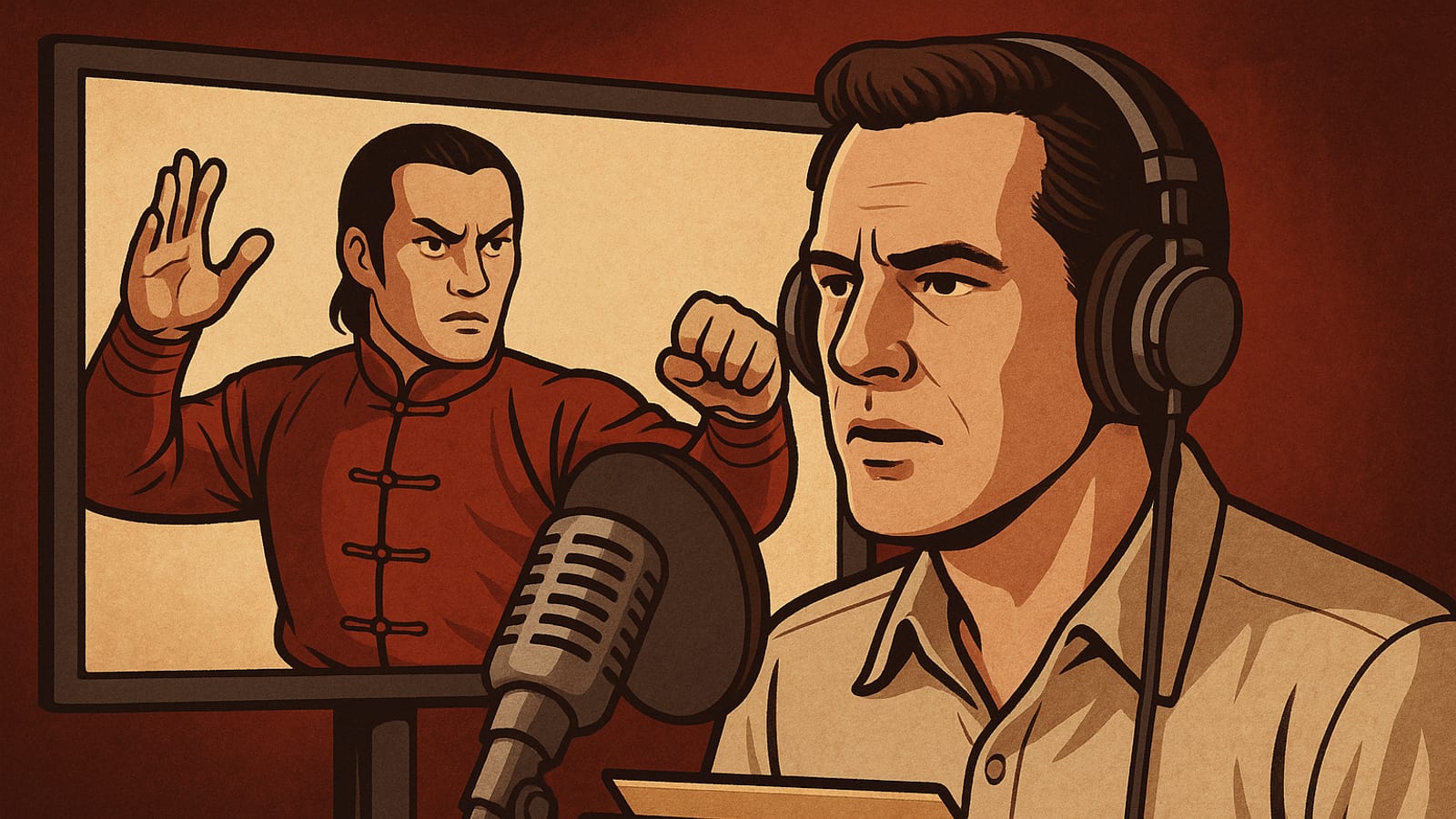
The English dub of Five Deadly Venoms is famous for being rough, but almost nobody knows who made it. Think about that for a second. This film has been quoted, sampled, and passed hand to hand on VHS for decades, and the people who actually sat in a studio and gave it its voice have never gotten so much as a line of credit. That imbalance bothered me the first time I heard about it, and it still bothers me now. So let’s talk about where the dub came from and give some long-overdue attention to the people behind those voices.
Why the Dub Became Legendary
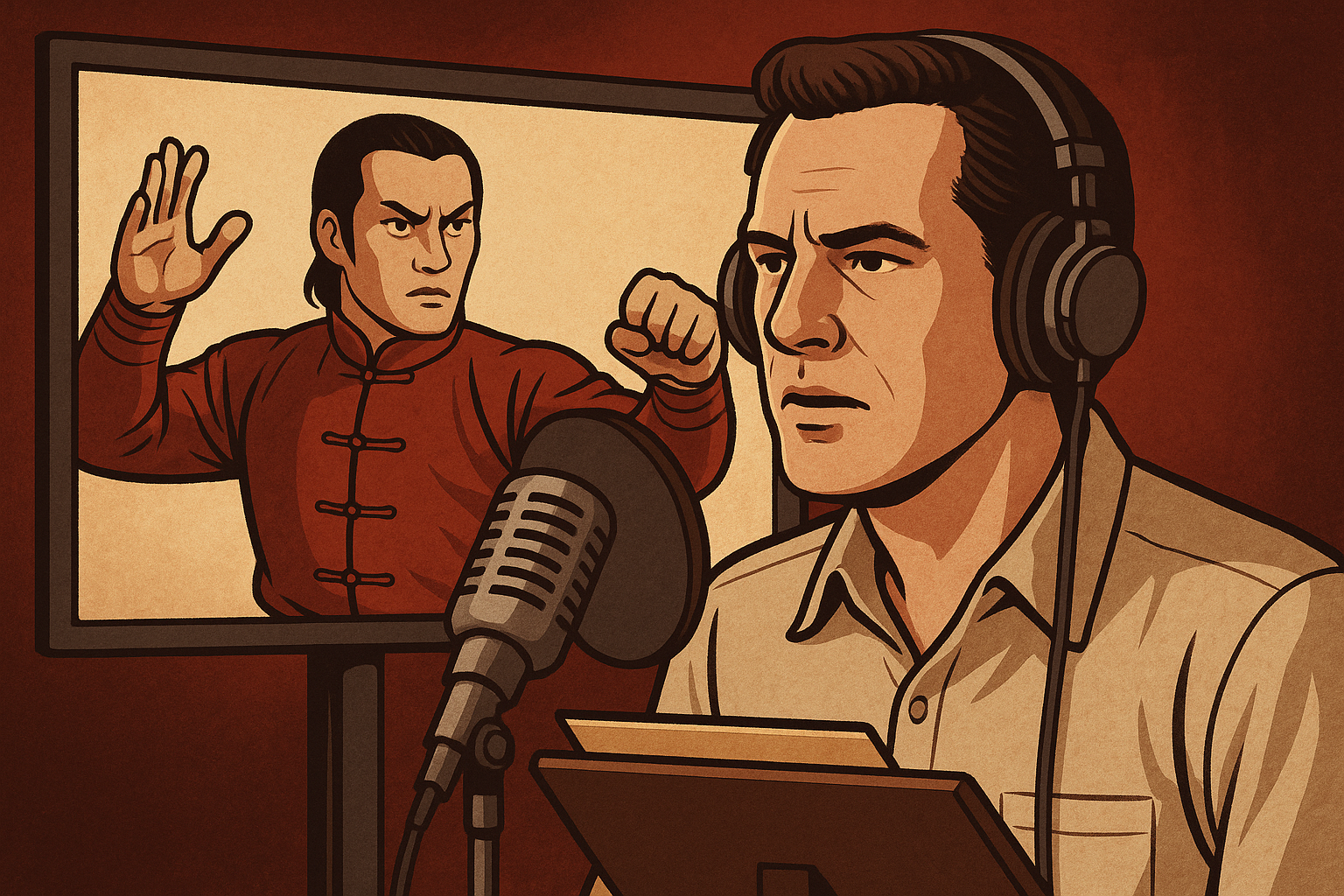
For a lot of us, the Five Deadly Venoms English dub is inseparable from the film itself. The exaggerated intonation, the lip-sync that arrives a half-beat late, the lines that feel like they were translated by someone working fast under a deadline — all of it became part of the experience. The original Mandarin version shows you what the performers were actually doing with the material. The English version gave grindhouse audiences and late-night TV viewers something stranger and harder to shake.
What gets me is the gap between the dub’s reputation and the total obscurity of the people who created it. Word spread through VHS copies and grindhouse screenings, the film built a following that has never really stopped growing, and the voice actors who made that possible stayed invisible. Their craft shaped how an entire generation first encountered this film, and the industry treated that contribution like it never happened.
The Production Company and the Era That Shaped It
To understand how this dub got made, you have to understand what the late 1970s localization business actually looked like. Shaw Brothers had the films. They had the distribution ambitions. What they needed were companies that could turn Mandarin dialogue into English fast and cheap, and there was a small ecosystem of localization outfits ready to do exactly that.
The company that handled the Five Deadly Venoms dub was one of several working in this space during the era, processing multiple martial arts titles on tight budgets and tighter timelines. The technology imposed its own constraints. Sessions were rushed. The priority was matching the overall rhythm of the dialogue to the film’s running time, not chasing perfect lip-sync or layered performances. That pressure is audible in the final product, and it is also, honestly, part of what makes the dub so distinctive.
The Voice Actors Who Went Uncredited
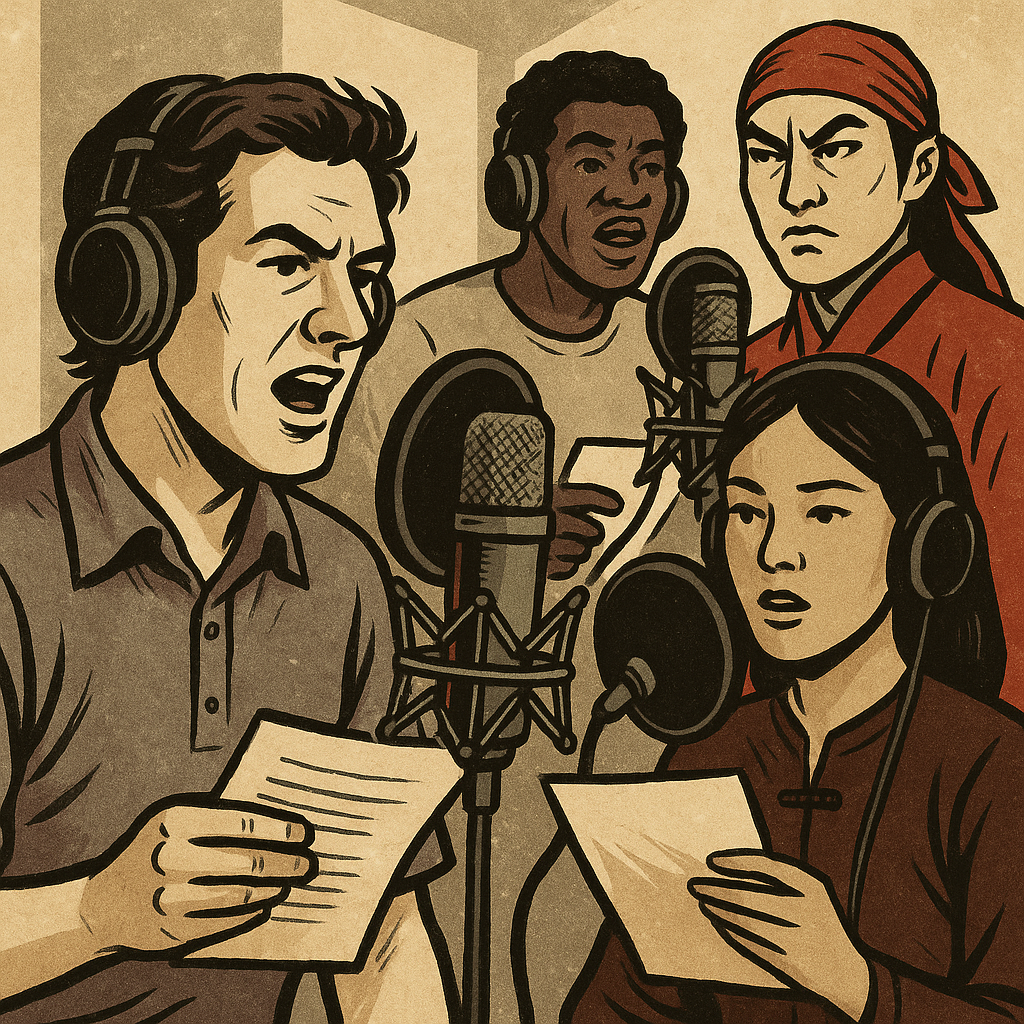
The people who actually performed this dub were working actors with real range, often taking on multiple characters in a single session, sometimes under pseudonyms, rarely with any promise of recognition. Names like Ted Thomas, who voiced characters across a string of martial arts titles, and Brian Pearce, whose delivery became a recognizable signature of the genre, surface when you dig through interviews and the credits of other projects from the same period.
These were performers who knew how to adapt quickly, how to find a character in a few seconds of context, and how to hold a scene together when the technical conditions were working against them. Their stunt work was vocal rather than physical, but it required the same kind of instinct. The fact that the industry standard of the time was to leave them off the credits entirely is not a quirk of history. It is a choice that deserves to be named as such.
Inside the Recording Sessions
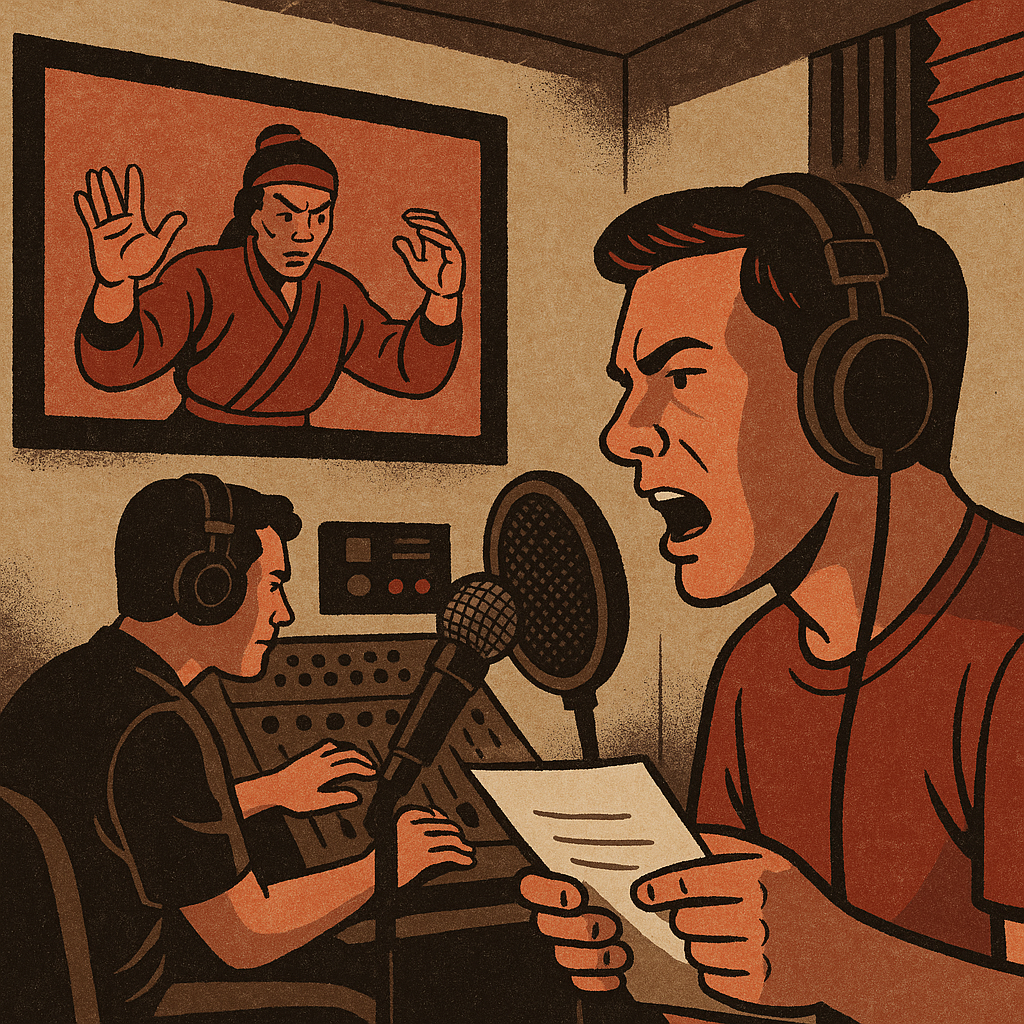
Picture a small studio, a reel running, and an actor who may not have seen the full film yet being asked to match lines to a scene they are encountering in real time. That was the working condition. Takes were limited. The budget did not allow for the kind of back-and-forth that produces polished results. What it produced instead was something rawer and, in its own way, more alive.
The dialogue adaptation added another layer of difficulty. Translators were navigating the gap between Mandarin idiom and English sentence structure, trying to land something that fit the timing without losing the meaning entirely. Sometimes they succeeded. Sometimes the result was a line that made no strict sense but landed with a rhythm that stuck in your head anyway. Those quirks are not accidents. They are the residue of real craft working under real pressure.
Why It Stayed Forgotten
The anonymity of the people behind this dub did not happen by accident. Dubbing credits were treated as an afterthought across the martial arts genre, where the commercial logic was speed and volume rather than documentation. When home video arrived and bootleg copies started circulating without any credits at all, whatever thin paper trail existed got thinner.
Official records from this period focused on the films as commercial properties, not on the lineage of labor that made them accessible to English-speaking audiences. The transient nature of session voice work meant that even the performers themselves sometimes had incomplete records of what they had contributed. The dub’s fame grew. The archive stayed empty. That gap is worth sitting with, because it tells you something real about how the industry valued the people doing this work.
The Five Deadly Venoms English dub is a document of its moment — the constraints, the speed, the ingenuity, and the invisibility of the people who pulled it off. For those of us who came to these films through that dub, understanding its history does not diminish the experience. It deepens it. The voices were real. The work was real. It deserves to be remembered that way.
For more on martial arts film history and a community that takes this lineage seriously, visit Old School Shaolin and Wu.
How Dubbing Shaped the Global Reach of Shaw Brothers Films
The Five Deadly Venoms dub is one example of a much larger story about how dubbing functioned as the primary engine of international distribution for martial arts cinema in the 1970s and 1980s. Without it, the Shaw Brothers catalog does not reach Western grindhouse screens. The genre does not build the English-speaking audience it built. The films that influenced a generation of American filmmakers do not land the same way, if they land at all.
That access came with real trade-offs. Translation flattened cultural specificity. Dialogue that carried weight in Mandarin sometimes arrived in English as something blunter or stranger. The viewing experience in a grindhouse in New York was genuinely different from the viewing experience in Hong Kong, and not only because of the seats. The dub created its own version of the film, and that version had its own lineage and its own influence.
Holding the Story Together Across Languages
The hardest part of the job, from what we can piece together, was maintaining narrative integrity when the tools for doing so were limited. Translators working on Five Deadly Venoms had to make fast decisions about idiomatic expressions and cultural references that had no clean English equivalent. The choice was usually between accuracy and timing, and timing won more often than not.
The results were sometimes awkward and sometimes genuinely funny, and the film’s cult following has always understood both of those things at once. What gets lost in the easy jokes about dub quality is the actual difficulty of the craft. These were not careless people producing careless work. They were skilled people working in conditions that made precision nearly impossible, and the film found its audience anyway.
What Contemporary Dubbing Owes to That Era
The practices that produced the Five Deadly Venoms dub look very different from how the industry approaches the work today. Budgets are larger. Technology allows for tighter synchronization. Studios increasingly bring original filmmakers into the process to protect the intent of the source material. The restoration of older films has also renewed interest in what the original performances actually contained, which has changed how audiences relate to dubbed versions.
Modern dubbing treats the choreography of dialogue — the rhythm, the weight, the character — as something worth preserving rather than approximating. That shift did not happen in a vacuum. It happened partly because audiences who grew up with dubs like the one on Five Deadly Venoms eventually became the people making decisions about how this work gets done. The lessons were absorbed, even when the source was never credited.
What Good Dubbing Actually Requires
- Synchronization Accuracy: How closely the dubbed dialogue tracks the lip movements of the original performers, which affects whether the audience stays inside the film or gets pulled out of it.
- Narrative Fidelity: How faithfully the adapted script carries the plot, the character relationships, and the tonal intentions of the original.
- Audience Reception: Whether viewers in the new market feel the film the way it was meant to be felt, which is harder to measure but ultimately the only thing that matters.
- Market Reach: How effectively the dubbed version opens the film to audiences who would not otherwise have access to it, which is the original argument for doing this work at all.
When studios hold themselves to these standards, dubbing stops being a compromise and becomes something closer to a genuine act of translation — one that respects both the film and the audience receiving it. The people who worked on Five Deadly Venoms were doing that work before anyone had language for it. They just never got the credit.

Leave a Reply