
The Producer’s Mindset: Overcoming Creative Blocks in Music Production
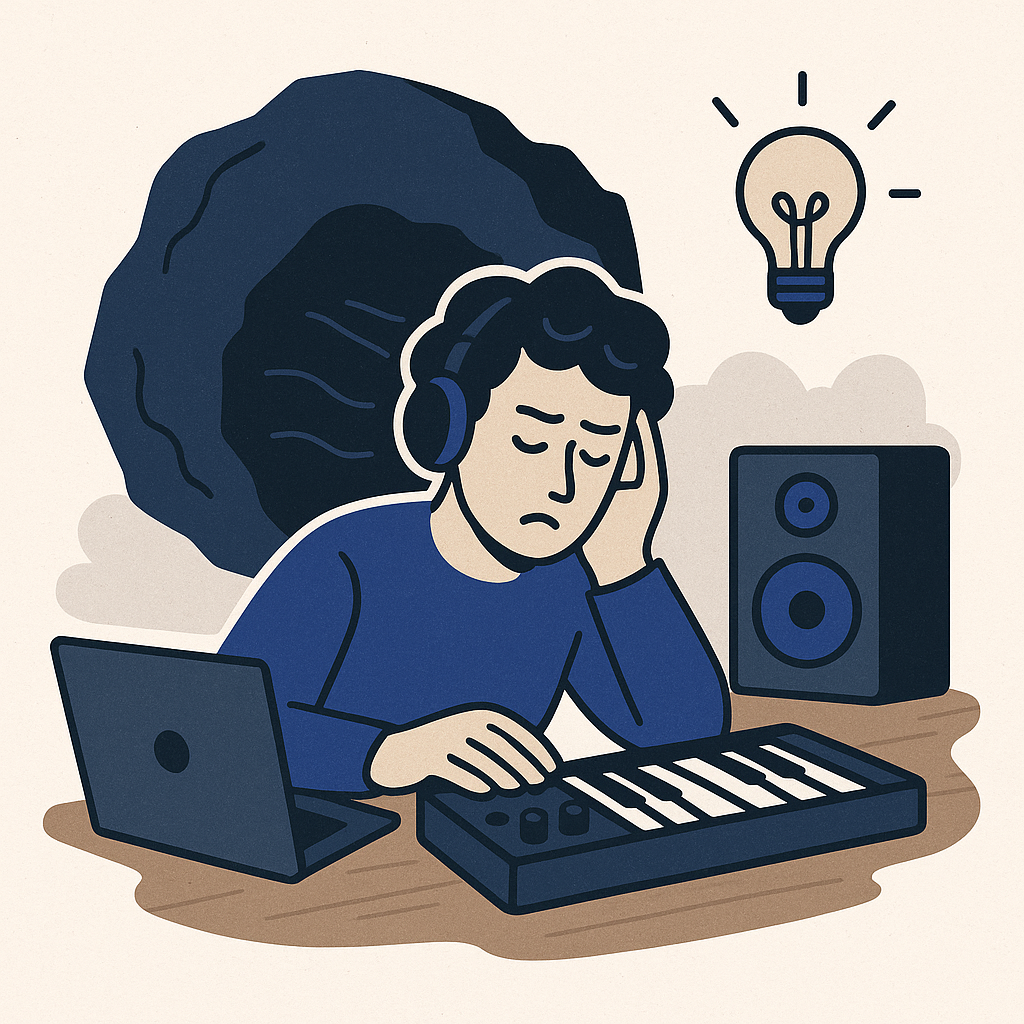
You open your DAW. The timeline is empty. So is your head. That moment is not a mystery — it is a signal. Creative blocks do not appear randomly. They are the product of pressure, perfectionism, and a process that has stopped serving you. Understanding what is actually happening is the first move toward breaking through it.

Understanding the Creative Block
A creative block is not simply the absence of ideas. It is the presence of mental barriers cutting off your access to creative flow. Stress builds one wall. Perfectionism builds another. The sheer volume of options inside a modern DAW builds a third. Most producers try to push through by doing more. That rarely works. You need to understand the structure of the block before you can dismantle it.
Case Study: The Stalled Beatmaker
One aspiring beatmaker logged hours every day, sharpening his craft. Then the pressure to produce something significant started mounting. Output dried up. Nothing he started felt worth finishing. The breakthrough did not come from a new plugin or a better template. It came when he stopped trying to optimize his workflow and started questioning his entire creative process. The system was the problem — not the talent.
Strategies to Overcome Creative Blocks
These are not motivational suggestions. They are tested methods that move the needle:
- Limitations as Freedom: Too many options paralyze decision-making. Restrict yourself to one synth and a single drum kit for an entire session. Constraints force unconventional thinking. That friction is where original ideas live.
- Routine Breakers: Your environment shapes your output. If you always produce in the same room, move. A different physical space interrupts stale mental patterns and opens new angles.
- Collaborative Sessions: Bring another producer or musician into your session. An outside perspective cuts through the noise fast. Platforms like TruZillah connect you with communities of working artists who can provide exactly that.
Tools and Techniques for a Fresh Perspective
The right tools do not replace process — they support it. These are worth having in your kit:
- Loopcloud: A deep library of loops and samples. When you are stuck, start with a loop and build outward. It removes the blank-canvas problem immediately.
- Splice: Subscription-based access to an extensive sound library, plus a community layer that makes producer collaboration straightforward.
- ArcanoLabs AI: Integrating AI into your workflow lets you surface new composition directions based on your existing body of work. Visit the content page to see what is possible.
Step-by-Step Guide to Breakthrough
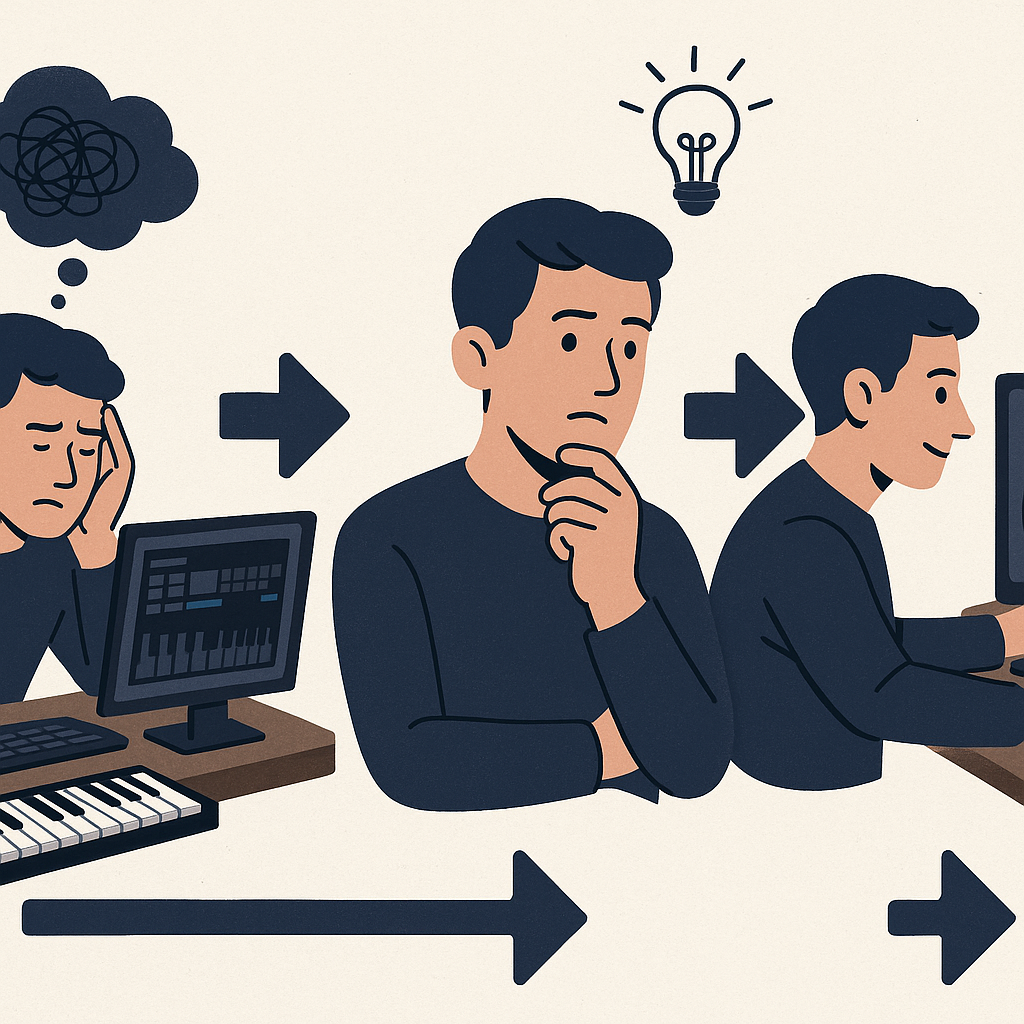
Follow this process when you hit a wall:
- Identify the Block: Name what is actually stopping you. Fear of failure, lack of direction, mental fatigue — each one requires a different response. Vague frustration is not actionable. A specific diagnosis is.
- Set Small Goals: Break the project into the smallest possible tasks. Finishing small things builds real momentum. Momentum compounds.
- Use a Timer: Set 25 minutes on the clock — the Pomodoro method. Work on nothing but the music. Take a 5-minute break. Repeat. Focused intervals outperform marathon sessions that drift.
- Reflect and Adjust: After each session, spend two minutes reviewing what moved and what stalled. Adjust before the next session. Iteration is the actual process.
Actionable Next Steps
Breaking through a block once is not the goal. Building a process that keeps you moving is. Start here:
- Experiment Regularly: Block time each week to explore unfamiliar sounds and techniques. Treat it as maintenance, not inspiration-chasing. Consistent exposure keeps your creative range wide.
- Join a Community: Isolation compounds blocks. Connect with producers who are actively working. TruZillah’s blog is a solid starting point for insights and real collaboration.
- Continuous Learning: Stay current with production techniques through courses and focused tutorials. New knowledge opens new creative doors — not because of inspiration, but because of expanded capability.
The producers who build in silence and earn in peace are not waiting for the right feeling. They keep moving. Every block you push through sharpens the mindset. That is the actual work.
Exploring Diverse Musical Influences
One of the most direct ways to break a creative block is to go outside your usual genre entirely. Unfamiliar sounds disrupt familiar patterns. That disruption is productive.
Incorporating Unfamiliar Genres
- World Music: Afrobeat, Reggae, Bossa Nova — these genres carry rhythmic structures and instrumentation you will not find in your default library. Pull from them deliberately.
- Classical Elements: Sonata form, counterpoint, orchestral layering. These structures add compositional depth that most modern production ignores. That gap is an opportunity.
- Electronic Subgenres: Synthwave, Drum and Bass, Chillwave each carry distinct production signatures. Studying them closely expands your technical vocabulary fast.
Widening your musical frame of reference is not about genre-hopping. It is about building a deeper toolkit that keeps your output from going stale.
Mindfulness and Mental Health Practices
Creative blocks are frequently mental health problems wearing a production costume. Address the root, not just the symptom.
Mindfulness Techniques
- Meditation: Even short daily sessions reduce the background stress that quietly kills creative output. Apps like Headspace or Calm offer guided sessions built around focus and clarity.
- Journaling: Writing clears mental clutter. Processing what is weighing on you off the screen makes more room for what you want to create on it.
- Mindful Listening: Spend time each day listening to a track with full attention. Break down every element. Note how the parts interact. This sharpens your ear and consistently surfaces new production ideas.
When your mental state is stable, your creative output follows. That is not soft advice — it is operational reality.
Setting Up an Inspiring Workspace
Your physical environment is part of your production system. Treat it that way.
Workspace Optimization Tips
- Declutter: A clean workspace reduces cognitive load. Remove what you do not use. Organize what you do. Access to your tools should be frictionless.
- Personalization: Add elements that signal creativity to your brain — artwork, plants, lighting you control. Your environment should feel like it belongs to someone who makes things.
- Ergonomics: Physical discomfort is a slow drain on focus. A proper chair and desk setup is not a luxury — it is infrastructure. Protect your ability to work long sessions without distraction.
An optimized workspace does not guarantee great sessions. But a chaotic, uncomfortable one guarantees shorter, less productive ones.
FAQ: Addressing Common Concerns
Direct answers to the questions producers actually ask:
How do I know if I’m experiencing a creative block?
If new ideas have stopped coming, frustration is replacing focus, or you are consistently avoiding the DAW, you are blocked. Sit with that honestly. Naming it clearly is the first step toward addressing it.
What should I do if my usual strategies aren’t working?
Change the input entirely. Collaborate with someone outside your usual circle, explore a genre you have never touched, or introduce a mindfulness practice into your daily routine. When the standard approach fails, the answer is a different approach — not more of the same one.
Can taking a break help with creative blocks?
Yes. Stepping away from the work restores perspective and lowers stress. Exercise, reading, time outdoors — activities with no connection to production give your mind the recovery it needs. You come back with a cleaner signal.
Understanding the mechanics of creative blocks and applying the right countermeasures keeps your production practice moving forward. That consistency, compounded over time, is what separates producers who build lasting output from those who stay stuck waiting for inspiration to arrive.
Utilizing Creative Limitations
Constraints are not obstacles. They are tools. Restricting yourself to a fixed set of instruments or a hard cap on track count forces your mind to find solutions it would never reach with unlimited options. That pressure produces originality. The producers who build in silence understand this — they set the rules, work within them, and let the results speak.

Leave a Reply