
Lau Kar-leung directed 28 films between 1979 and 1999, and in 2024 they are scattered across five continents in formats most fans have never seen. If you have been hunting these titles down one by one, you already know the frustration. This guide is here to cut through that and get you to the films themselves, in the best versions currently available.

Why Lau Kar-leung’s Work Is Worth the Hunt
Here is the thing about Lau Kar-leung that gets lost when people talk about him only as an actor. He came up through a lineage that ran directly from the Hung Gar tradition through his adoptive father Lau Cham, who trained under Wong Fei-hung’s real-life successor. That lineage is not trivia. It is the reason his choreography looks the way it does — grounded, purposeful, every technique traceable back to an actual form. When he moved into directing at Shaw Brothers, he brought that same discipline to the camera. His films break into three distinct eras, each one showing him pushing the craft further. The reason so many of them vanished from English-language circulation has nothing to do with quality and everything to do with distribution decisions that treated these films as disposable product. They were not.
The 2024 Streaming Landscape: What’s There and What’s Missing
Streaming in 2024 gives you a real foothold into Lau’s catalog, but it does not give you everything. In the US, UK, and Australia, Criterion Channel and Amazon Prime Video carry a solid selection. The Criterion presentation in particular is worth your time — the restorations are careful and the context provided around the films is genuine. Asian platforms like iQIYI and Tencent Video hold titles that never made it to Western services, often with subtitled versions that are closer to the original intent than the dubbed audio you might remember from a grindhouse double bill or a late-night cable run. The honest answer is that no single platform covers the full catalog. Streaming gets you started. Physical media gets you the rest.
Physical Media: The Collector’s Path to Completeness
If you are serious about Lau’s directorial work, physical media is not optional — it is the only way to close the gaps. Hong Kong DVD pressings, still available through import sellers, give you access to titles that have never appeared on any streaming service. The picture quality varies, but the films are there. Remastered Blu-ray editions from distributors like Eureka Entertainment are a different story entirely; the restoration work on some of these releases is genuinely impressive, and the supplemental material is worth having. Region coding matters here. Most Hong Kong releases are Region 3, which means you need a region-free player. Some of the remastered editions are Region B. Out-of-print titles on the secondary market can get expensive fast, so it pays to know which ones to prioritize before prices climb further.
The Import Route: What Works and What Doesn’t
Importing is how dedicated fans have always filled the holes in a collection like this, and in 2024 it still works — with some caveats. Region-free releases give you the most flexibility, but a lot of the best pressings are not region-free. YesAsia and CDJapan are the most reliable retailers for Asian physical media; both have consistent shipping and accurate condition descriptions. Shipping timelines vary depending on where you are and what method you choose. The quality issues to watch for with older Hong Kong pressings are real: non-removable subtitles burned into the image, compressed audio tracks, and occasional missing scenes that were cut for regional release. Know what you are buying before you buy it. The fan communities around this genre are good about documenting exactly which pressing of a given title is the one to get.
Building a Viewing Path: Where to Start Based on What You Care About
Not everyone comes to Lau’s catalog from the same direction, and the right entry point depends on what you are looking for. If you practice martial arts and want to understand how a real practitioner translates form to screen, start with The 36th Chamber of Shaolin. The training sequences in that film are not filler — they are a structured argument about how skill is built. Shaw Brothers completists will find essential work throughout his early directorial period at the studio. If you are studying fight choreography specifically, Eight Diagram Pole Fighter shows what Lau could do when he was given room to let a fight breathe across a wide frame. Newcomers who want to understand his range and his ability to work with other major talents should start with Drunken Master II, which remains one of the most technically accomplished action films ever made and is also just enormously fun to watch.
Availability at a Glance: The Complete 2024 Catalog Map
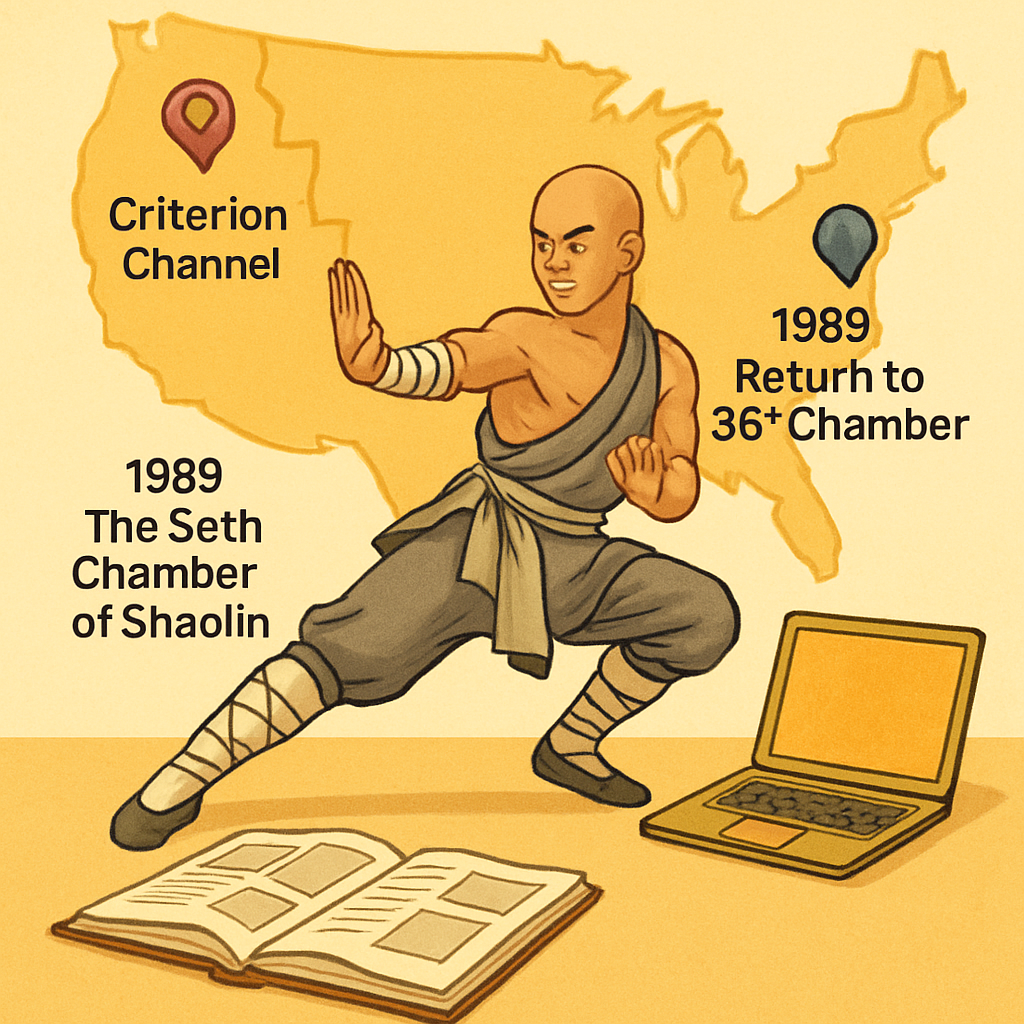
Here is where things stand for the key titles in Lau’s directorial catalog as of 2024:
- 1979 — The 36th Chamber of Shaolin: Streaming on Criterion Channel, available on Blu-ray (Region B)
- 1980 — Return to the 36th Chamber: Import DVD (Region 3), no legal streaming
- 1984 — Eight Diagram Pole Fighter: Available on Amazon Prime Video, Blu-ray (Region A/B)
- 1994 — Drunken Master II: Streaming on iQIYI (subtitled), Blu-ray (Region A)
Each entry reflects current availability, language options, and subtitle status. There are still genuine gaps — titles where no legal option exists in any region. That is the honest reality of where the catalog stands right now, and it is exactly why both streaming and physical media matter if you want to see the full picture of what Lau built across his career.
Tracking down Lau Kar-leung’s films is an act of respect for a filmmaker who deserved better distribution than he got. The craft is there in every frame. The lineage is real. For anyone serious about martial arts cinema, Old School Shaolin and Wu is here to help you navigate the search — whether you are building a collection from scratch or filling in the last few gaps in a catalog you have been chasing for years.
For more on film history and the voices shaping the conversation around it, explore our Ultimate Guide to Digital Marketing Success in 2024 and discover independent voices in our Top 10 Independent Hip-Hop Producers to Watch in 2026.
Reading the Films: What Lau’s Technique Actually Shows You

Once you have the films in front of you, it helps to know what you are looking at. Lau’s approach to choreography and camera was not accidental, and understanding a few of his core methods changes how you watch the fights.
Choreography That Earns Its Realism
Lau built his fight sequences around performers who actually knew what they were doing, and then he gave the camera room to show it. Long takes and wide shots are his signature — not because he was showing off, but because cutting around a technique is an admission that the technique is not there. When you watch a Lau fight and the camera holds, that is a choice rooted in confidence in the stunt work and the performers executing it. The contrast with the quick-cut approach that dominates modern action films is not subtle. One style trusts the audience to see. The other hopes they won’t notice.
The Fight as Story
In Lau’s films, the fight is never just the fight. Every major action sequence is doing narrative work — revealing something about a character’s limits, shifting the power between two people, or paying off something the story set up earlier. That integration is harder than it looks, and it is one of the reasons his films hold up when a lot of his contemporaries feel dated. The choreography serves the story. The story earns the choreography.
Cultural Grounding as Craft
Lau drew consistently on traditional Chinese philosophy and the specific cultural context of the martial arts he practiced. That grounding is not decoration. It gives his films a depth that purely kinetic action cannot match, and it is part of why they resonate with audiences who come to them with no prior knowledge of the genre. Authenticity reads on screen even when viewers cannot name exactly what they are responding to.
What Streaming Platforms Should Be Tracking
For anyone on the platform side thinking about how to build and sustain an audience for catalog titles like Lau’s, the metrics that matter most are not complicated:
- Viewer Engagement: Average watch time and completion rates tell you whether audiences are staying with these films or dropping off, and where.
- Subscription Growth: New subscriptions during promotional windows around Lau’s titles indicate whether the catalog is actually pulling people in.
- Content Licensing ROI: Comparing revenue from these titles against licensing costs gives you the honest picture of whether the investment is working.
- Audience Demographics: Knowing who is watching shapes how you market to the people who are not watching yet.
How Classic Martial Arts Films Find New Audiences: A Real Pattern
The resurgence in interest around classic martial arts cinema over the last several years is not accidental. It has followed a recognizable pattern, and Lau’s catalog is well positioned to benefit from it.
Film Festivals and Retrospectives: Events like the New York Asian Film Festival have brought these films back in front of audiences who were not alive when they were made, pairing screenings with genuine historical context from people who know the material. That combination — the film plus the conversation around it — is what turns a one-time viewing into a lasting interest.
Targeted Promotion: Streaming services that have invested in promoting their martial arts holdings through social media and partnerships with people who actually love the genre have seen real returns. The key is that the promotion has to be honest about what makes these films worth watching. Audiences can tell when the enthusiasm is genuine and when it is a marketing exercise.
The infrastructure to bring Lau Kar-leung’s directorial catalog to a much wider audience already exists. What it takes is the will to treat these films as the serious, lasting work they are — not as a niche curiosity, but as a body of craft that has been underrated for too long and is overdue for the attention it deserves.

Leave a Reply