
Crafting an Impactful Music Portfolio: Essentials for Artists
The music industry does not reward the most talented artist in the room. It rewards the one who shows up prepared. Your portfolio is your first move in that room. It is your proof of concept, your brand statement, and your silent pitch to every industry professional who encounters your name. Most artists treat it as an afterthought. The ones who build in silence treat it as infrastructure. This guide gives you the blueprint.

Understanding the Purpose of Your Music Portfolio

Your music portfolio is not a scrapbook. It is a strategic asset. Every element inside it should serve a specific function. When it is built correctly, it does three things at once:
- Showcase Talent: Put your strongest work in front of the people who can move your career forward.
- Professional Branding: Define your artistic identity before someone else defines it for you.
- Networking: Give collaborators, booking agents, and fans a concrete reason to reach out.
Think of your portfolio as a narrative. It should communicate where you have been, what you sound like right now, and where you are clearly headed. If someone walks away unsure of who you are as an artist, the portfolio has failed its job.
Key Elements of an Effective Music Portfolio
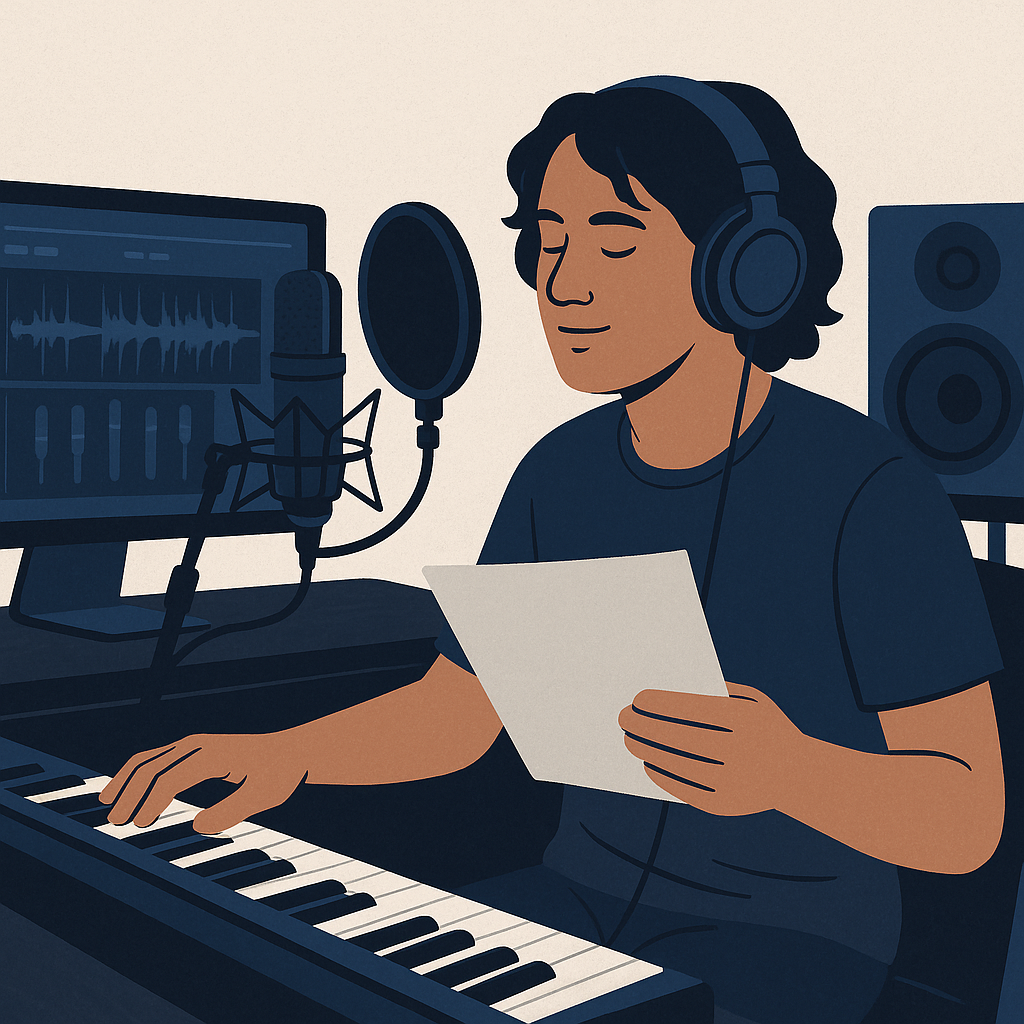
Strip away the noise. A portfolio that converts attention into opportunity contains four non-negotiable components.
1. High-Quality Recordings
This is the foundation. Everything else is packaging. Low-quality audio signals low-quality standards, and industry professionals move on in seconds. Invest in professional studio time or a capable home setup. The PreSonus AudioBox USB 96 is a proven entry point for artists building a home studio without overspending.
2. Artist Bio
Your bio is your written pitch. Keep it tight. Cover your background, your influences, and the specific thing that makes your sound yours. Every sentence should earn its place. If a line does not add information or create interest, cut it.
3. Professional Photos
Visuals communicate before a single note plays. A professional photoshoot is not vanity — it is brand infrastructure. These images will carry your identity across your portfolio, press releases, and every platform where your name appears.
4. Press Kit
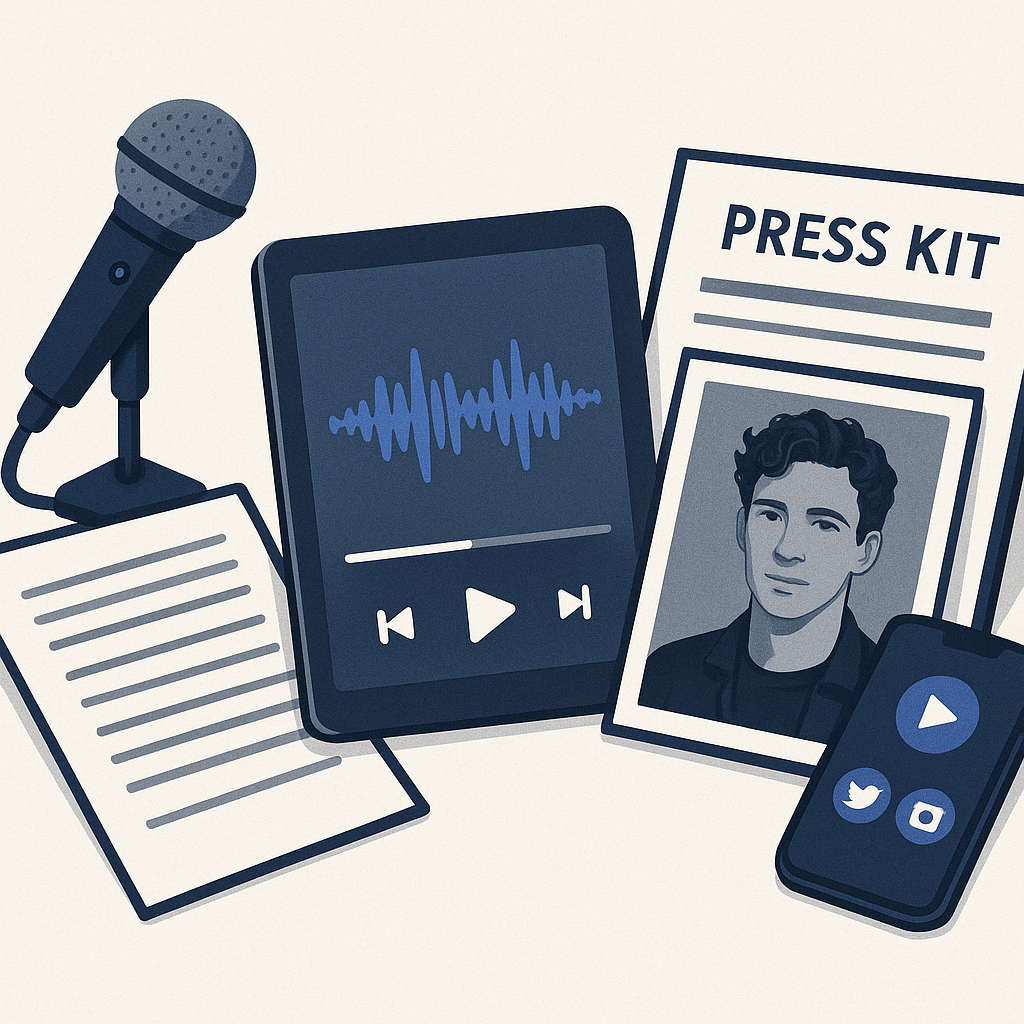
Your press kit is the package that opens doors. Bio, photos, music samples, and any press coverage or reviews — compiled and polished. It is what you send when a booking agent or journalist asks for more information. Have it ready before they ask.
Tools and Platforms for Building Your Music Portfolio
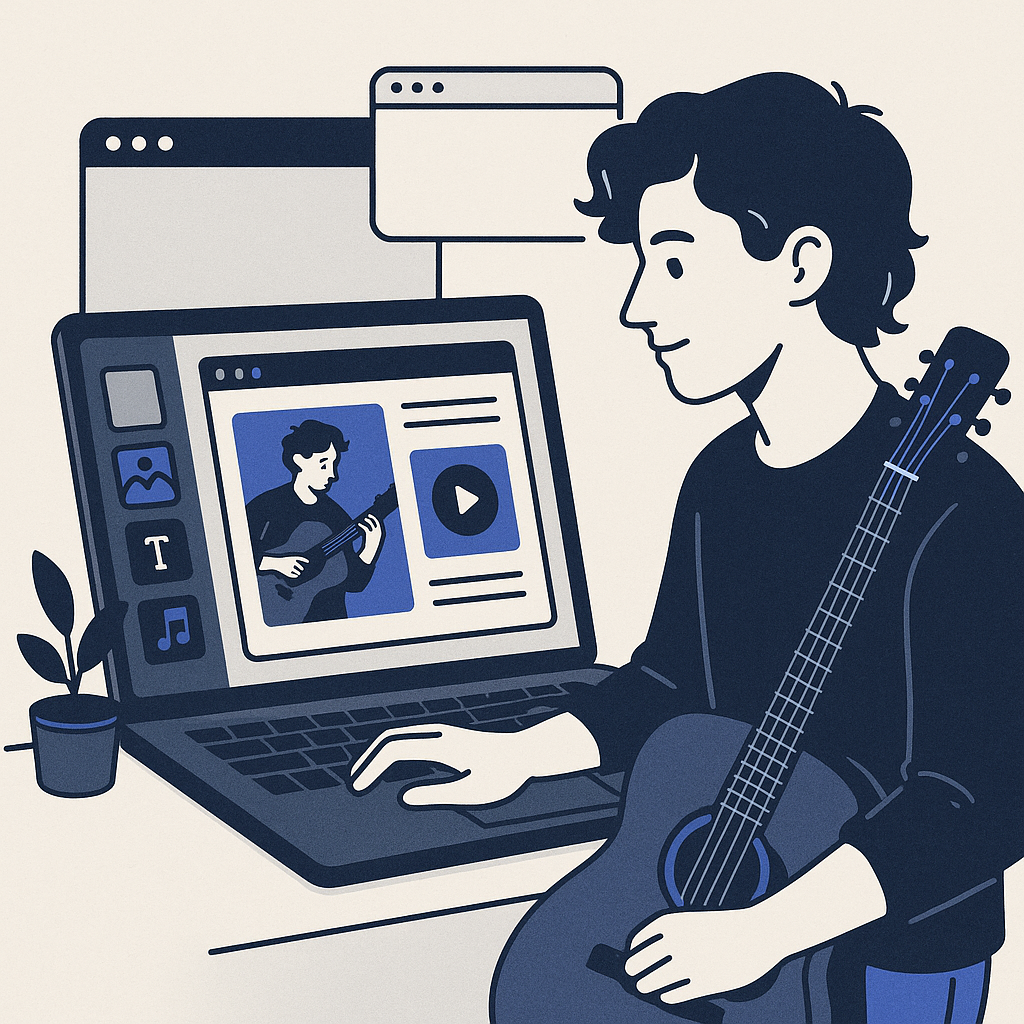
You do not need a development team. The tools exist. You need to choose the right ones and use them with intention.
1. Website Builders
Your portfolio needs a permanent home online that you control. Squarespace and Wix both offer clean, professional templates with no coding required. Basic plans start around $12 per month. That is a low barrier for a permanent, professional presence.
2. Social Media Integration
Connect your social profiles directly to your portfolio. It shows activity, builds credibility, and gives visitors multiple ways to follow your work. Use Buffer to schedule posts consistently without being chained to your phone.
3. Music Distribution Platforms
Your music needs to be everywhere listeners are. DistroKid and TuneCore distribute your tracks across major streaming services efficiently. Wider reach means more organic traffic back to your portfolio and more data on what is resonating.
Step-by-Step Guide to Creating Your Music Portfolio

Here is the sequence. Follow it in order.
- Define Your Brand: Get clear on your artistic identity and what separates you from every other artist in your genre.
- Gather Your Best Work: Select high-quality tracks that demonstrate your range. Quality over quantity, every time.
- Build Your Website: Use a website builder to create a clean, professional site. Include your bio, music, and visuals in a layout that is easy to navigate.
- Assemble Your Press Kit: Compile your bio, photos, and any media coverage into a single polished document ready to send on demand.
- Optimize for Search: Use targeted keywords so the right people find your portfolio through organic traffic. Think about how industry professionals and fans actually search.
- Distribute Your Portfolio: Share it strategically across social media and with industry contacts. Make it easy for the right people to find and share your work.
Actionable Next Steps

The portfolio is built. Now put it to work.
- Show Up in the Right Rooms: Attend industry events, online and offline. Your portfolio is the conversation starter — let it do the heavy lifting.
- Update It Consistently: A stale portfolio signals a stalled career. Add new music, new achievements, and new press coverage on a regular schedule.
- Seek Honest Feedback: Get input from industry professionals who will tell you the truth. Use that data to sharpen what is not working.
Your portfolio is not a finished product. It is a living system that compounds in value as your career grows. For deeper insight into building a sustainable music career, visit TruZillah — a resource built for artists serious about developing a distinct identity and growing their brand with intention.
A strong music portfolio does not happen by accident. It is built deliberately, refined consistently, and deployed strategically. Follow the framework in this guide and you will not just stand out — you will be the artist that industry professionals remember when the right opportunity opens up.
Measuring the Success of Your Music Portfolio
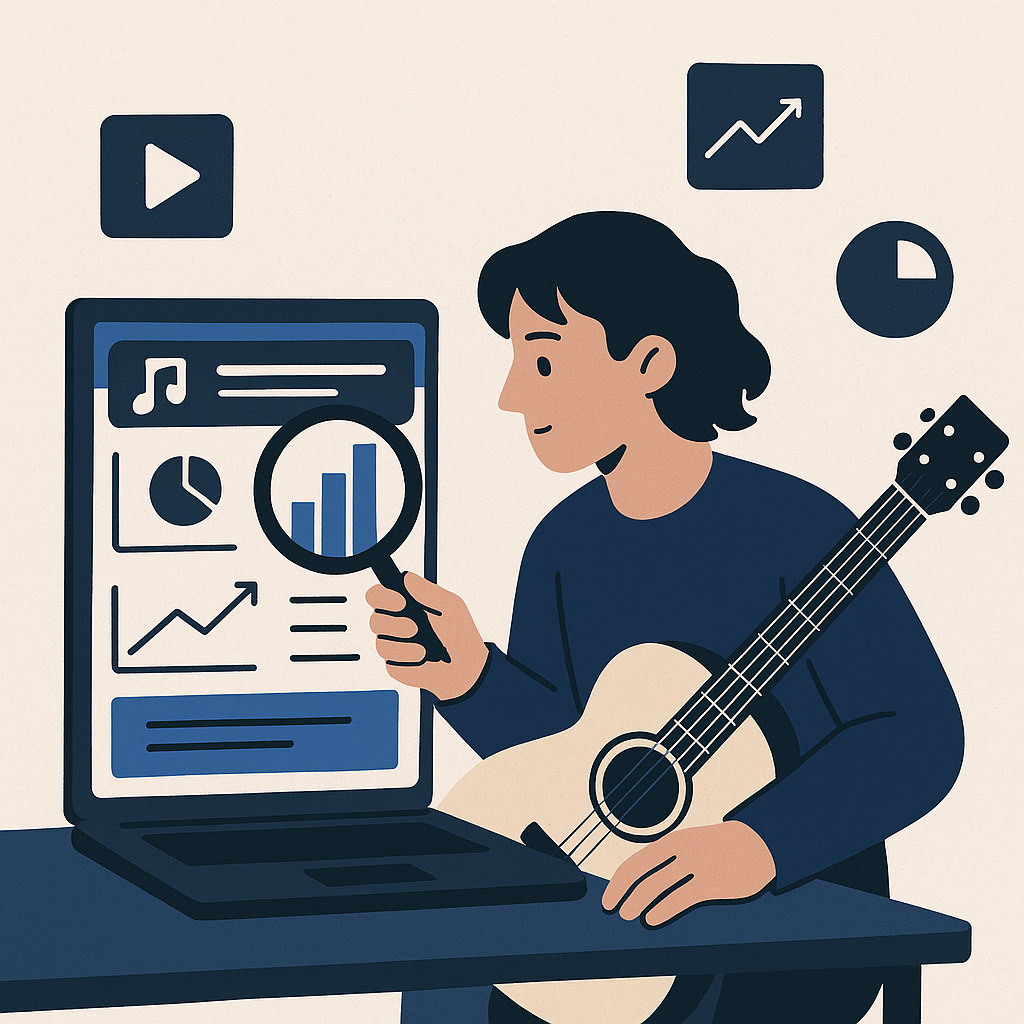
Building the portfolio is step one. Measuring whether it is actually working is step two. Track these metrics with discipline and let the data tell you where to improve.
- Website Traffic: Use Google Analytics to monitor visitor volume and trends over time. Watch how different distribution strategies affect your organic traffic numbers.
- Engagement Rates: Track time on page, click-through rates on music samples, and social shares. These signals tell you whether visitors are genuinely interested or just passing through.
- Conversion Rates: Measure how effectively your portfolio turns visitors into fans or collaborators. Newsletter sign-ups, music downloads, and merchandise sales are concrete indicators.
- Audience Growth: Monitor follower growth across your platforms as a direct result of portfolio activity. Consistent growth confirms your positioning is working.
- Industry Feedback: Qualitative data matters too. Feedback from professionals in your space will surface blind spots that analytics cannot catch.
Case Study: Successful Music Portfolio Implementation
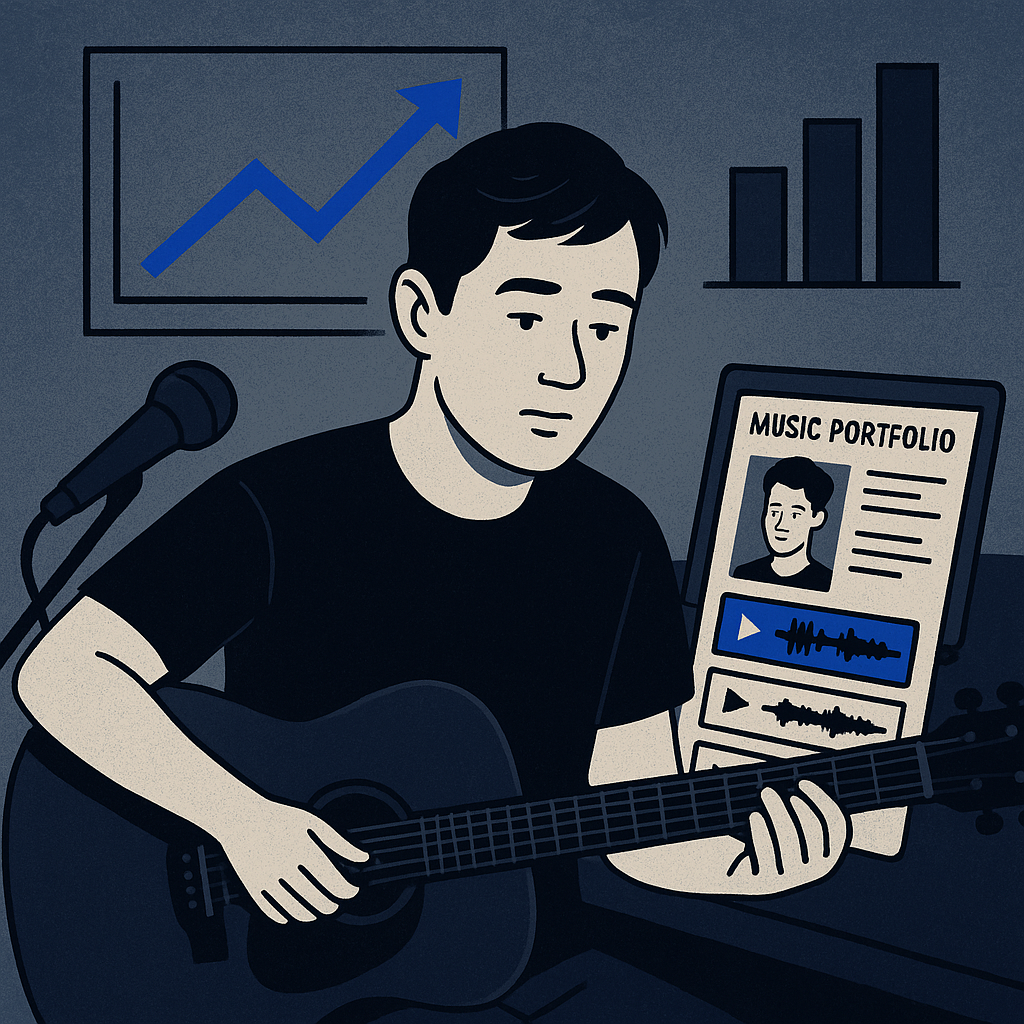
Here is what the framework looks like in practice. Alex Tran, an independent singer-songwriter, was invisible in a saturated market. His portfolio was the problem — and fixing it changed his trajectory.
Initial Challenges
Alex’s portfolio was fragmented. Inconsistent branding, low-quality recordings, and a minimal online presence meant industry professionals had no reason to take him seriously. He was easy to overlook.
Strategic Overhaul
- Professional Branding: Alex worked with a branding expert to build a cohesive artistic identity that carried consistently across every element of his portfolio.
- High-Quality Recordings: He invested in professional studio sessions to re-record his key tracks. The difference in sound quality was immediate and obvious.
- Comprehensive Press Kit: A polished press kit — professional photos, a sharp bio, and curated samples — gave media outlets and booking agents exactly what they needed.
- Social Media Integration: Connecting his social accounts to his portfolio created a unified presence and increased visibility across every platform simultaneously.
Results
Within six months, Alex saw measurable growth in website traffic and social following. Booking agents took notice. Gig opportunities followed. The consistent feedback from industry contacts pointed to one thing: his brand finally looked and sounded like someone worth betting on.
Checklist for a Comprehensive Music Portfolio
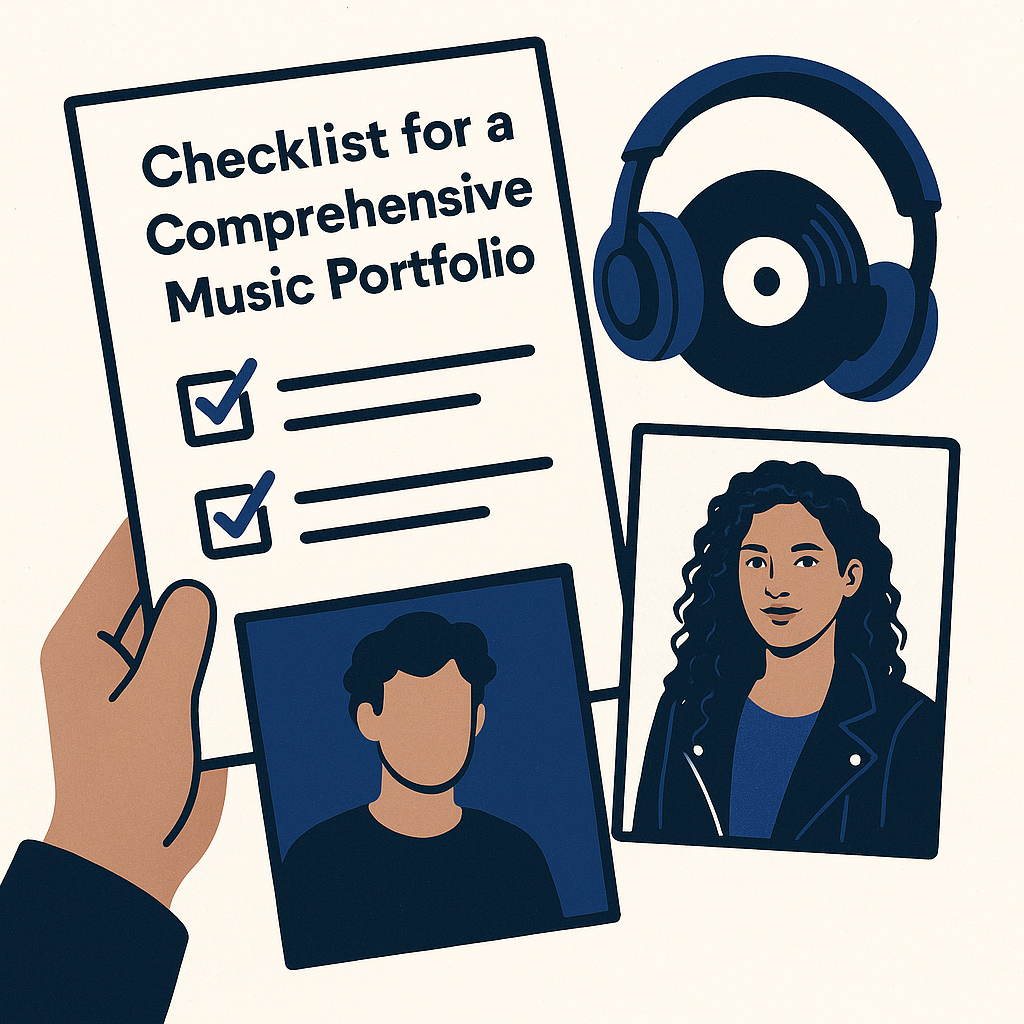
Before you call your portfolio ready, run through this list. Every unchecked item is a gap that costs you credibility.
- ☑ High-quality recordings of your strongest tracks
- ☑ A concise, compelling artist bio
- ☑ Professional photos that reflect your brand identity
- ☑ A complete press kit with any available media coverage
- ☑ A clean, easy-to-navigate portfolio website
- ☑ Seamless integration with your social media accounts
- ☑ A consistent update schedule for new content and achievements
- ☑ Analytics tools in place to track performance and engagement
- ☑ A feedback loop with industry professionals for ongoing refinement
FAQs About Music Portfolios
What should I include in my music portfolio?
High-quality recordings, a sharp artist bio, professional photos, a press kit, and direct links to your social profiles and streaming platforms. Every element should reinforce a single, consistent brand identity. If something does not serve that goal, leave it out.
How often should I update my music portfolio?
At minimum, every quarter. More frequently after significant milestones — a new release, a notable performance, or meaningful press coverage. A portfolio that goes stale signals an artist who has stopped moving forward.
Do I need a professional designer for my portfolio?
Not necessarily. Modern website builders with quality templates can produce a professional result without a designer’s fee. If budget is tight, start there. As your career scales, investing in professional design becomes a worthwhile upgrade — but it should never be the reason you delay launching.

Leave a Reply