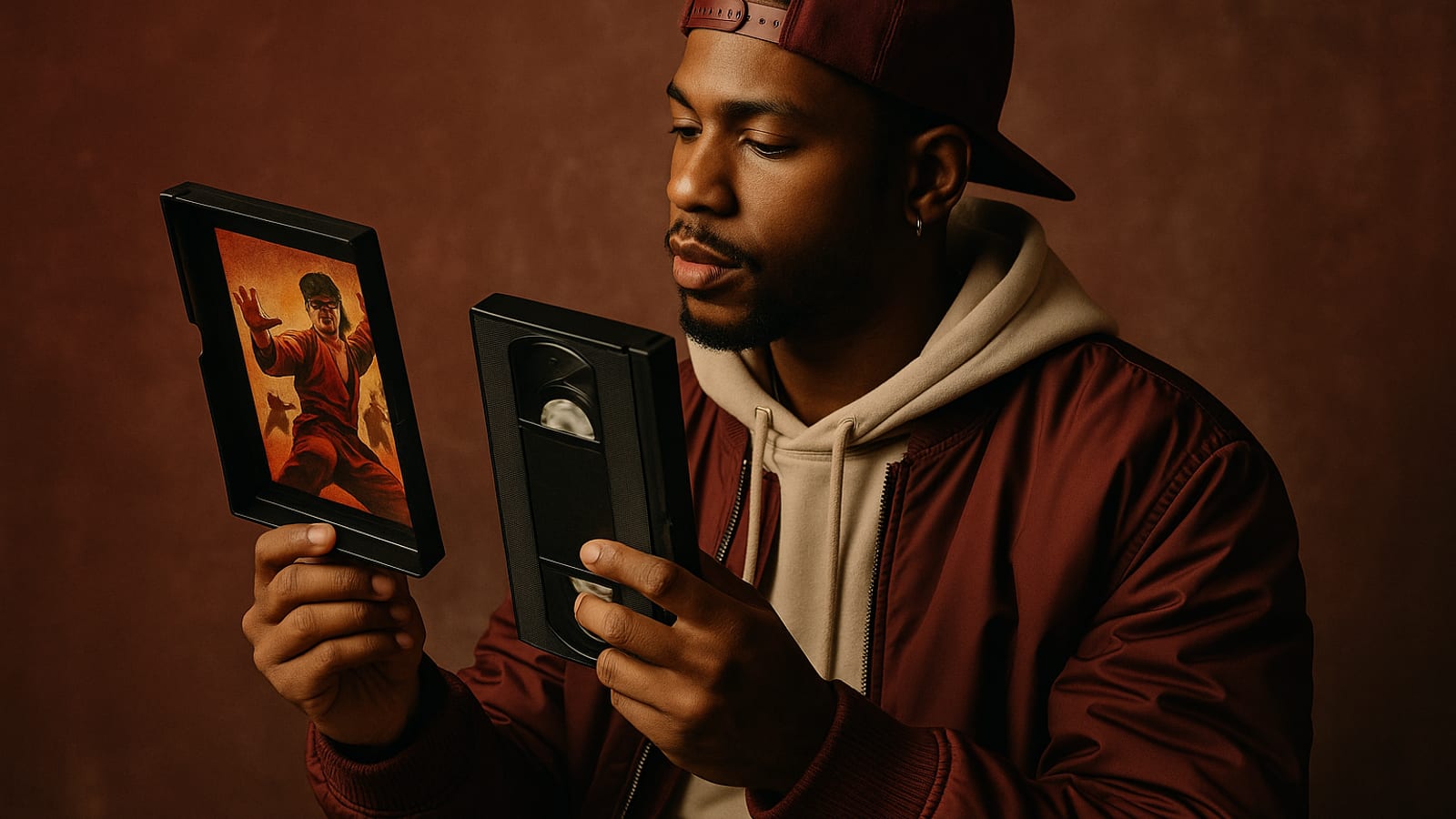
The Influence of Kung Fu B-Movies on Hip-Hop Culture
From VHS to Digital: The Journey of Kung Fu B-Movies in Hip-Hop Culture
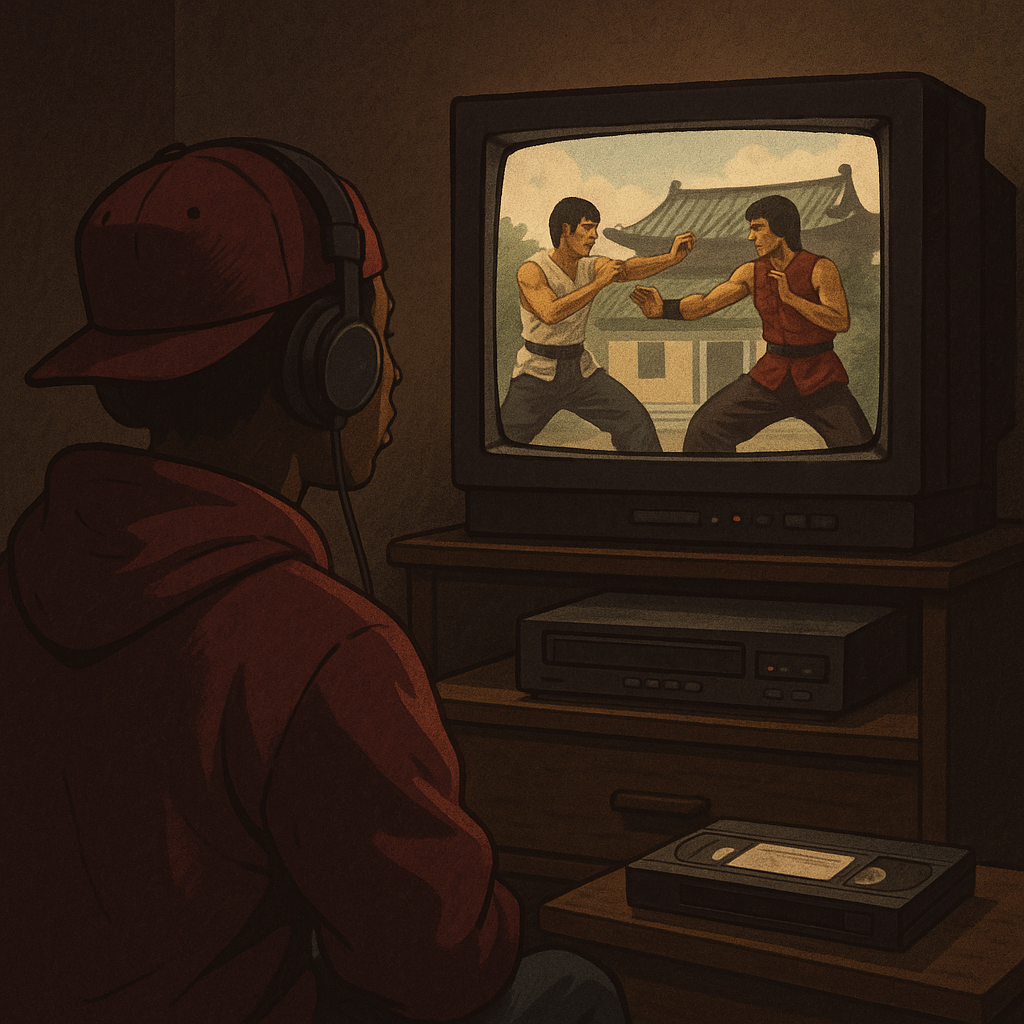
Picture the room. The TV is small, the tracking is slightly off, the dubbed audio hits about a half-second after the mouth moves. None of that matters. The fight is happening, and you are not going anywhere. That was the deal with kung fu films on VHS — the format was imperfect and the experience was total. What I want to trace here is how those tapes moved through a generation, found their way into hip-hop, and why the whole lineage is still very much alive now that the films have made it to digital.
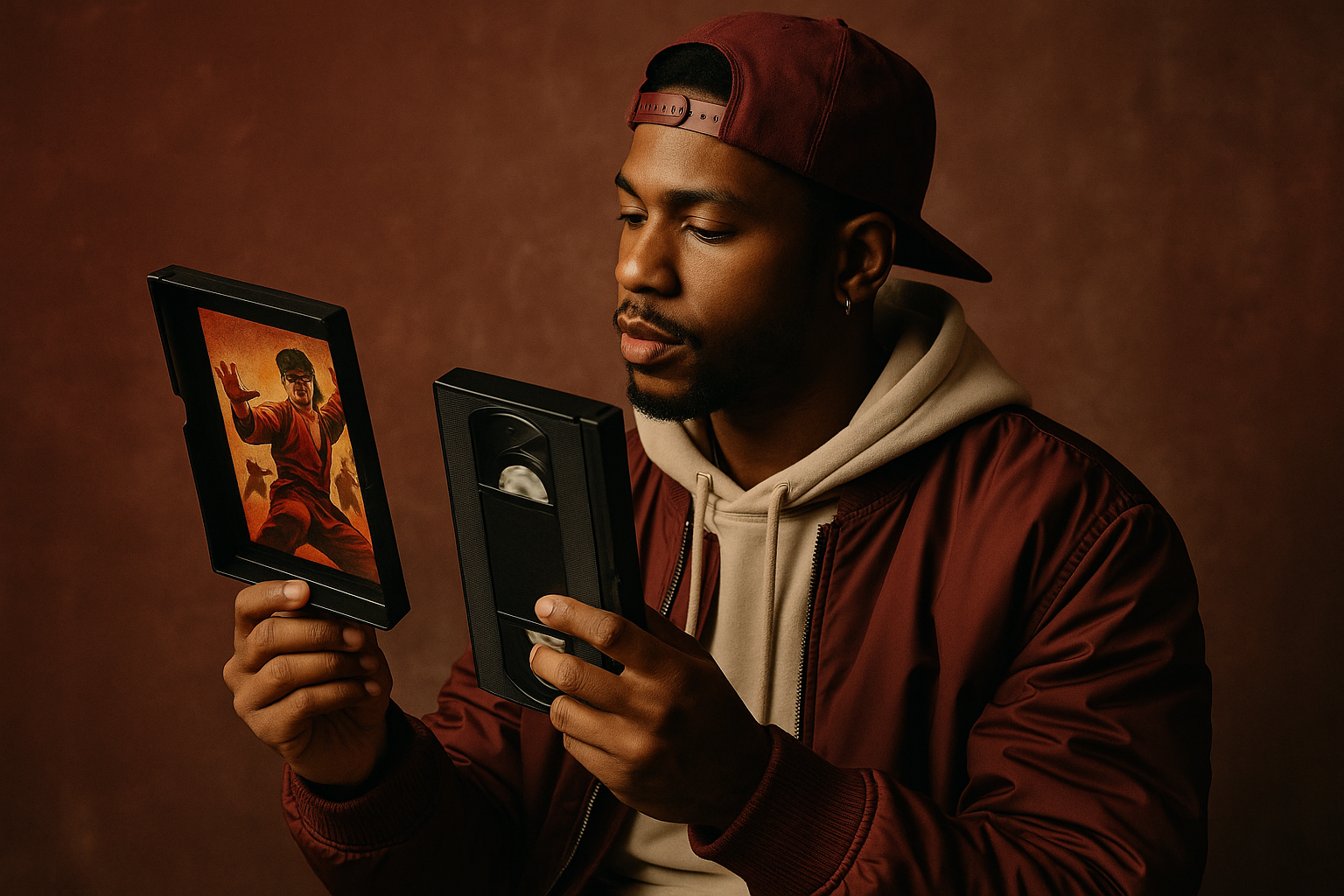
The Tape That Started Everything
Shaw Brothers was running a full production machine through the 1960s and 1970s, turning out films at a pace that Hollywood could not match and would not have known how to. Those films made it onto VHS and into rental shops, flea markets, and living rooms across the United States, often in neighborhoods that had no particular reason to expect them. The choreography and stunt work in those movies were operating at a level that had no equivalent in American cinema at the time, and the people who found them knew it immediately.
The grindhouse circuit had already introduced some of these films to theater audiences, but VHS democratized the whole thing. You did not need to live near a repertory cinema. You needed a player and someone who knew where to look. For a lot of us, that someone was an older sibling, a cousin, a neighbor with a crate of tapes. The films carried a lineage — of training, of form, of craft — and that came through even on a worn-out copy with a cracked case.
Two Disciplines, One Frequency
Hip-hop was building itself out of the same kinds of spaces where those tapes were circulating. That is not a coincidence. Both kung fu cinema and early hip-hop were made by and for people who were not being handed resources, and both put an enormous premium on what a body could do with discipline and repetition. The connection was felt before it was articulated.
The Wu-Tang Clan made it explicit. They built their entire identity around the philosophy and imagery of martial arts cinema, and they were not being ironic about it. RZA understood the films deeply — the codes inside them, the way honor and betrayal and mastery worked as themes. When hip-hop artists sampled dialogue or lifted imagery from these movies, they were paying real respect to a craft that had shaped how they thought about their own art. The exchange ran both directions: martial arts informed the music, and the music sent new audiences back to the films.
What Restoration Actually Gives You
Streaming platforms and digital restoration have changed what it is possible to see. When a film like Five Deadly Venoms gets a proper restoration, you are not just getting a cleaner image. You are getting the choreography back. VHS compression and tape degradation ate detail — the footwork, the spacing between performers, the way a sequence was timed. A restored version lets you watch the stunt work the way it was meant to be watched, and that matters enormously for understanding what these performers actually did.
For hip-hop artists and fans who grew up on the degraded versions, seeing the films in restoration can feel like hearing a record properly mastered for the first time. The bones were always there. Now you can see every one of them. Specialized streaming services and Blu-ray releases have made this possible, and the community around these films has grown because of it.
Why the Fight Lands the Way It Does
The fights in these films work because of where the performers came from. Many of them trained in Peking opera from childhood — a system that is genuinely brutal, that demands physical precision over years before it gives you anything back. That training shows up on screen in ways that editing cannot fake. These films relied on long takes and minimal cuts because the performers could hold the sequence. The camera did not need to rescue them.
That is a fundamentally different approach from Hollywood action, where editing has historically done a significant portion of the work. When you watch a Shaw Brothers fight and the camera stays wide and the cut does not come, that is not a stylistic choice made in the editing room. That is a performer who was trained to make the cut unnecessary. Recognizing that changes how you watch every fight scene you will ever see again.
Where to Find the Films
If you are coming to this fresh, the Criterion Channel has a strong curated collection. Amazon offers digital purchase and rental options for a wide range of titles. For collectors, Blu-ray releases of restored Shaw Brothers films are worth tracking down — the bonus content on some of them is genuinely valuable for understanding the craft and the era.
Old School Shaolin and Wu exists specifically for people who want to go deeper. It is a community built for martial arts cinema enthusiasts at every level, where newcomers and longtime obsessives can talk about the films seriously and find their next watch. Nobody there is going to make you feel like you asked a wrong question.
The Next Film Is Already Waiting
The journey from VHS to digital has not diminished these films. If anything, it has clarified them. The choreography is sharper, the stunt work is visible in full, and the lineage they carry is easier to trace and share than it has ever been. There are performers in this canon who still have not received the attention their craft deserves, and there are films that have been underrated for decades simply because the format they lived on could not do them justice.
So whether you are returning to something you watched as a kid or walking into this world for the first time, the next film is already out there. It might be a classic you have been putting off or something genuinely obscure that nobody in your circle has seen. Either way, the craft holds up. It was built to.
For more on the intersection of film and culture, check out our blog for insights and discussions.
Bringing Kung Fu Cinema Into Hip-Hop Work: Approaches That Actually Hold Up
For hip-hop artists who want to work seriously with kung fu cinema rather than just gesture at it, the films reward close attention. Here are approaches that treat the source material with the respect it has earned.
- Sampling and Sound Design: The soundtracks and dialogue from these films carry real weight. When you are selecting audio to sample, go for moments that capture the drama of the fight or the philosophy behind it — not just the surface spectacle. The best samples feel like they were always meant to live inside a beat.
- Visual Storytelling: Working with choreographers who know the form to design sequences for music videos is a different commitment than throwing in a reference. When it is done with care, the movement carries meaning. When it is not, the audience can tell.
- Lyricism and Metaphor: The discipline and philosophy inside these films — the years of training, the cost of mastery, the weight of lineage — translate directly into hip-hop lyricism. Artists who have done this well are not borrowing aesthetics. They are drawing on something they actually understand.
- Fashion and Aesthetics: The visual language of kung fu cinema has influenced hip-hop style in ways that go well beyond costume. When it shows up in cover art, stage design, or merchandise, the strongest versions are the ones where the artist clearly knows the films they are referencing.
A Practical Guide for Artists Starting This Work
If you are ready to build something that takes this connection seriously, here is a straightforward process for doing it with intention.
- Watch Widely First: Before you commit to a theme or a reference, watch broadly across the genre. Shaw Brothers alone gives you decades of material. Take notes on what actually moves you, not just what you recognize from other people’s work.
- Find Your Specific Angle: The hero’s journey, the cost of mastery, betrayal within a lineage — these films are full of themes that carry real weight in hip-hop. Pick the one that connects to what you are actually trying to say.
- Build a Reference Collection: Images, sound clips, film sequences — gather the material that captures your chosen themes in one place. This keeps your project grounded when you are deep in production and losing the thread.
- Bring in People Who Know Both Worlds: Sound engineers, directors, and choreographers who understand both hip-hop and martial arts cinema will catch things you miss and push the work further than you can get alone.
- Produce and Refine with the Source in Mind: Keep returning to the films as you build. The integration should feel earned, not decorative. If a kung fu element is not doing real work in your project, it probably does not belong there.
- Share It with Both Communities: Hip-hop audiences and martial arts cinema communities overlap more than people assume. Putting your work in front of both gives you feedback that makes the next project stronger.
Questions People Actually Ask About This
Here are some of the questions that come up most often when artists and fans start exploring this intersection seriously.
- What films should I start with?
The 36th Chamber of Shaolin, Enter the Dragon, and Five Deadly Venoms are the foundational three for understanding why this lineage matters to hip-hop. Start there and let each film point you toward the next one. - How do I handle samples legally?
Clear everything. Obtain the appropriate licenses or permissions from rights holders before the project is finished, not after. This is not optional and the process is worth understanding early. - Can modern production tools help with this kind of integration?
Absolutely. Digital audio workstations and video editing software give you real precision when you are working with film elements. The tools are good. What matters is knowing the source material well enough to use them with intention. - What does social media do for this kind of work?
It connects you to communities that are already having these conversations. It also lets you find collaborators who care about both sides of this exchange, which is where the most interesting work tends to come from.

Leave a Reply