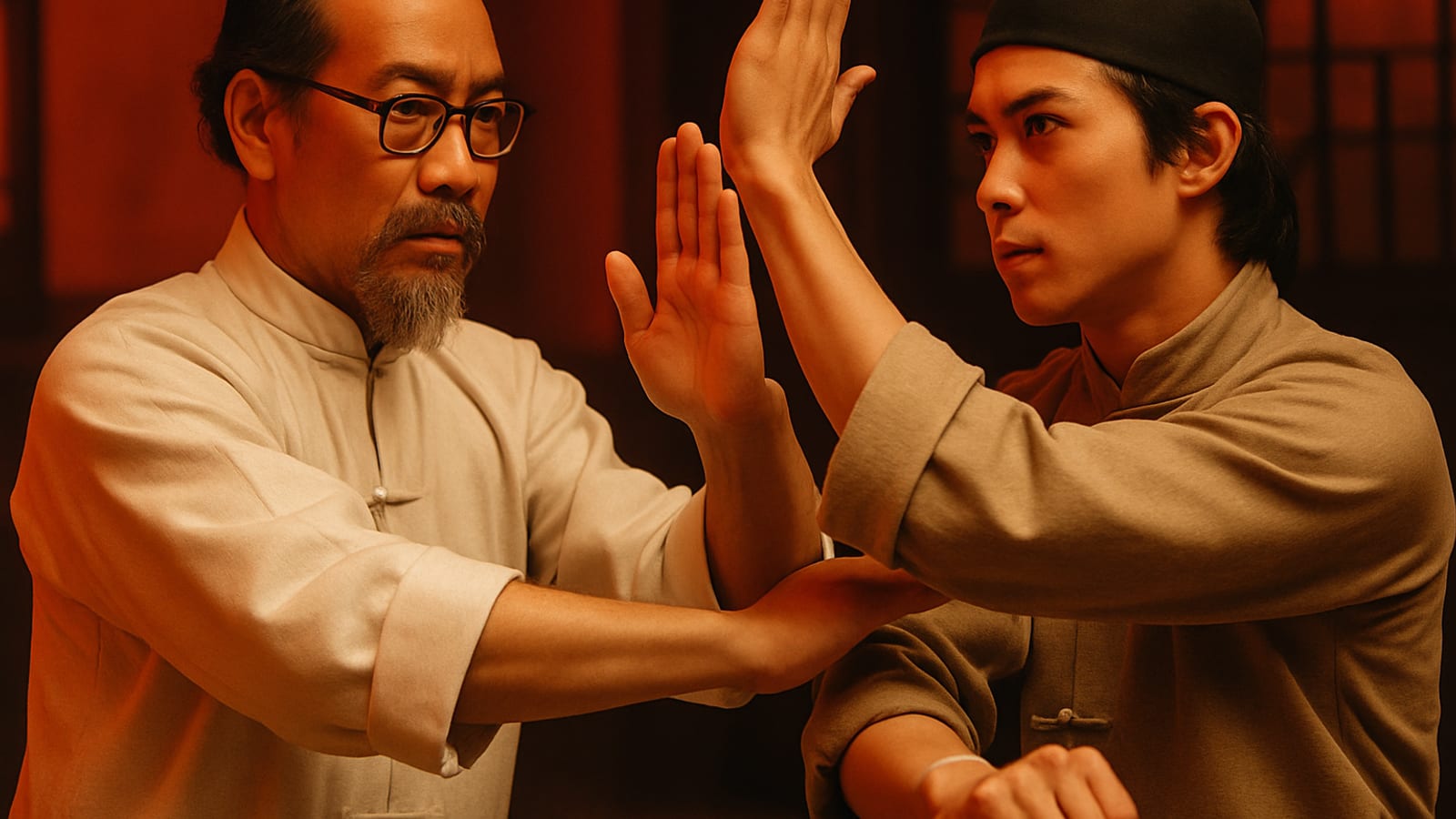
Understanding the Depth of “Dirty Ho”: More Than Just a Comedy
Why Dirty Ho Got Dismissed as a Comedy When It’s Actually a Textbook
Dirty Ho looks like a joke. It is a 1979 Shaw Brothers film where Lau Kar-leung’s character spends half the runtime pretending to be drunk and incompetent, and every stumble and pratfall is a Wing Chun lesson that most viewers have been laughing past for forty years. Shaw Brothers knew how to move product, and packaging martial arts inside a comedic wrapper brought in audiences who might have walked past a straight action film. That was smart business. What nobody warned those audiences about was that they were also sitting through a masterclass, and most of them never noticed.
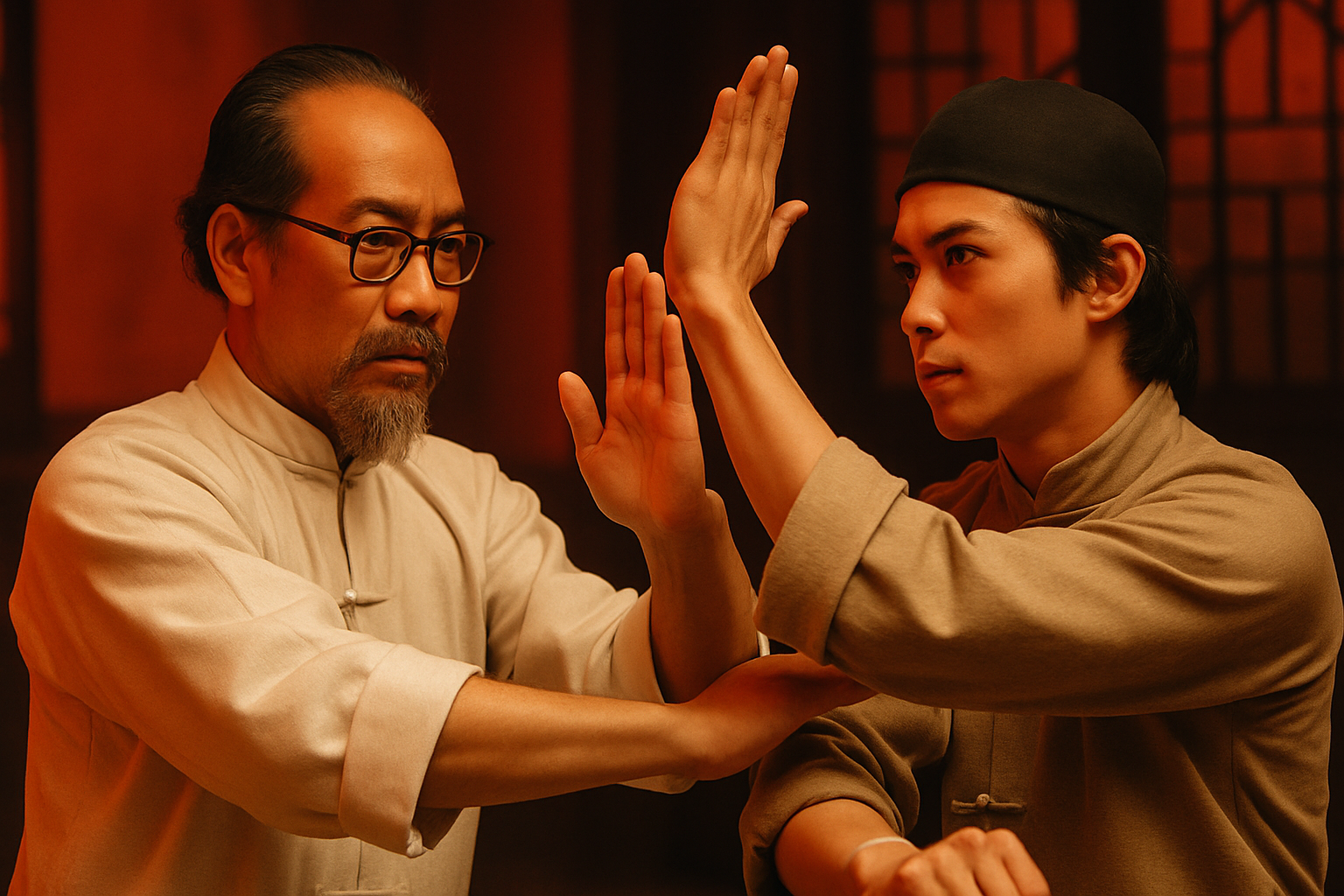
Lau Kar-leung came up through a lineage that traced directly back to the southern kung fu traditions his father carried. He was not a choreographer who learned forms from a book. He was the real thing, and his filmography reflects that in ways that reward close attention. Dirty Ho can look like an outlier in that body of work, a detour into broad comedy, but that reading misses the point entirely.
The drunk master routine is not a comedic device with some technique accidentally attached to it. It is a strategic cover. Lau uses the character’s apparent incompetence to demonstrate Wing Chun principles in motion without ever stopping to announce what he is doing. When the comedy is all you see, the craft disappears. That is exactly what he was counting on, and it is exactly what most audiences delivered.
The Wing Chun Principles Hidden in the ‘Slapstick’ Sequences
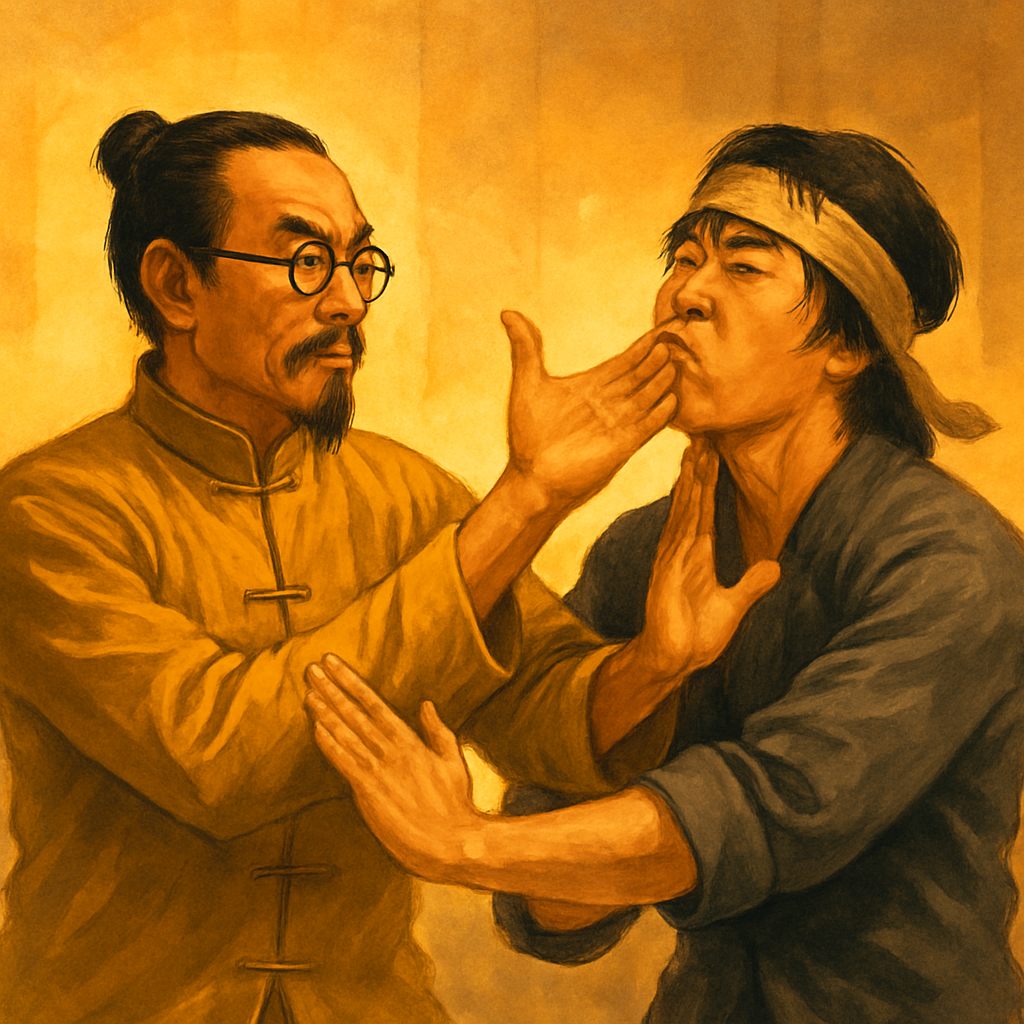
Watch the choreography in Dirty Ho with the comedy muted in your head, and what you find underneath is meticulous. The film’s early tavern scenes are where Lau first lays out his argument. His character holds the centerline through every exchange, keeping attacks and defenses along the most direct path to the opponent. That is not accidental framing. Centerline theory is foundational to Wing Chun, and Lau is demonstrating it in real time while the audience is busy laughing at his stumbling entrance.
Economy of motion runs through every sequence. Even when the character appears to be flailing, Lau never overextends. The movements are precise and contained, conserving energy while landing with maximum effect. This is not the big, sweeping stunt work you see in wuxia films from the same period. It is the opposite of that, and the contrast is the whole point.
Footwork is the element that most casual viewers miss entirely. Lau’s character looks off-balance by design, but his feet are always exactly where they need to be. He absorbs and redirects his opponents’ momentum rather than meeting force with force. That is Wing Chun strategy applied in a live fight, dressed up as a pratfall so nobody calls it a lecture.
Lau Kar-leung’s Teaching Method: Why He Chose to Hide the Lesson
Lau Kar-leung understood something that a lot of martial arts filmmakers did not. If you stop the film to explain what you are showing, you lose the audience and you lose the art. The lesson lands harder when the viewer discovers it themselves, or when a practitioner in the theater recognizes a form mid-sequence and has to sit with that recognition quietly while everyone else laughs.
His approach across his entire filmography is to show rather than explain. Technique is demonstrated, not narrated. This is consistent with how traditional martial arts knowledge was passed down, through repetition and observation rather than written instruction. Lau brought that pedagogy into the cinema without translating it into something more palatable for people who wanted everything spelled out.
Dirty Ho fits this pattern completely. The film speaks two languages at once. For the general audience it is an entertaining Shaw Brothers comedy with strong fight sequences. For anyone who trained, or who watches the choreography with real attention, it is a structured demonstration of Wing Chun principles organized around a narrative that keeps the uninitiated from getting bored. Both audiences are being served. Only one of them knows it.
Frame-by-Frame: Three Sequences That Prove the Point
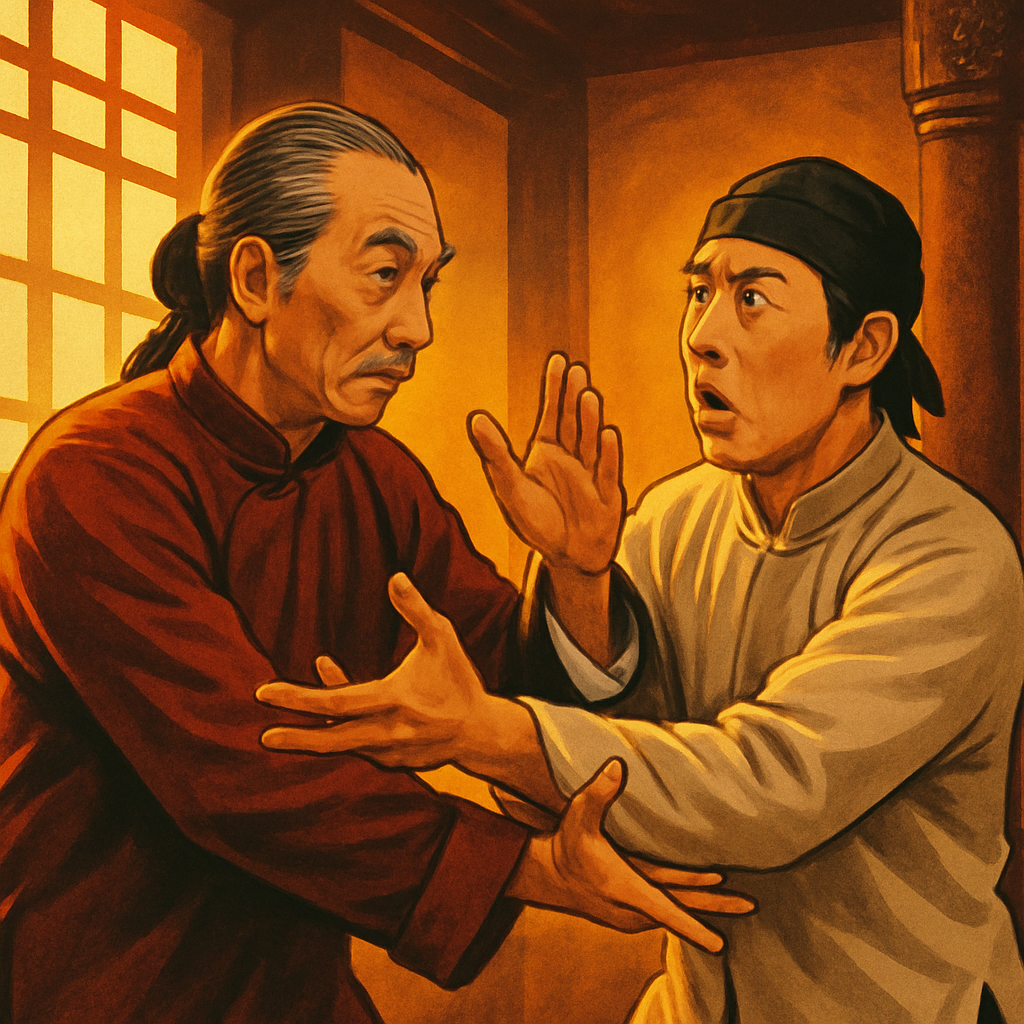
The first major fight is where Lau establishes the argument. What reads as clumsiness is controlled positioning. He is manipulating the space around him and steering his opponents into disadvantageous angles, using the environment the way Wing Chun uses the centerline, as a tool for controlling the geometry of the fight. The apparent chaos is organized. Watch it again and track where his weight is at every moment.
The mid-film confrontation puts Lau’s character against a larger opponent, and this is where Wing Chun’s logic becomes undeniable. He does not try to match size or strength. He works close, redirects incoming force, and uses short strikes that do not require room to generate power. This is the system doing exactly what it was designed to do, and Lau is performing it at a level that holds up to frame-by-frame analysis.
The final sequence is where everything taught throughout the film arrives together. The character drops the pretense and the full form is visible. Every technique that appeared earlier in disguise now shows itself clearly. Lau structured the whole film to build toward this moment, which means Dirty Ho has a pedagogical arc. It is not a collection of fight scenes. It is a course with a final exam.
What This Means for How We Watch Lau Kar-leung’s Other Films
Once you see what Lau is doing in Dirty Ho, you cannot unsee it in the rest of his work. His films consistently embed martial instruction inside their narratives, and the instruction is always serious even when the tone is not. This is a filmmaker who believed the craft deserved to be preserved and transmitted, and who used the commercial machinery of Shaw Brothers to do it.
The 36th Chamber of Shaolin rewards exactly this kind of attention. Understanding that Lau approaches his films as a practitioner first and a director second changes what you notice in every sequence. Younger viewers coming to his work through streaming need this context. Without it, they are watching the surface and missing the lineage underneath.
For anyone who wants to find Dirty Ho and see it properly, Old School Shaolin and Wu recommends Where to Watch Lau Kar-leung’s Directorial Catalog in 2024: A Complete Streaming and Import Guide as a good place to start. Go back to the film with this framework in mind. You will watch a completely different movie, and you will understand why Lau Kar-leung belongs in any serious conversation about martial arts cinema.
Case Study: The Influence of Dirty Ho on Modern Martial Arts Choreography
The approach Lau established in Dirty Ho, embedding authentic technique inside comedic framing, did not stay inside the Shaw Brothers catalog. It became a template that later choreographers and directors returned to, sometimes consciously and sometimes because the logic of it is just sound filmmaking.
Stephen Chow’s Kung Fu Hustle is the most direct line of descent. Chow has spoken openly about the influence of classic martial arts films on his work, and the structure of Kung Fu Hustle reflects it. The exaggerated comedy and the precisely choreographed fight sequences are not in tension with each other. They are doing the same thing Lau was doing, using humor as a delivery mechanism for stunt work and form that would otherwise feel too formal for a mainstream audience.
Edgar Wright’s Scott Pilgrim vs. the World applies a version of the same logic in a Western context. The fights are played for laughs, but the choreography underneath them is grounded and specific. The comedy softens the delivery without diluting the craft. That balance is harder to achieve than it looks, and Dirty Ho is one of the clearest early models for how to do it.
Television picked this up too. Into the Badlands built entire seasons around the idea that authentic martial arts choreography and genre entertainment are not competing interests. The choreographers working on that series were drawing from a tradition that Lau helped define, whether or not his name came up in the production meetings.
A Viewer’s Checklist for Finding the Hidden Lesson in the Fight
If you want to start watching martial arts films this way, here is what to look for. These are not complicated questions. They just require slowing down and watching the choreography instead of the plot.
- Track the character’s movements precisely: Is there economy of motion? Are they maintaining balance and centerline control even when the scene is playing for laughs?
- Ask what the comedy is covering: When a sequence goes broad, consider whether the humor is masking a technical demonstration that would otherwise be too obvious.
- Watch the footwork: Footwork is where the real information lives. How a character positions themselves relative to an opponent tells you more than the strikes do.
- Look for strategic adaptation: Does the character adjust their approach based on the opponent’s size, speed, or style? That adaptation is the system showing itself.
- Know the director’s lineage: A filmmaker who trained seriously will embed that training in their work. Understanding their background tells you where to look.
FAQs: Understanding Wing Chun in Film
These questions come up a lot, and they are worth answering directly.
- Q: Why does Wing Chun show up so often in martial arts films?
A: The system is built around efficiency and close-range control, which reads clearly on camera. Its principles translate well into choreography because they are visually distinct and technically specific. - Q: How do you recognize Wing Chun technique when you see it?
A: Look for close-range combat, centerline control, and movements that redirect an opponent’s force rather than absorbing it. The strikes tend to be short and direct rather than wide and sweeping. - Q: Are the techniques shown in these films actually practical?
A: The underlying principles are real and come from genuine martial arts tradition. Films dramatize for effect, but the foundation is sound. Watching is not a substitute for training, but it is not worthless either, especially when the choreographer is someone like Lau Kar-leung.
Key Things to Track When Studying Martial Arts Through Film
If you are serious about using films like Dirty Ho as a study tool, measure your progress against these markers.
- Technical recognition: Can you identify specific techniques and strategies as they appear in a sequence?
- Conceptual understanding: Do you understand the principles behind what you are seeing, not just the moves themselves?
- Practical application: Are the things you observe informing how you think about your own training?
- Analytical attention: Are you getting better at reading choreography as a structured argument rather than a series of impressive moments?
- Sustained engagement: The best sign is that the films get more interesting the more you know. If Dirty Ho rewards a third watch more than a first, you are on the right track.

Leave a Reply