The Influence of Shaw Brothers on Fist of the North Star
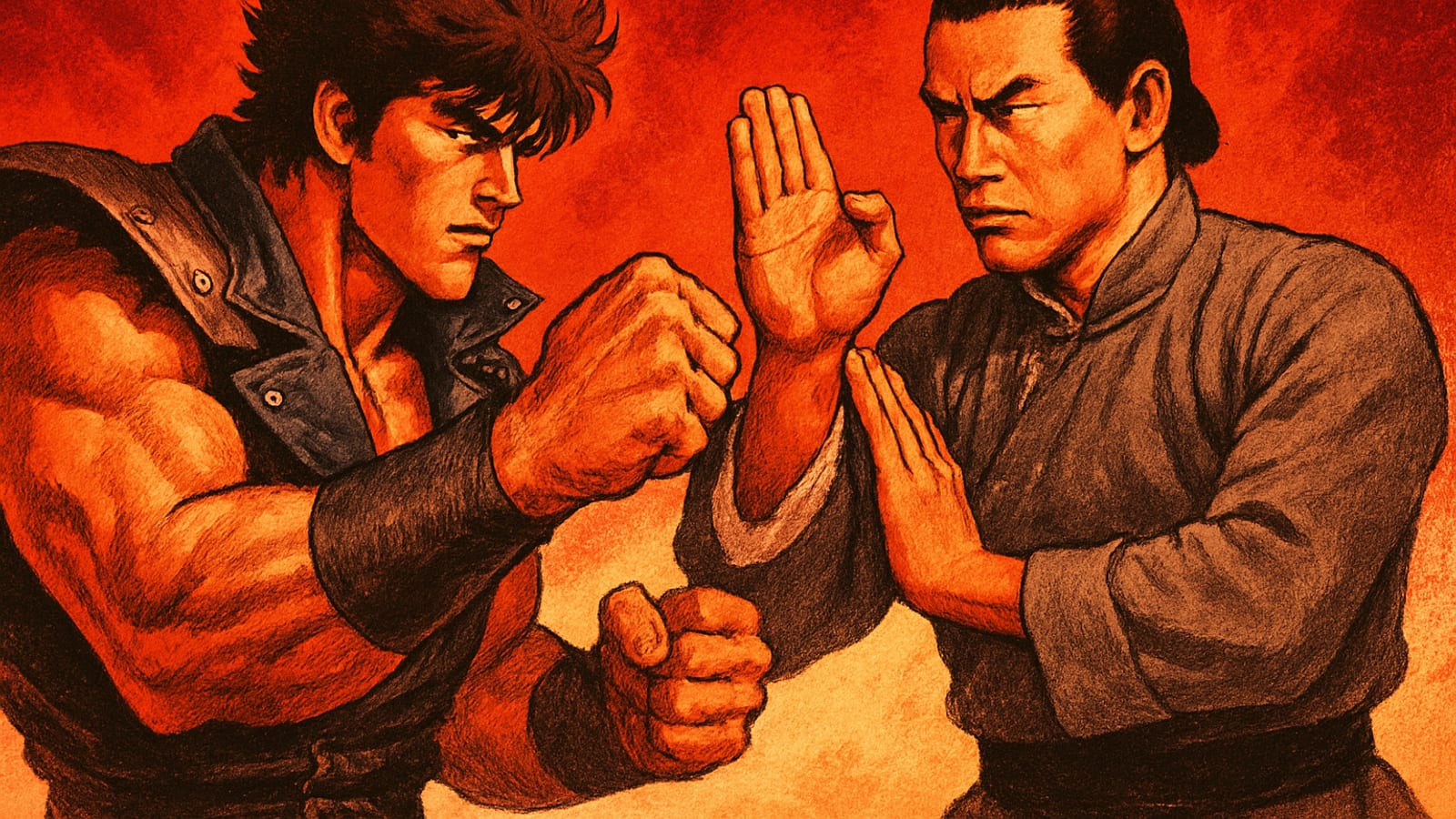
When Kenshiro’s fingers pierce through an opponent’s body in the 1986 Fist of the North Star film, the camera holds. It doesn’t cut away. It sits there the same way Chang Cheh’s cameraman would linger on a sword wound—still, brutal, letting your mind finish what the frame started. This is a prime example of the Fist of the North Star kung fu cinema influence that Shaw Brothers had on the film.
Shaw Brothers as the Grammar of Screen Fighting
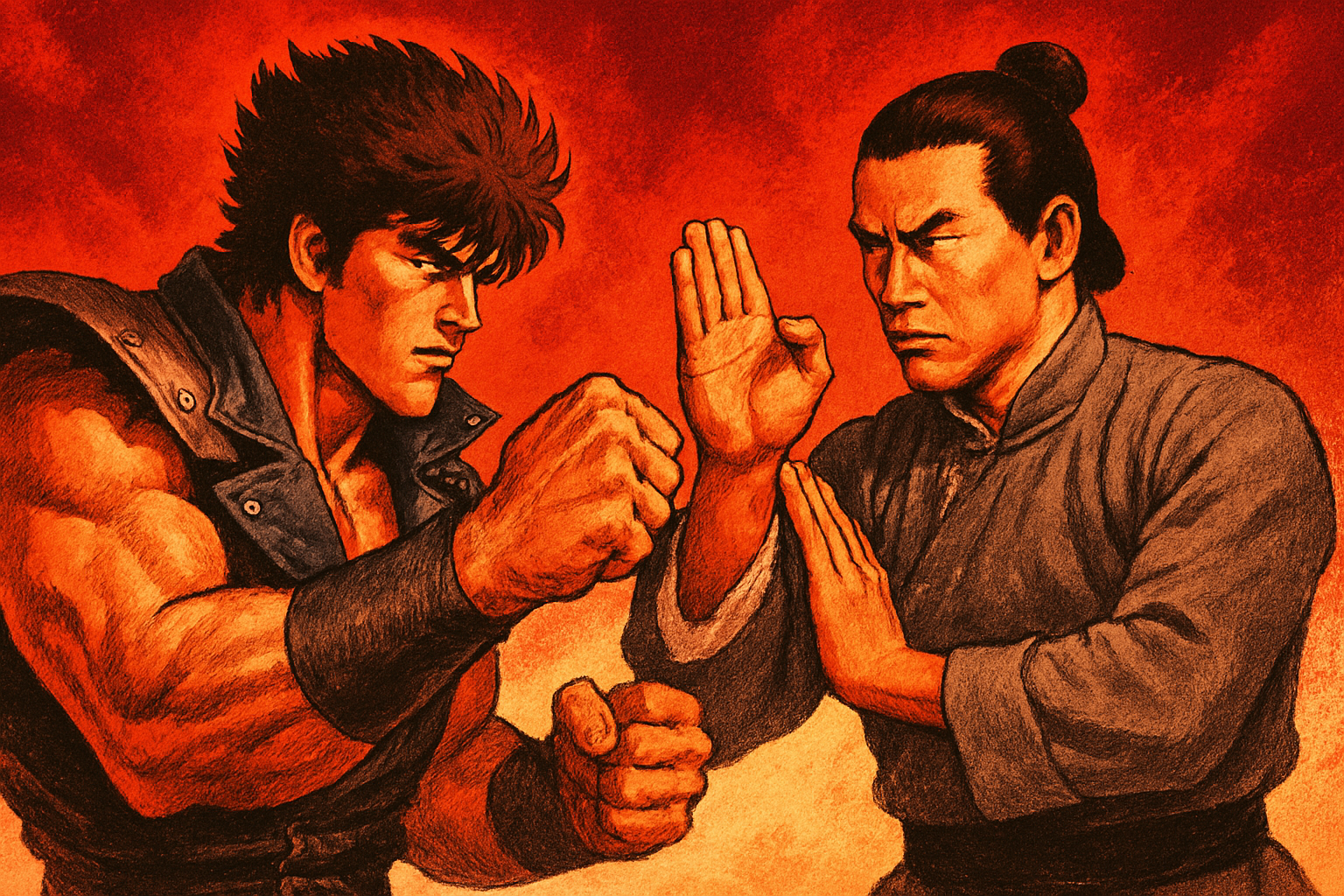
The Shaw Brothers weren’t just making martial arts movies. They were building a language—a system for how screen violence should feel, how it should breathe, how it should land. Chang Cheh was central to that. His use of close-ups and stillness wasn’t a stylistic flourish; it was a deliberate choice to make the audience feel the weight of every blow. Hold the camera on a fighter’s face. Hold it on the wound. Let the silence do the work that a dozen cuts never could.
Where Hollywood was already chasing speed and fragmentation, the Shaw Brothers editing rhythm was patient and precise. The choreography was the point, and the framing existed to serve it. That system translated across mediums in ways nobody fully mapped at the time, offering a blueprint that anime directors would eventually follow whether they knew it or not. For anyone who wants to understand where that lineage runs, Chan Wai-man’s fighting style is one of the clearest places to start looking.
The 1986 Film’s Debt to Specific Shaw Choreographers
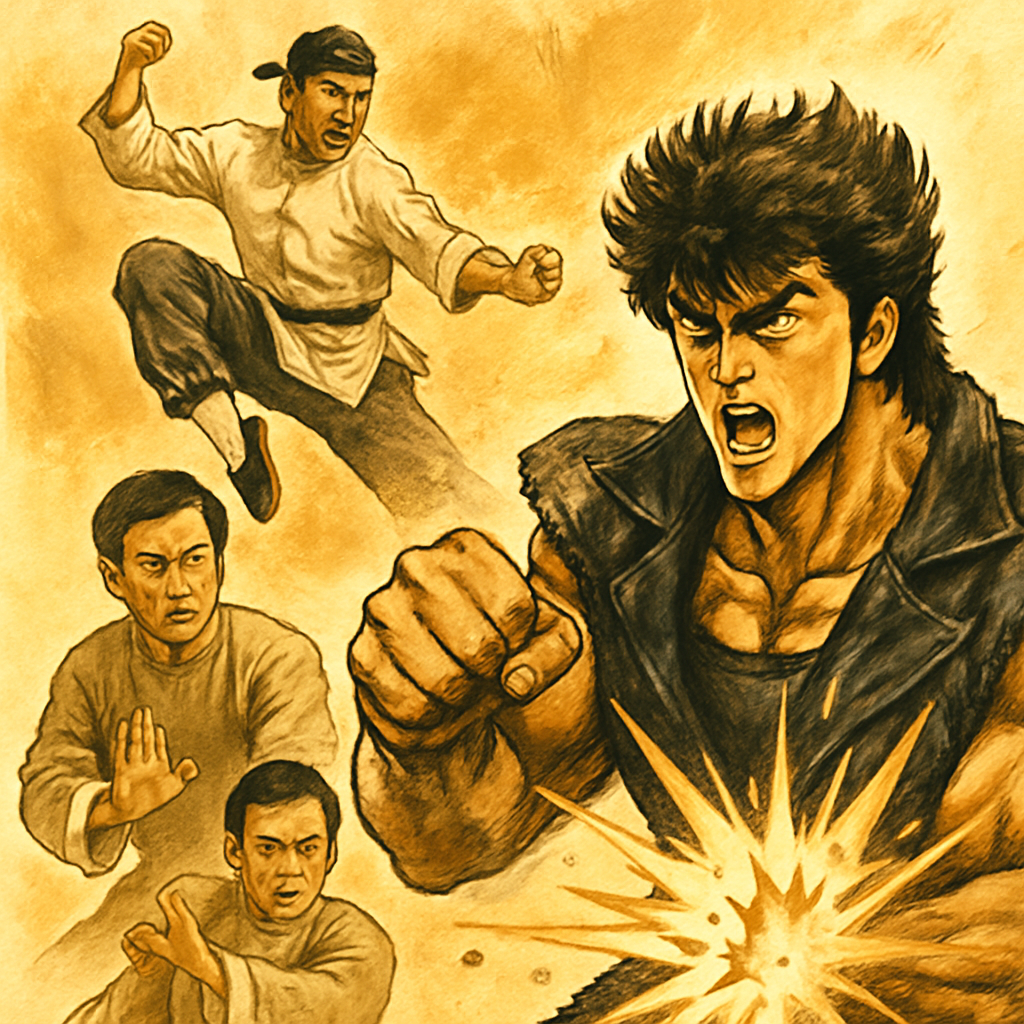
The 1986 Fist of the North Star adaptation carries the fingerprints of Shaw Brothers choreographers in ways that reward close attention. The influence of Lau Kar-leung and Tang Chia is visible throughout the fight sequences. Lau Kar-leung spent his career insisting on authentic martial arts form—real stances, real transitions, real weight behind every technique. Tang Chia brought a gift for constructing sequences that were visually arresting without sacrificing that authenticity. Both qualities show up in how the anime handles combat.
Director Toyoo Ashida studied martial arts films extensively, and the Shaw Brothers catalog was part of that education. What he absorbed wasn’t surface detail. It was the underlying logic of how a fight should be structured—the pacing, the stillness, the moment where everything stops before everything breaks. That gravity is what separates the 1986 film from lesser animated action of the same era.
Impact Timing: The Shaw Secret That Anime Inherited
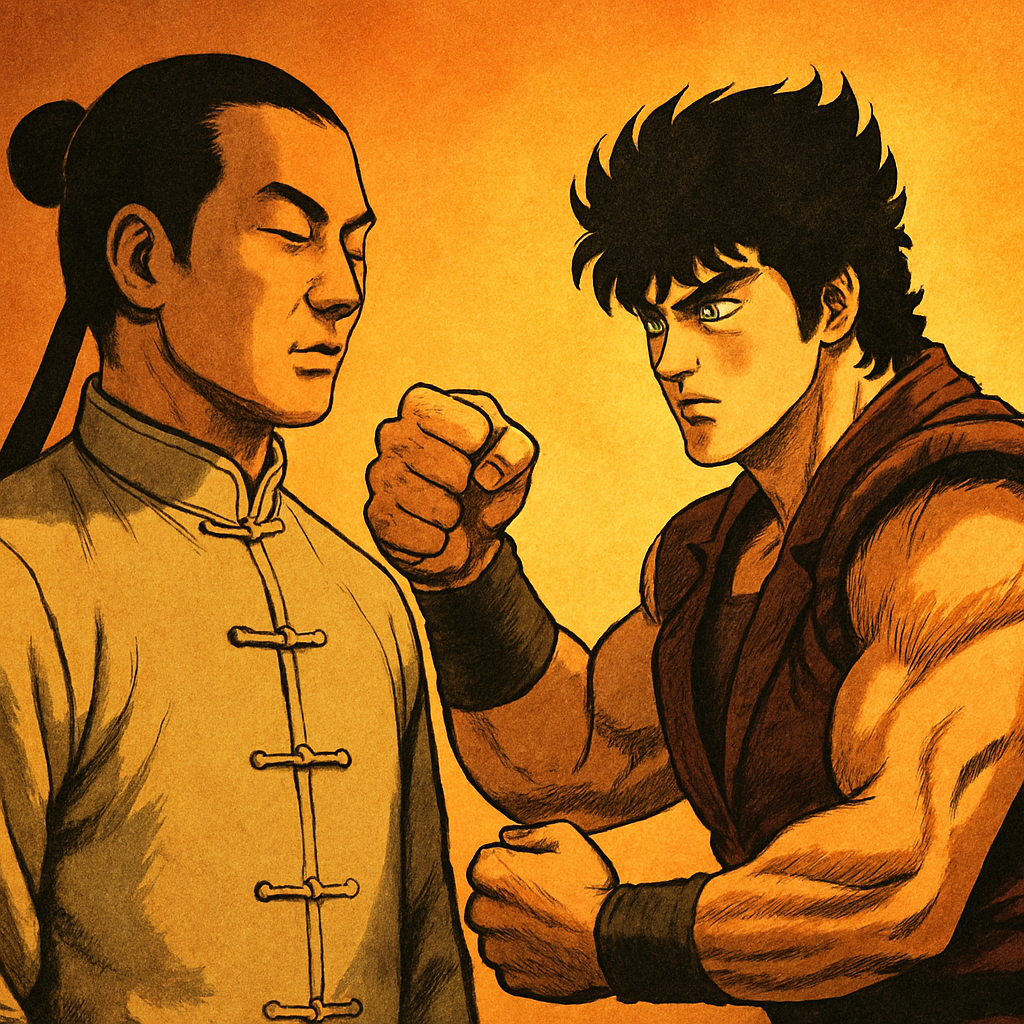
If I had to name the single most important thing Shaw Brothers choreography passed down to anime, it would be impact timing. The pause before the strike. The silence that makes the sound design hit harder when it finally arrives. Shaw films used this constantly—a held breath, a frozen frame, a moment of absolute stillness that told your nervous system something serious was about to happen.
In Fist of the North Star, the animators translated this into their own medium through the timing of cuts and the architecture of sound. The pause before impact is treated with the same respect it received in live-action. That’s not an accident. The people making this film understood that the anticipation is half the fight, and that an audience which feels the weight of a strike before it lands will feel it twice as hard when it does.
Why Animation Could Go Where Live-Action Shaw Films Could Not
The Shaw Brothers built something extraordinary inside real constraints. Actors get tired. Cameras have to live somewhere in physical space. Stunt work carries genuine risk, and the performers absorbing that risk were not always treated the way their craft deserved. Those limits shaped the choreography, sometimes productively, sometimes not.
Animation removed the physical ceiling. Toyoo Ashida could design sequences that no human body could safely execute and no camera crew could practically capture, while still honoring the structural logic he had absorbed from Shaw Brothers films. The result wasn’t imitation. It was evolution—a new form that kept the grammar intact while expanding what the grammar could say. The spirit of the choreography survived the translation because the people doing the translating understood what they were working with.
Where to See This Lineage in Action
If you want to trace this connection yourself, the path is straightforward. Start with The 36th Chamber of Shaolin and Five Deadly Venoms. Watch how stillness functions in those films. Watch where the cuts happen and, more importantly, where they don’t. Pay attention to impact timing—the pause, the held frame, the moment before everything moves again.
Then put on the 1986 Fist of the North Star and watch Kenshiro’s fight against Shin with the same eye. The Shaw Brothers lineage is right there in the structure of the sequence. For anyone who wants to go deeper, you can find out where to stream uncut Shaw Brothers classics and run the comparison yourself.
Watch the 1986 Fist of the North Star back-to-back with the Shaw Brothers films cited here and the grammar becomes impossible to miss. Then tell us which other anime or live-action films you spot carrying this same lineage forward.
The Fight as Story: How Choreography Carried the Narrative
What made the Shaw Brothers films matter beyond their stunt work was that the choreography was never decorative. Every punch, kick, and block was doing narrative work—advancing the story, revealing character, showing you something about who these people were and what they were fighting for. Chang Cheh understood that a well-constructed fight sequence could carry emotional information that dialogue would flatten.
In Fist of the North Star, that same principle holds. Kenshiro’s battles aren’t interruptions in the story; they are the story. The way a character moves in a fight tells you about their history, their damage, their code. Shaw Brothers films did this through evolving fighting styles that reflected a character’s internal state. The anime does it through visual metaphor—each confrontation a chapter in Kenshiro’s quest, his form in the fight revealing as much as anything he says.
The Emotional Weight Inside the Fight
Shaw Brothers films were never just about the craft of the choreography in isolation. The best ones made you feel something—dread, grief, exhilaration, the particular ache of watching someone fight past the point where winning is enough. That emotional current running underneath the stunt work is what separated the films that lasted from the ones that didn’t.
Fist of the North Star absorbed this too. When the backstory between two fighters carries real weight, every exchange in the fight carries it as well. The Shaw Brothers understood that a rivalry built over time makes each blow land differently than a fight between strangers. Kenshiro’s confrontations work on the same principle—personal history as the invisible force multiplying the impact of every strike, pulling the audience into the outcome whether they planned to care or not.
What Technology Added Without Replacing the Foundation
Animation technology gave the creators of Fist of the North Star tools that live-action filmmakers in the Shaw Brothers era simply didn’t have. Fluid movement between positions that would require multiple camera setups in live-action. Slow-motion that doesn’t depend on overcranking film. The ability to place the viewer at angles that no physical camera could occupy.
What matters is that the technology served the choreography rather than replacing it. The Shaw Brothers foundation—impact timing, stillness, the fight as narrative—remained the structural logic underneath everything the animators built on top of it. The slow-motion sequences that emphasize a strike’s impact or the suspended moment before a decisive move both trace back to techniques Chang Cheh’s unit was using on Shaw Brothers sets years before this film existed. The tools changed. The grammar didn’t.
A Checklist for Spotting Shaw Brothers Influence in Modern Media
- Signature Form: Look for martial arts techniques choreographed with real precision and lineage behind them, not just movement for movement’s sake.
- Impact Timing: Find the moments of silence and stillness that precede major strikes—the pause that builds the anticipation.
- Character Through Combat: Notice whether fight sequences are doing narrative work, revealing character and advancing the story rather than just filling time.
- Emotional Stakes: Assess whether personal history between fighters adds weight to the choreography itself.
- Cinematic Storytelling: Watch for sequences where movement and form carry the narrative load that dialogue alone couldn’t handle.
The Lineage Running Through Modern Animation
Tracing the line from Shaw Brothers films through the 1986 Fist of the North Star and into later anime like Naruto and Dragon Ball Z shows how durable this foundation turned out to be. Each of those series built on what came before while adapting to what animation specifically makes possible.
Naruto carries the Shaw Brothers emphasis on precise, readable hand-to-hand choreography—fights where you can follow the logic of what each fighter is doing and why. Dragon Ball Z takes the structural permission that animation offers and pushes it toward scale that no live-action film could attempt, while still relying on impact timing and stillness to make the biggest moments land. The principles that Chang Cheh and his choreographers worked out on Shaw Brothers sets kept traveling forward, finding new forms without losing what made them work in the first place.
For those looking to explore the Fist of the North Star kung fu cinema influence further, Old School Shaolin and Wu offers a curated selection of films and analysis that highlight this enduring legacy.

Leave a Reply