Most producers waste years chasing the sound instead of building the system. They buy the same plugins every YouTube tutorial recommends, loop the same drum patterns, and wonder why their beats sound like everyone else’s. The producers who break through — the ones who land placements, build catalogs, and generate income while they sleep — treat hip-hop production the way a silent operator treats a business. They build frameworks, not just tracks.
This is not a surface-level rundown of what a compressor does. It’s a receipts-first breakdown of the actual techniques, tools, and mindset shifts that separate working producers from bedroom hobbyists. Whether you’re building your first catalog or refining your signature sound, every section here gives you something you can apply before the session ends.
🔹 The Foundation: Drum Architecture Before Everything
Amateur producers start with melody. Professional producers start with drums. The kick, snare, and hi-hat pattern is the skeleton of your track — everything else hangs off it. Before you touch a sample or a synth, understand drum layering as a structural decision, not an aesthetic one.
Layering a kick means stacking two or three kick samples with complementary frequency ranges. One handles the sub punch below 80Hz. One carries the mid-body attack between 80 and 200Hz. A third optional layer adds the click transient that cuts through on laptop speakers. Each layer gets its own EQ and volume balance. The result is a kick that sounds full on studio monitors and translates on phone speakers — which is where most listeners actually hear your music.
For snare design, the standard technique is layering a snare with a clap offset by 10 to 20 milliseconds. That slight delay creates a natural room feel without adding reverb. Producers like J Dilla built entire sonic identities around deliberately imperfect quantization — pushing snares slightly behind the grid creates a laid-back, human groove that rigid quantization kills.
Practical step: In your DAW, create a dedicated drum bus. Route all drum elements through it and apply a single instance of glue compression — ratio 2:1, slow attack, fast release. That one move tightens your kit without killing dynamics. It’s one of the fastest ways to make a bedroom beat sound like it belongs on a professional record.
🔹 Sample Clearance Reality and the Flip Technique
Sampling is the DNA of hip-hop production. Most producers treat it recklessly. Using an uncleared sample in a commercially released track exposes you to legal liability that can wipe out every dollar the record generates. The business-minded producer either clears samples properly or learns to flip them beyond recognition.
The flip technique involves transforming a sample so thoroughly it no longer resembles the original. The standard workflow: chop the sample into at least eight segments, rearrange the order, pitch individual chops independently, time-stretch selectively, and layer original instrumentation on top. When you add your own bass line, melody, and drum architecture over a properly flipped sample, the source material becomes a texture rather than a recognizable element.
For producers who want to build a catalog they can actually monetize without clearance headaches, interpolation is the cleaner path. You recreate the feel and melodic idea of a classic record using original recordings. Interpolation only requires publishing clearance — not master clearance — which is significantly easier and cheaper to obtain. This is how many modern producers reference classic sounds without the legal exposure.
If you’re building toward a release cadence and want to understand how catalog architecture and content systems work together for independent artists, the documentation at ArcanoLabs covers content and distribution frameworks worth studying alongside your production practice.
🔹 Mixing in the Box: The Three Moves That Matter Most
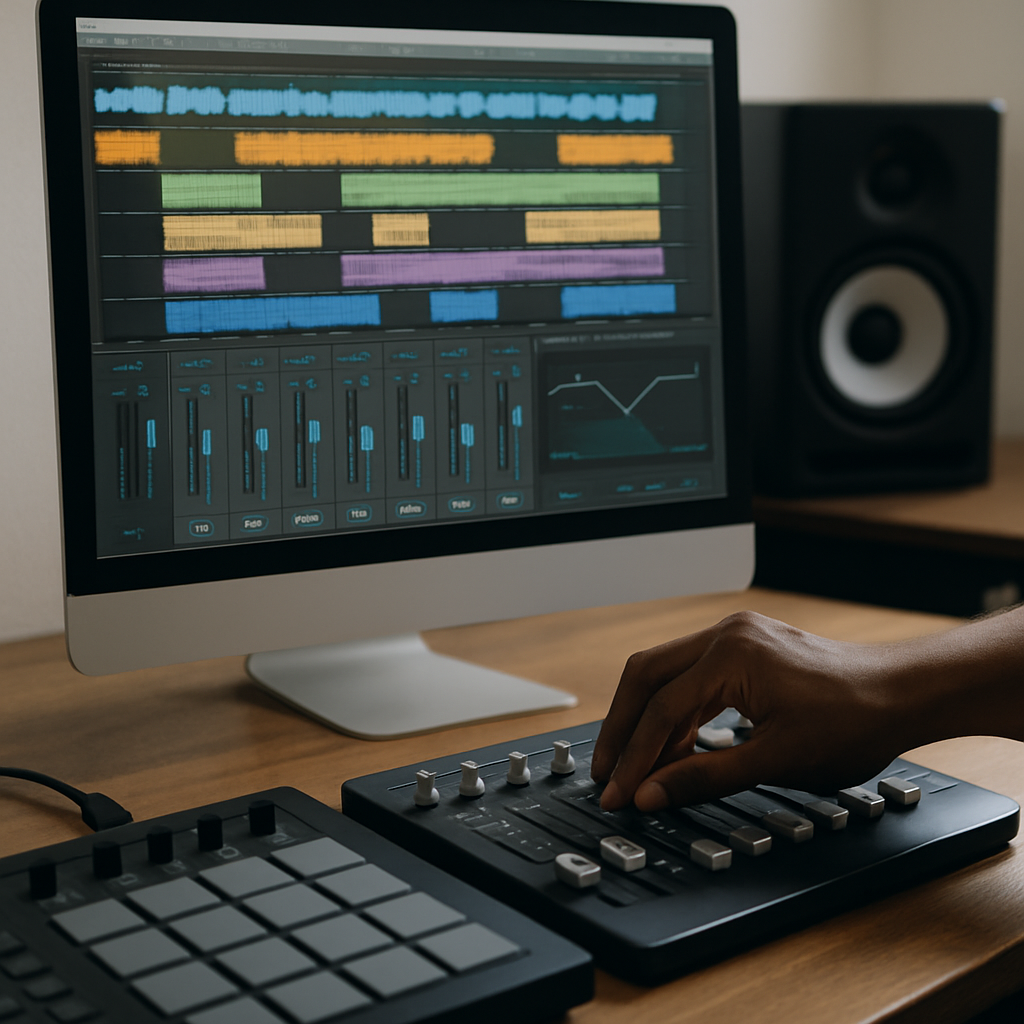
Mixing hip-hop is not about applying every plugin in your library. It’s about three core decisions executed with precision: frequency separation, dynamic control, and spatial placement. Get these three right and your mix translates. Miss any one of them and you’re chasing problems in mastering that can’t be fixed downstream.
Frequency Separation
Every element in your mix needs its own frequency real estate. The kick owns the sub. The bass sits just above it. Vocals live in the upper-mid range. When two elements compete for the same frequency band, neither wins. Use high-pass filters aggressively — most producers are afraid to cut low end from elements that don’t need it. A synth pad does not need anything below 200Hz. Cut it. Your mix opens up immediately.
Dynamic Control
Hip-hop mixes are dense. Compression is how you manage that density without flattening the energy. The most common mistake is over-compressing the master bus before individual elements are controlled. Start with the 808 or bass — use a sidechain compressor triggered by the kick so the bass ducks slightly every time the kick hits. This technique creates the punchy, clean low end that defines modern trap and boom-bap alike. A gain reduction of 2 to 4dB on the sidechain is usually enough. More than that and it becomes audible pumping.
Spatial Placement
Stereo width is a tool, not a default. Keep your kick, snare, 808, and lead vocal in mono or near-mono. Push hi-hats, pads, and atmospheric elements to the sides. This creates a mix that sounds wide on headphones and still hits hard on a mono Bluetooth speaker. Producers who pan everything wide end up with mixes that fall apart in mono — and mono compatibility still matters in real-world listening environments.
🔹 Building Your Signature Sound: The System Behind the Style
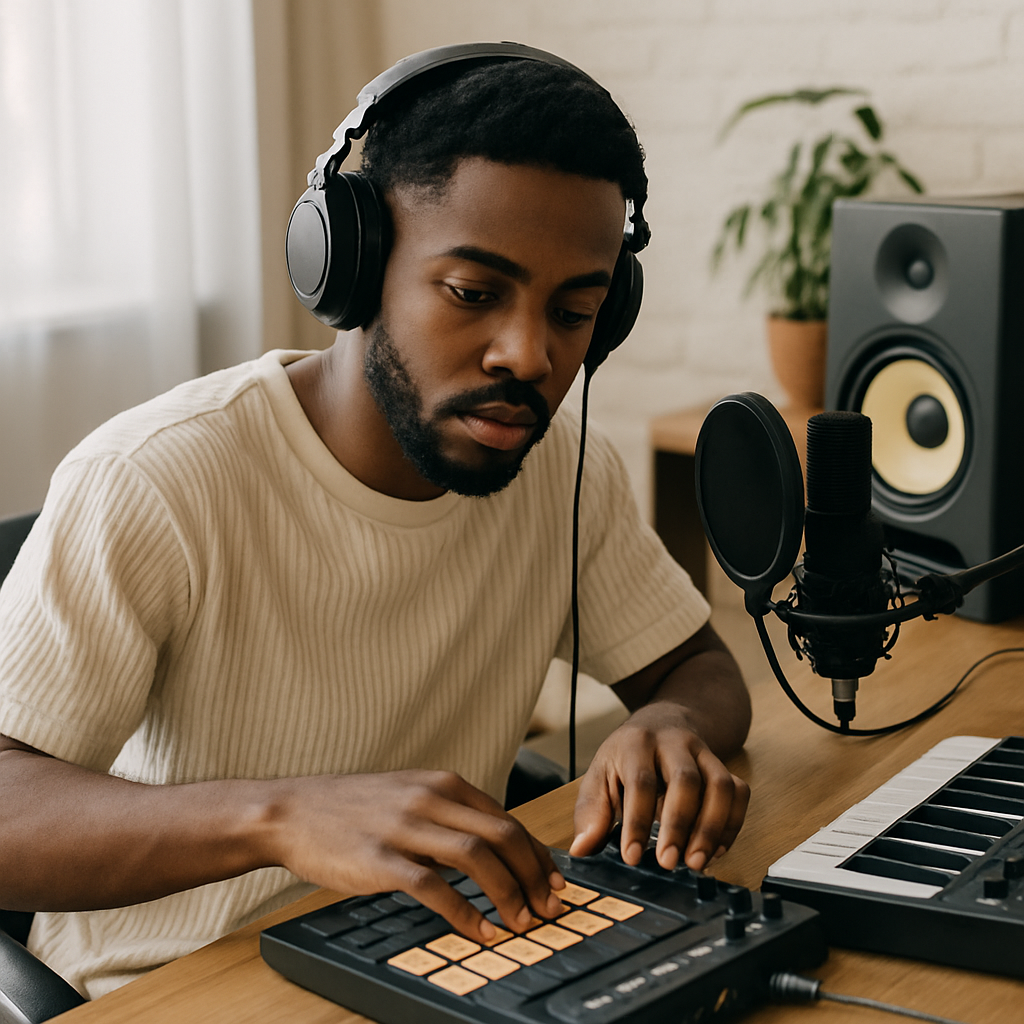
Every producer with a recognizable sound built it through deliberate repetition of specific choices, not random experimentation. Timbaland’s signature came from specific drum machine textures combined with Middle Eastern and Indian melodic influences applied consistently across hundreds of records. Metro Boomin’s sound is defined by specific reverb tails on snares, dark minor-key melodies, and a precise 808 tuning approach.
To build your own signature, you need a sound palette — a defined set of instruments, textures, and processing chains you return to consistently. This is not creative limitation. It’s brand architecture. When listeners hear your tag and immediately recognize the sonic world they’re entering, you’ve built something with real commercial and artistic value. That’s what it means to build in silence and earn in peace.
Start by identifying three to five sonic characteristics you want your production to own. Write them down as specific technical descriptions, not vague adjectives. “Dark” is not a specification. “Minor-key melodies with heavy reverb on the tail, 808s tuned to the root note, and hi-hat patterns with triplet variations every four bars” — that’s a palette you can execute consistently.
For artists building a cinematic, atmospheric sound — the kind of hip-hop and R&B that feels like a film score with bars — studying how producers like TruZillah approach sonic world-building gives you a real-world model of how signature sound and release cadence work together to build an artist identity.
🔹 The Catalog Mindset: Production as a Long-Term Asset
A single hit record is an event. A catalog is a system. Producers who treat every beat as a standalone transaction never build leverage. Producers who think in terms of a niche site portfolio equivalent — thematically connected bodies of work, consistent sonic identity, and strategic release timing — build assets that compound over time. That’s the silent operator approach applied to music.
The practical application in 2024 is understanding how streaming royalties, sync licensing, and beat licensing interact. A beat licensed non-exclusively for $50 today can also earn sync placement fees, performance royalties through your PRO, and mechanical royalties if it gets released on a distributed record. The same asset generates multiple revenue streams simultaneously — but only if you’ve registered it properly and structured your publishing correctly.
Register every track with a Performance Rights Organization before it’s released. Set up a publishing entity so you collect both the writer’s share and the publisher’s share of performance royalties. These are not optional steps for serious producers — they’re the difference between leaving money on the table and building a system that pays you while you’re in the next session.
Producers interested in how content systems, automation, and owned organic traffic can amplify a music catalog’s reach — without depending on social media algorithms — will find the frameworks at ArcanoLabs Content directly applicable to building a sustainable artist or producer business online.
🔹 Essential Tools and Realistic Investment
You don’t need a $10,000 studio to make professional hip-hop. You need the right tools used correctly. Here’s a realistic stack:
- ✅ DAW: FL Studio Producer Edition or Ableton Live Standard — both in the $200–$450 range as one-time purchases. Pick one and master it before considering alternatives.
- ✅ Drums: Native Instruments Battery 4 or the free DrumBrute samples from Arturia. Layering free samples with a paid drum instrument gives you professional flexibility at low cost.
- ✅ Mixing: FabFilter Pro-Q 3 (~$180) for surgical EQ. For compression, the stock compressors in FL Studio and Ableton are genuinely capable — learn them before spending on third-party options.
- ✅ Monitoring: A pair of studio headphones in the $100–$150 range (Audio-Technica ATH-M50x is a common benchmark) plus a free reference track comparison tool like Reference by Mastering The Mix.
- ✅ Sample Packs: Splice subscription (~$10–$20/month) gives you access to cleared, royalty-free samples. Every sample downloaded through Splice is pre-cleared for commercial use — no legal exposure.
Total investment for a functional professional setup: under $800. The producers spending $5,000 on gear before they understand gain staging are not ahead of you — they’re just more in debt.
🔹 The Next Session Starts Now
Production mastery is not a destination. It’s a practice built through deliberate repetition of the right fundamentals. Drum architecture, frequency separation, catalog thinking, and signature sound development are not advanced concepts reserved for signed producers. They’re the baseline habits that separate silent operators who build lasting careers from hobbyists who stay stuck in the bedroom loop.
Take one technique from this guide and apply it in your next session before you read another article. Build the drum bus. Set up the sidechain. Write down your three sonic palette specifications. The gap between where you are and where you want to be closes one session at a time — not one tutorial at a time.
🚨 If you’re serious about building a production catalog that works as a long-term asset, start treating your music like the system it can become. The tools are accessible. The frameworks exist. The only variable left is whether you execute.

Leave a Reply