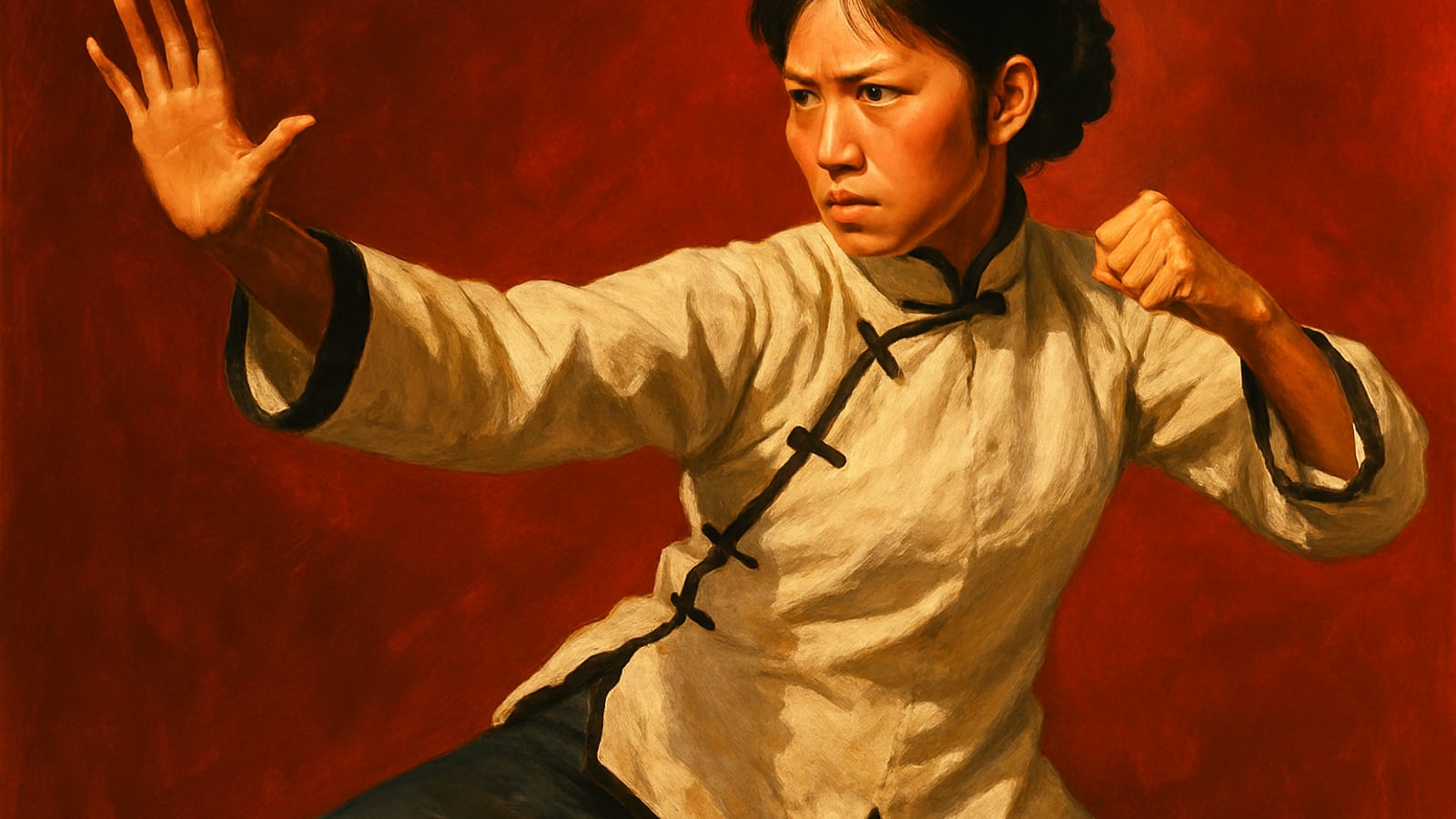
Angela Mao Ying threw the first punch that mattered in American martial arts cinema, and nobody remembers it because they were too busy waiting for Bruce Lee.
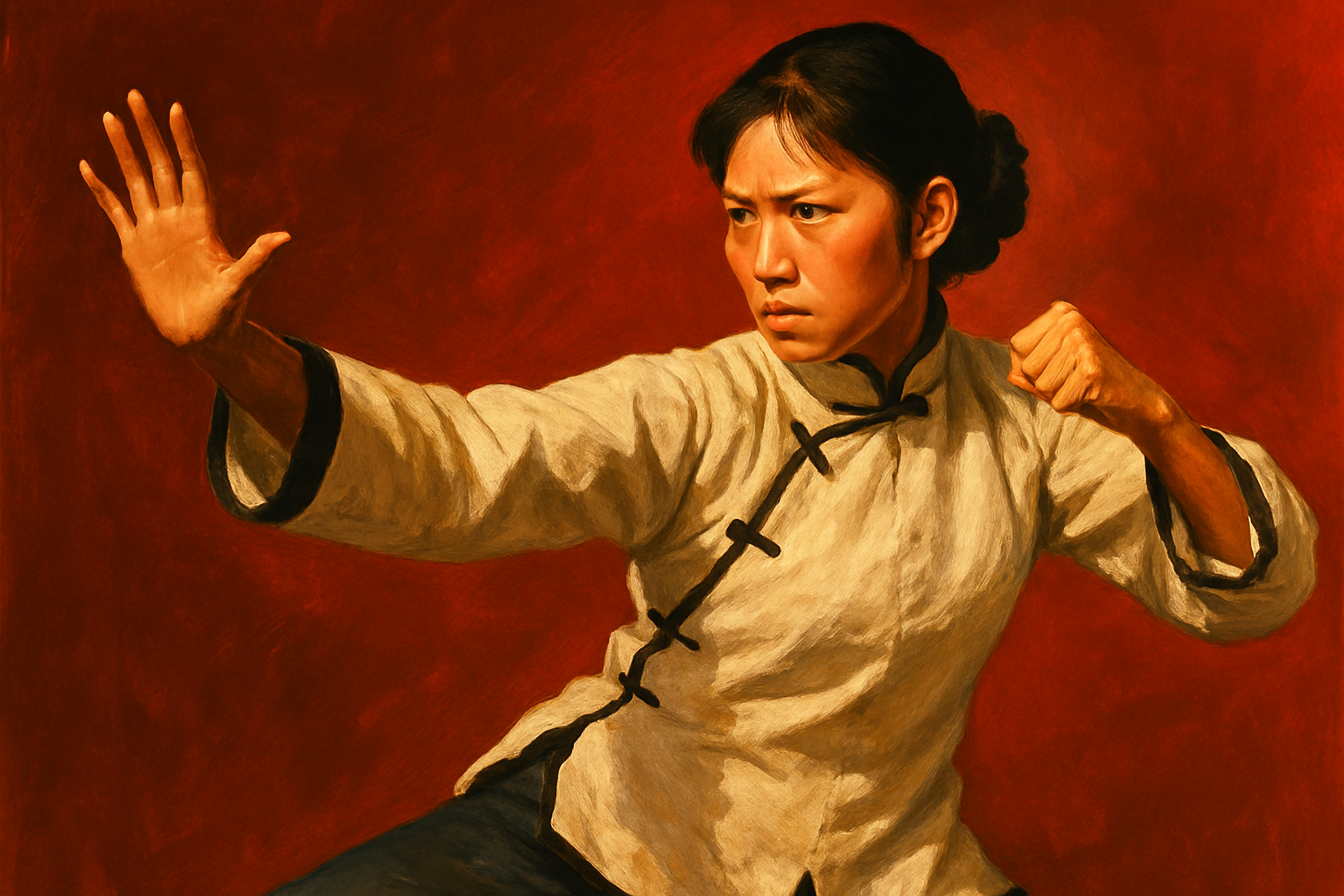
Who She Was Before America Knew Her Name
By the time Western audiences caught their first glimpse of Angela Mao Ying, she had already built a reputation that most action stars spend entire careers chasing. Her work inside the Shaw Brothers universe established her as something the genre rarely produced: a female lead who was not there to be rescued, who moved through a fight with the kind of authority that comes from real training and real time put in. She was not playing at toughness. She was demonstrating it.
That foundation came from years of Hapkido, a Korean martial art built around joint locks, throws, and kicks that demand as much precision as they do power. You can see the lineage in every sequence she performs. Films like Lady Whirlwind and Hapkido made her a genuine star across Asia, and the choreography in those pictures holds up today not because it was flashy but because it was honest. Her screen presence did the rest. When Angela Mao Ying walked into a fight, the camera did not need to do anything clever. She was already the most interesting thing in the frame.
The American Breakthrough Nobody Talks About
Here is what the standard history leaves out. When Enter the Dragon hit American screens in 1973, audiences who paid attention saw Angela Mao Ying in the film’s opening sequence, playing the sister of Bruce Lee’s character. Her performance in those few minutes is ferocious and controlled at the same time, and it set the emotional stakes for everything that followed. Most people walked out talking about Lee. Almost nobody walked out asking who she was.
Her leading work in films like Stoner and The Tournament reached American grindhouse audiences before Lee’s mythology had fully calcified, yet those pictures never got the recognition they earned. Watch the fight sequences and you will see why they deserved better. Long takes. Minimal cuts. The camera holding still long enough for you to actually register what her body is doing. That is a filmmaker trusting a performer, and a performer who has earned that trust through craft. The reviews of the time acknowledged her physicality and then moved on. The historical record did the same.
Why Bruce Lee Got the Credit for What She Already Did
This is not about taking anything away from Bruce Lee. His talent was real and his impact was enormous. But the reasons his name became synonymous with the entire American arrival of martial arts cinema have as much to do with marketing and distribution as they do with the films themselves. Lee’s pictures had major studio backing and promotional budgets that Mao’s releases simply never saw. Her work came through limited distribution channels, often landing in grindhouse theaters without the infrastructure to build a lasting mainstream profile.
Then Lee died in 1973, and the mythologization accelerated in ways that crowded out almost everyone else. English-language media needed a singular origin story for the genre’s American moment, and Lee was the one they had already built the narrative around. That left performers like Angela Mao Ying in the margins of a history they helped write. The record that survived was not inaccurate exactly. It was just incomplete in ways that cost her the recognition she was owed.
The Fights Themselves: What Made Her Different
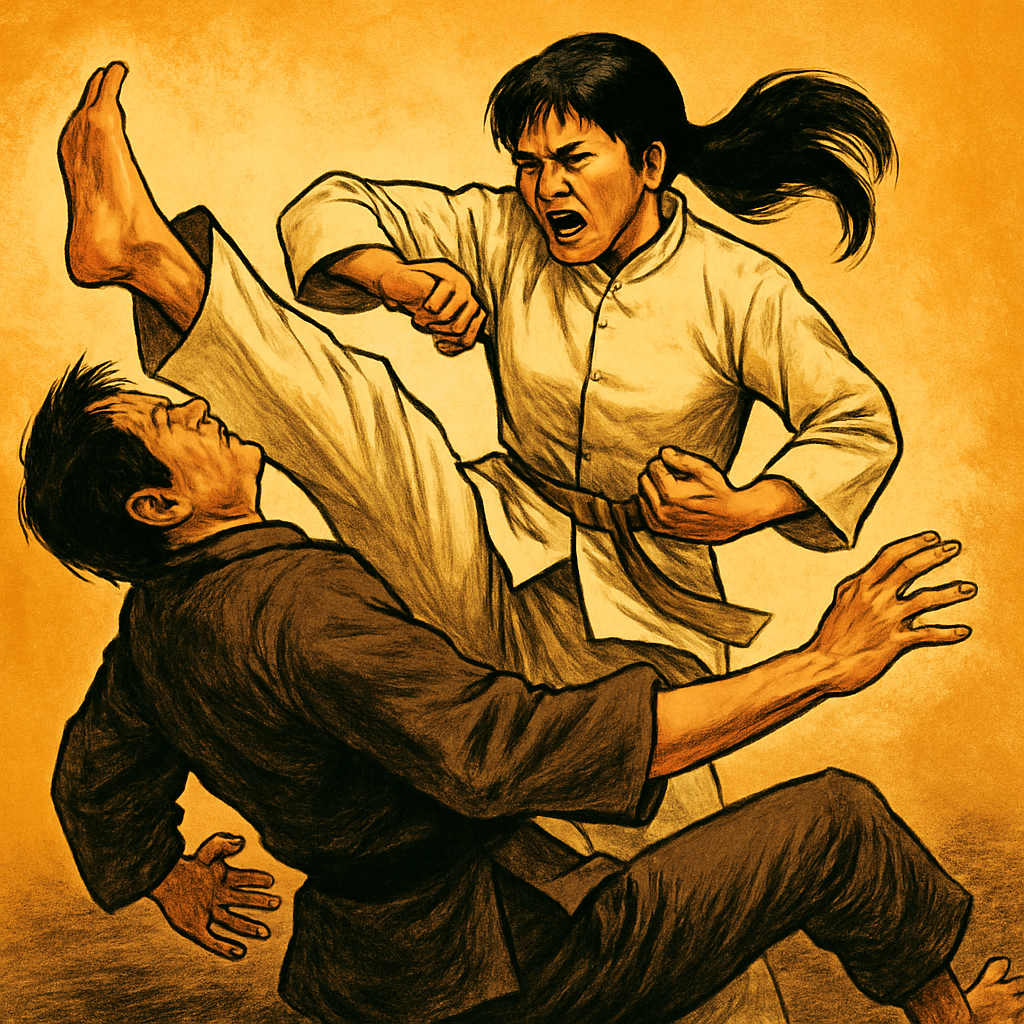
Go back to Hapkido and watch the extended sequences where she moves through multiple opponents. What you are seeing is not stunt work assembled in the editing room. The choreography is built around her actual form, her actual speed, and the specific grammar of Hapkido as a discipline. The joint locks land with weight. The kicks travel through the target rather than stopping at it. There is a difference between someone performing martial arts for a camera and someone who has internalized a martial art deeply enough that the camera is just recording what they already know how to do. Mao was the second kind.
What separated her from the action stars who followed in the commercial wave after Lee’s success was a commitment to fluidity over spectacle. Her fights read as confrontations between people who understand how bodies work, not as choreography designed to impress from a distance. The stunt work around her was calibrated to serve that authenticity rather than overwhelm it. That is a harder thing to pull off than it looks, and it is why her best sequences feel less dated than a lot of what came after.
Where to Find Her Now
The good news is that restoration has been catching up to her catalog. Lady Whirlwind and Hapkido are both available on DVD and Blu-ray, and the quality of some of these releases finally does justice to what was actually captured on film. You can find them through Amazon and eBay, often packaged in box sets that treat classic kung fu cinema with the seriousness it deserves rather than as a novelty.
Streaming has been slower to catch up, but some platforms have started adding her work to their catalogs, which means the barrier to entry is lower than it used to be. If you have to hunt a little, hunt. The effort is worth it, and sitting with these films changes how you understand the lineage of everything that came after. For more on the performers who built this genre without getting the credit, The Hidden Hero Files: Carter Wong and the Fists Nobody Talked About is the next place to go.
Angela Mao Ying’s place in martial arts cinema history is not a matter of debate for anyone who has actually watched the films. She was a pioneer who arrived early, worked at a level that held up, and got written out of the mainstream story through a combination of bad distribution luck and a cultural tendency to organize complicated histories around a single name. Old School Shaolin and Wu exists in part to push back against that tendency, and Mao is exactly the kind of underrated figure this space was built to honor.
What She Made Possible for Every Female Action Star Who Came After
Angela Mao Ying’s influence on the female action stars who followed her is not a matter of speculation. Michelle Yeoh and Zhang Ziyi have both pointed to her as a reference point, and you can see why when you look at the template her films established. She demonstrated that a woman could carry a martial arts picture on her own terms, not as a novelty and not as a softened version of what the male leads were doing, but as a complete action protagonist with her own physical language and her own dramatic weight.
What made that template durable was the complexity she brought to her characters alongside the physical craft. Her roles were not one-note. They carried personal stakes and emotional texture that made the fights mean something beyond the choreography itself. That combination of strength and vulnerability, neither quality compromising the other, became the standard that the best female-led action films have been reaching for ever since. She set the bar before most people knew there was a bar to set.
Technical Innovations in Fight Choreography
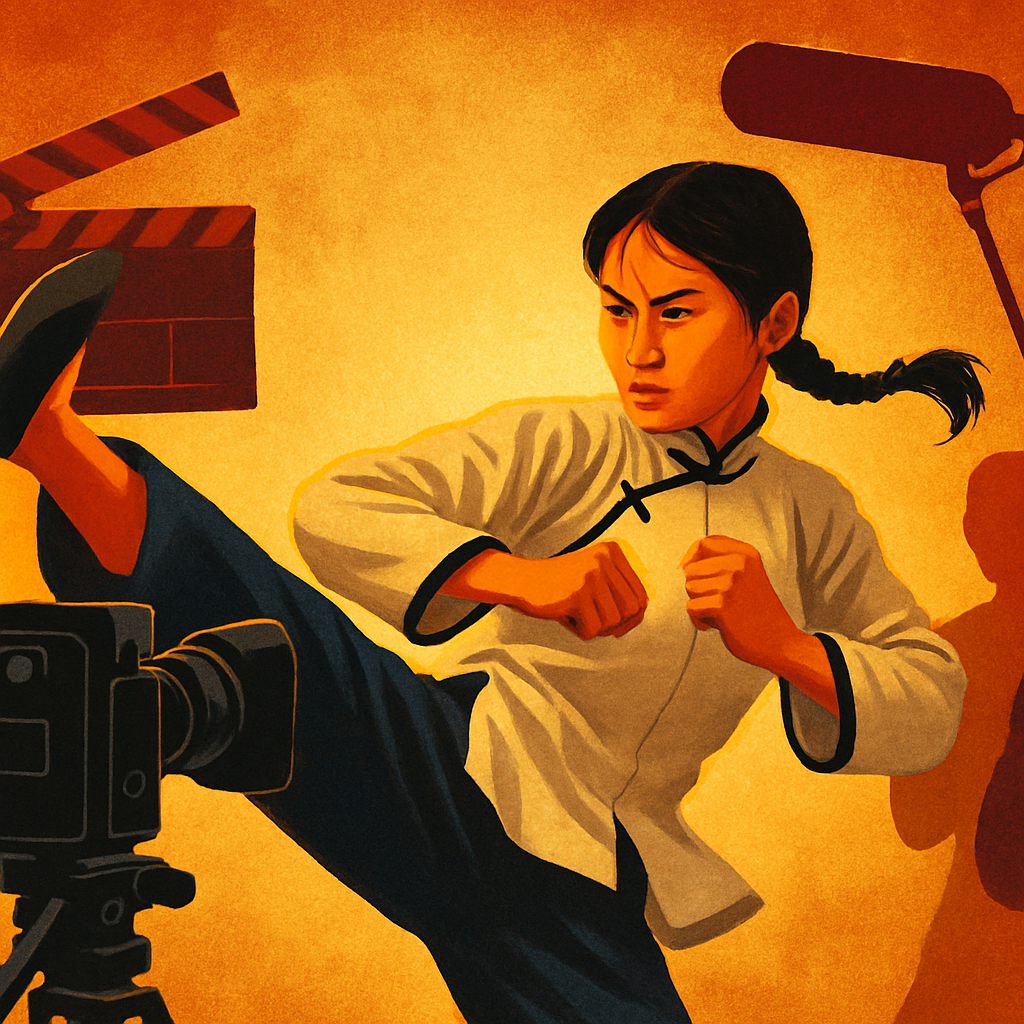
The long take was not a gimmick in Angela Mao Ying’s films. It was a statement of confidence in the performer. When a fight sequence runs without cuts, the audience cannot be fooled about what the actor can actually do. Every second of screen time is an honest accounting of the craft on display. That approach stood in direct contrast to the rapid cuts and tight close-ups that became the dominant grammar of action cinema later on, a style that can disguise limited ability but also flattens the spatial logic of a fight. Mao’s sequences let you understand where everyone is and what is actually happening between them.
The Hapkido influence brought something specific to the choreography that pure striking arts could not offer. Throws and joint locks require a different kind of physical commitment from both performers. They demand trust, timing, and a shared understanding of how the technique is supposed to resolve. When that work is done correctly, the result looks and feels different from a punch-kick exchange, more grounded, more consequential. Choreographers who came after Mao and wanted to build sequences with that same sense of weight and reality were working from a model she had already established.
Metrics for Evaluating Mao’s Impact
- Box Office Performance: The commercial numbers on Angela Mao’s films, particularly in Asian markets, tell a story about how seriously she was taken as a draw before Western distribution ever entered the picture.
- Cultural References: How often she appears in interviews, retrospectives, and other films as a named influence is a measure of how deeply her work embedded itself in the people who came after her.
- Film Restoration Projects: The ongoing effort to restore and re-release her catalog is a concrete indicator that the interest in her work has not faded and that new audiences are being found.
- Academic Studies: Scholarly writing on her contributions to martial arts cinema and to the representation of women in action film has grown steadily, which reflects a field catching up to what fans already knew.
FAQs on Angela Mao Ying’s Legacy
What are some of Angela Mao’s most influential films?
Hapkido and Lady Whirlwind are the essential starting points. Both films showcase her martial arts lineage at full strength and were genuinely pivotal in shaping what the genre understood a female action lead could be.
How did Angela Mao’s style differ from other martial artists of her time?
Her style was built on authentic Hapkido form and a commitment to fluidity over flash. The choreography in her films prioritized the seamless execution of real technique over acrobatic showmanship, which is exactly why it still holds up.
Why is Angela Mao Ying considered a pioneer for female martial artists?
She broke into a genre that was almost entirely male-dominated and did it on her own terms, carrying pictures as a lead and bringing a physical authority that nobody could dismiss. The generations of female action stars who followed her owe a debt that does not get acknowledged nearly enough.

Leave a Reply