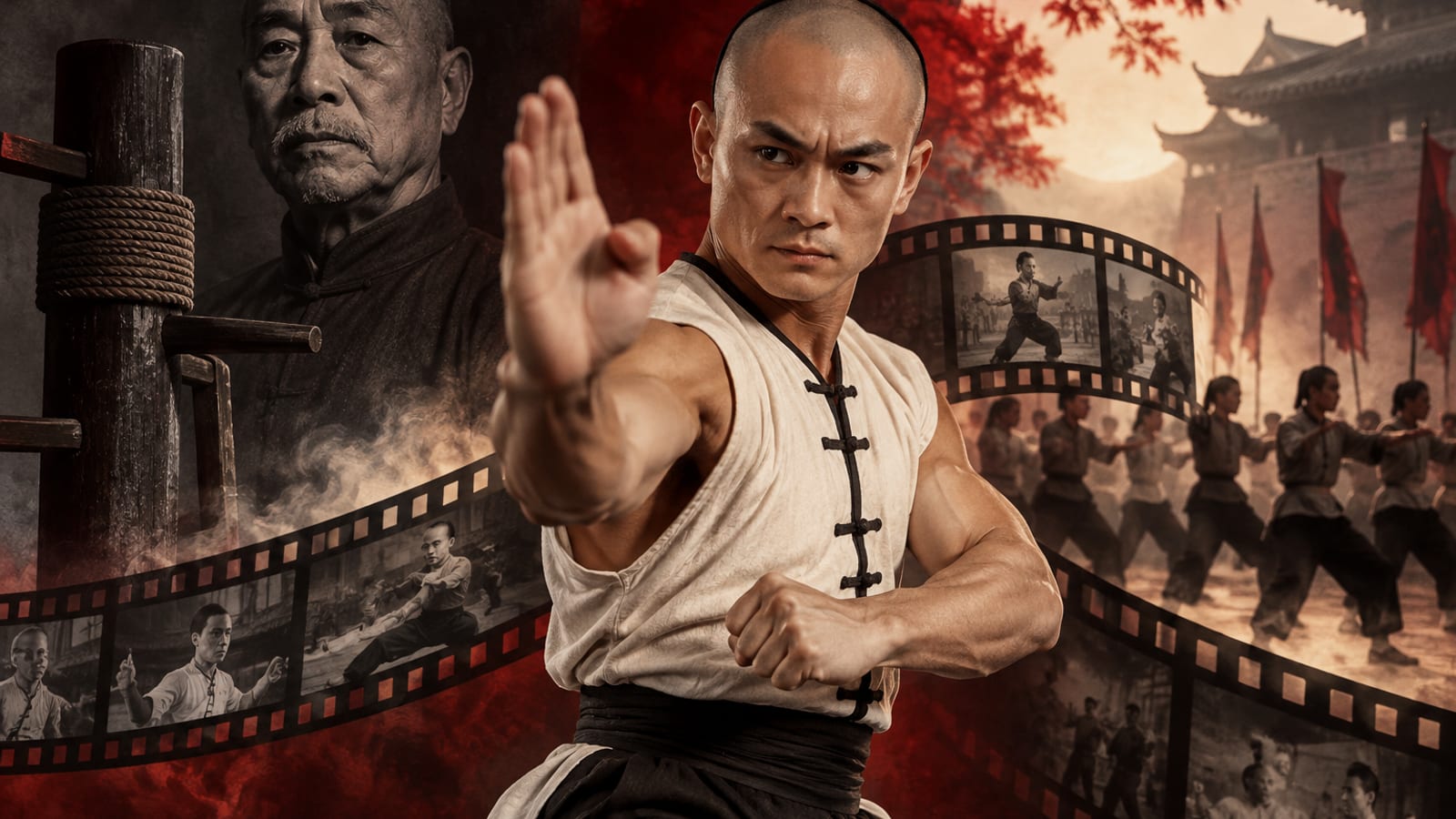
Lau Kar-leung’s father taught him Hung Gar in a way that made every punch look like it was rooted three feet underground, and by the time Gordon Liu threw his first on-screen fist, that same heaviness was unmistakable. You can feel it before you can name it. There is a weight to those movements, a deliberateness, that does not come from camera tricks or editing. It comes from a lineage that passed hand to hand across generations and eventually found its way onto film. What follows is the story of how a specific fighting style became a visual language, and why once you learn to read it, you cannot watch these films the same way again.
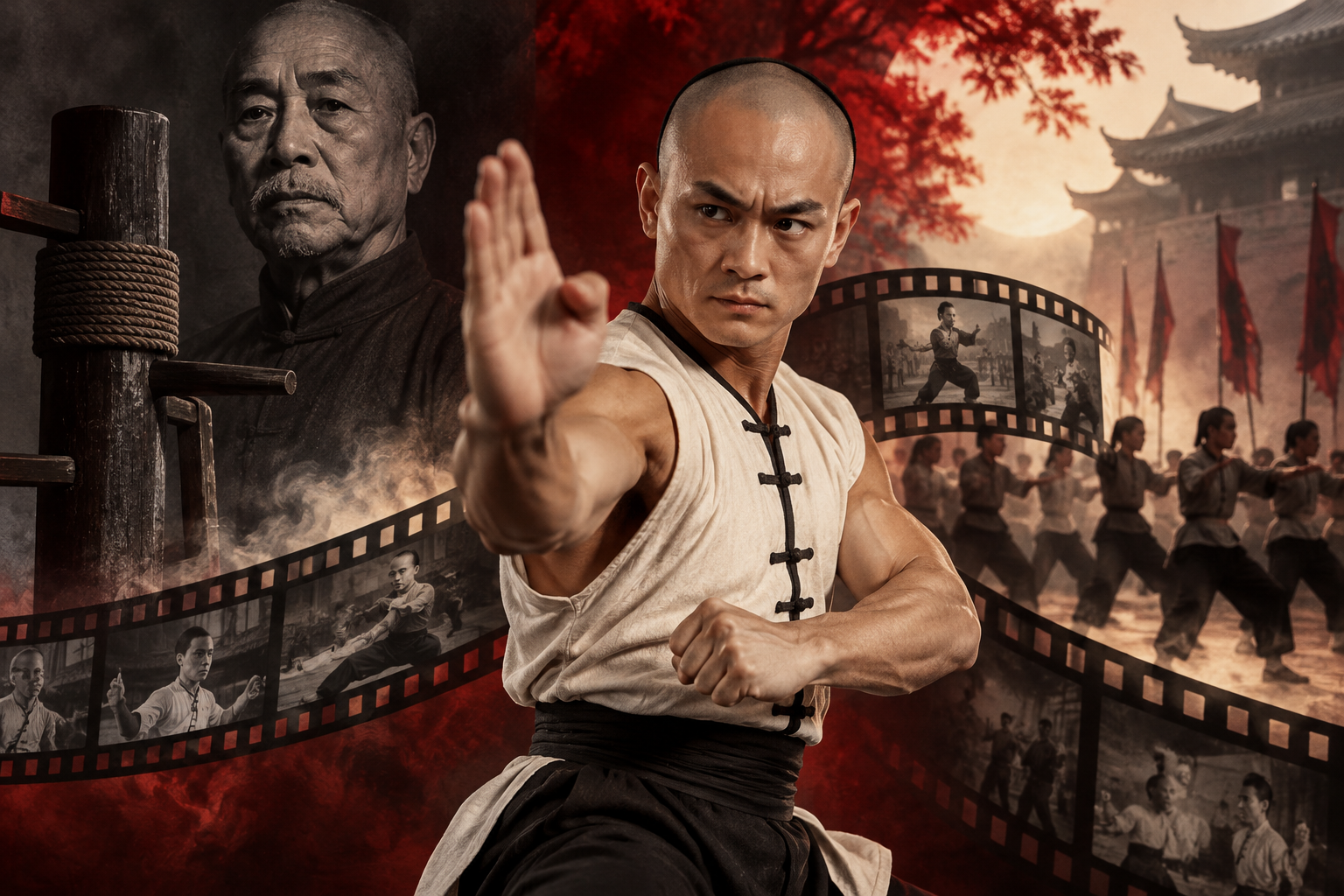
The Root: Lau Cham and What He Passed Down
Hung Gar is not just a martial art. It is a technical vocabulary with a specific grammar. Lau Kar-leung’s father, Lau Cham, was a respected master of the style, and what he carried was the real thing: low stances that demand genuine leg strength, bridge-arm techniques built around controlling and redirecting an opponent’s limbs, and a grounded quality that makes every movement look like it costs something. These are not decorative choices. They are the functional signature of a system that was designed to work, and that functionality is exactly what makes Hung Gar read so well on camera.
The low stances create a visual anchor. You see a fighter drop into a Hung Gar horse stance and you feel the stability before your brain processes it. The bridge-arm work adds layers to the choreography that most viewers absorb without realizing it, a constant negotiation of space and contact that gives the fight texture. Lau Kar-leung inherited all of this from his father and spent his career figuring out how to put it on screen without losing what made it real.
Lau Kar-leung Becomes the Translator
The move from student to choreographer is not automatic. Plenty of skilled martial artists never figure out how to make a camera understand what they know. Lau Kar-leung was different. He had the craft and the vision to see that Hung Gar’s specific qualities, the weight, the groundedness, the arm control, could become cinematic without being falsified. His early stunt work gave him a practical education in what the camera could and could not see, and by the time he stepped into directing, he knew exactly how to use that knowledge.
Films like Challenge of the Masters and The 36th Chamber of Shaolin are the proof. They do not just show Hung Gar; they teach it to the audience in real time, building sequences that reward attention. The choreography in those films is not spectacle for its own sake. It is a record of a living tradition, preserved on celluloid by someone who understood what he was preserving. For anyone tracking down these films, there are solid guides to Lau Kar-leung’s directorial catalog that will point you in the right direction.
Gordon Liu and the Hung Gar Inheritance
Gordon Liu is one of those performers who gets reduced to an image: the shaved head, the monk’s robe, the intensity. What that image tends to erase is the depth of his training and the specificity of what he brought to every fight. He was not cast in Lau Kar-leung’s films because he looked the part. He was there because he had absorbed the lineage. His movements carry the same rootedness that Lau Cham passed to his son, transmitted now through another generation.
Watch Shaolin vs Wu Tang or The 8 Diagram Pole Fighter with this in mind. Liu’s power does not come from speed or aggression alone. It comes from form, from the structural integrity of stances and transitions that were drilled into him over years. Every punch and kick is connected to the ground beneath him. That is Hung Gar. That is the inheritance. And it is what makes his performances hold up across decades in a way that pure athleticism never could.
How to See the Style: What You’re Actually Watching
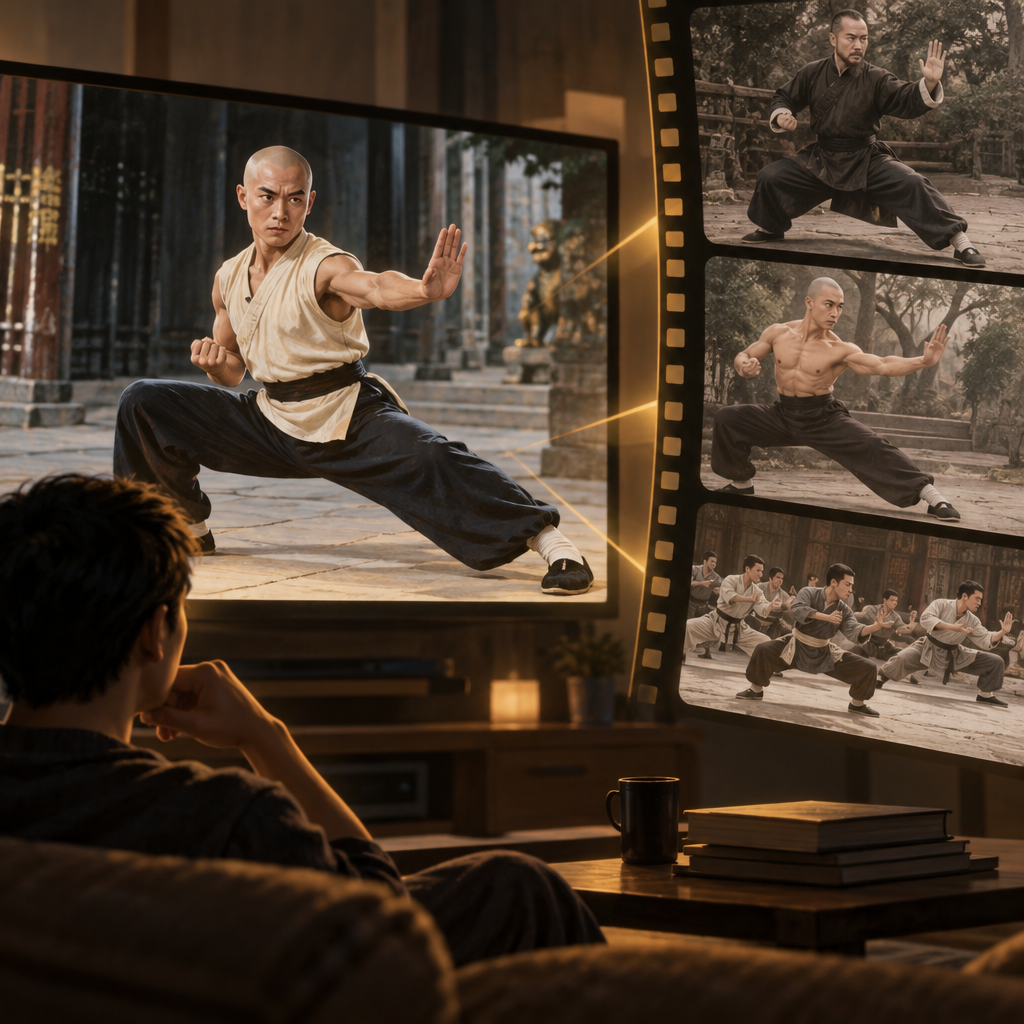
Once you know what to look for, Hung Gar announces itself. The low stances are the first thing. A fighter who drops his center of gravity and stays there, who does not bounce or drift, is showing you something specific. That stability is a choice rooted in training, not a camera angle. It makes the fighter look immovable, and in Hung Gar, that is the point.
The bridge-arm techniques are the second marker. Watch how the arms engage with an opponent’s limbs rather than simply striking past them. There is a constant conversation happening at close range, a controlling and redirecting that gives the choreography its density. Footwork in Hung Gar tends toward low, deliberate sweeping patterns rather than the light-footed mobility you see in other styles. When you are watching a film that mixes styles, these markers help you identify which tradition is doing the talking in any given exchange. For a deeper look at how Lau Kar-leung embedded this kind of teaching in his films, there is a detailed breakdown of his approach to on-screen instruction worth reading.
The Lineage After: Who Inherited This Language
Lineages do not end with the people who built them. The Hung Gar visual signature that Lau Kar-leung established and Gordon Liu embodied moved outward into the work of fighters and choreographers who trained under them or studied their films closely. You can find its traces in Iron Monkey and Once Upon a Time in China, sometimes adapted, sometimes blended with other influences, but still recognizable if you know what you are looking for.
That continuity matters. It means the style was never just a period artifact. It was a living craft that practitioners kept choosing to carry forward, updating its cinematic expression without abandoning its structural core. The choreography changed. The form underneath it did not.
Why This Lineage Matters Now
Knowing the lineage changes what you see. A fight scene that might read as generic action becomes a specific argument about technique, tradition, and the body of a particular performer who spent years earning the right to move that way. That is not a small thing. It is the difference between watching and understanding.
It also opens doors. Once you can trace the Hung Gar thread through Lau Kar-leung’s work, you start finding it in unexpected places, and that sends you toward films and performers you might never have found otherwise. Old School Shaolin and Wu exists precisely to support that kind of discovery, building an archive that treats the overlooked masters of this craft with the seriousness they deserve. The more you know about where the style came from, the more you have to find.
Training Techniques: Bringing Hung Gar to Life
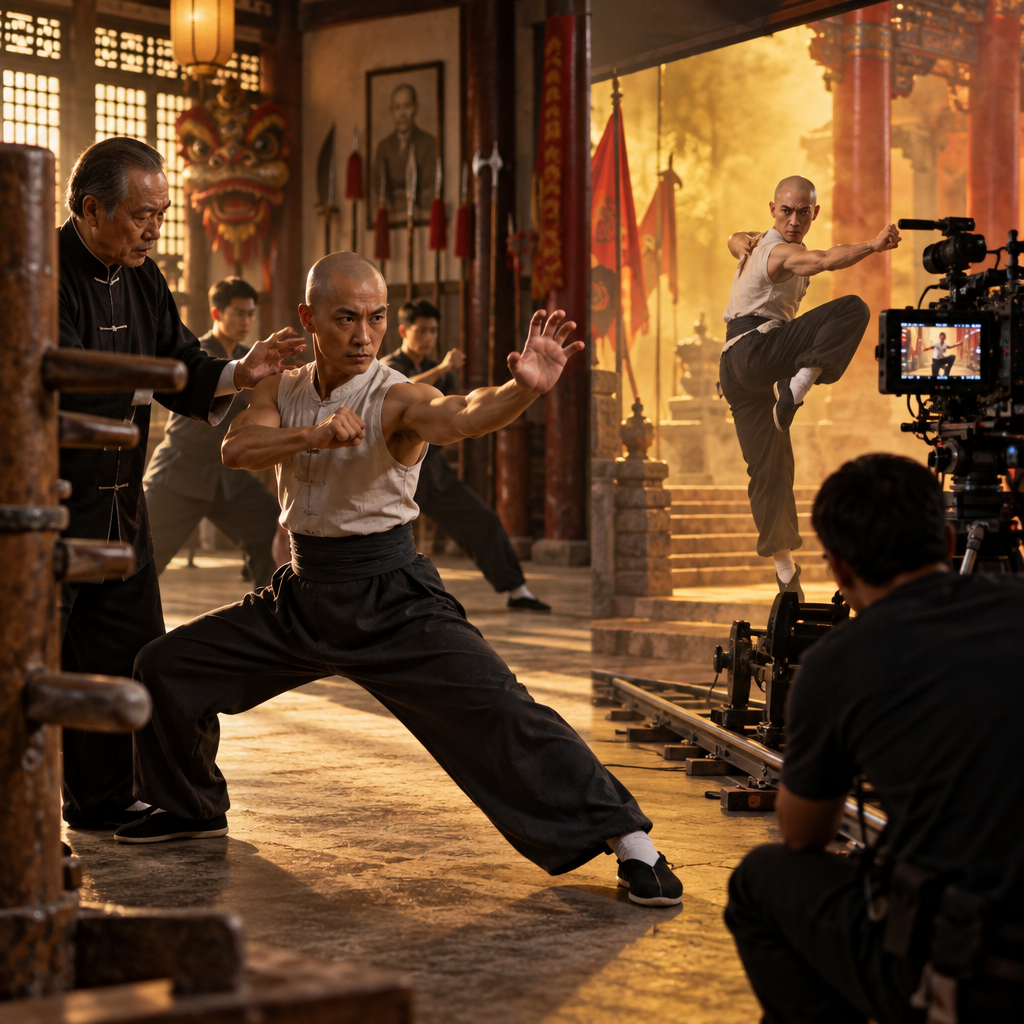
Getting Hung Gar from the training hall onto a film set is not a simple translation. The physical demands of the style are real, and the performers who carried it on screen had put in years of work before a camera ever pointed at them. Understanding that training helps explain why the stunt work in these films looks the way it does.
Conditioning and Strength: Hung Gar’s low stances are not a pose. Holding them under pressure requires genuine leg strength and endurance built through conditioning work that includes weight training, isometric exercises, and repetitive drilling of the foundational forms. The power in a Hung Gar strike comes from structural alignment, not just muscle, and building that alignment takes time and physical preparation that does not show up on screen but absolutely shows up in the result.
Flexibility and Agility: The style’s emphasis on power does not mean rigidity. Effective Hung Gar requires enough flexibility and agility to move between stances and execute the fluid transitions that make choreography readable. Stretching routines and dynamic movement work are part of the training, ensuring that practitioners can shift weight and change angles without losing their structural base.
Mindfulness and Focus: The mental side of Hung Gar training is not separate from the physical. Meditation and focused breathing are part of the practice, cultivating the concentration required to execute complex sequences with precision. In a fight scene, composure is as visible as technique. Performers who have trained this way carry a stillness even in motion that the camera picks up.
Translating Technique to Choreography
Once the foundational skills are in place, the work of building choreography begins, and that is its own discipline. It requires understanding camera angles, timing, and how a fight sequence functions as narrative. Lau Kar-leung and Gordon Liu were exceptional at this. They could spend hours on a single exchange, not because they were uncertain, but because they were committed to capturing something specific: the feel and logic of Hung Gar rendered in a way that a camera could carry to an audience who had never set foot in a training hall.
For martial artists interested in how traditional practice translates to film, studying these sequences closely is one of the best educations available. Workshops and seminars focused on martial arts choreography can add practical context, but the films themselves remain the primary text.
FAQs: Common Questions About Hung Gar in Cinema
- What makes Hung Gar distinct from other martial arts styles in film? The low stances, powerful bridge-arm techniques, and grounded footwork give Hung Gar a visual weight that is hard to mistake once you have seen it. It reads as stable and deliberate in a way that contrasts sharply with lighter, faster styles.
- Are there modern films that continue to showcase traditional Hung Gar? Yes. Modern productions often incorporate Hung Gar elements, sometimes blended with other styles. The Ip Man series and Crouching Tiger, Hidden Dragon both show traces of the tradition, though filtered through contemporary choreography sensibilities.
- How can I learn more about Hung Gar and its cinematic portrayal? Documentaries, martial arts journals, and community forums are all useful starting points. Watching the films themselves with attention to the specific markers described here is the most direct path in.

Leave a Reply