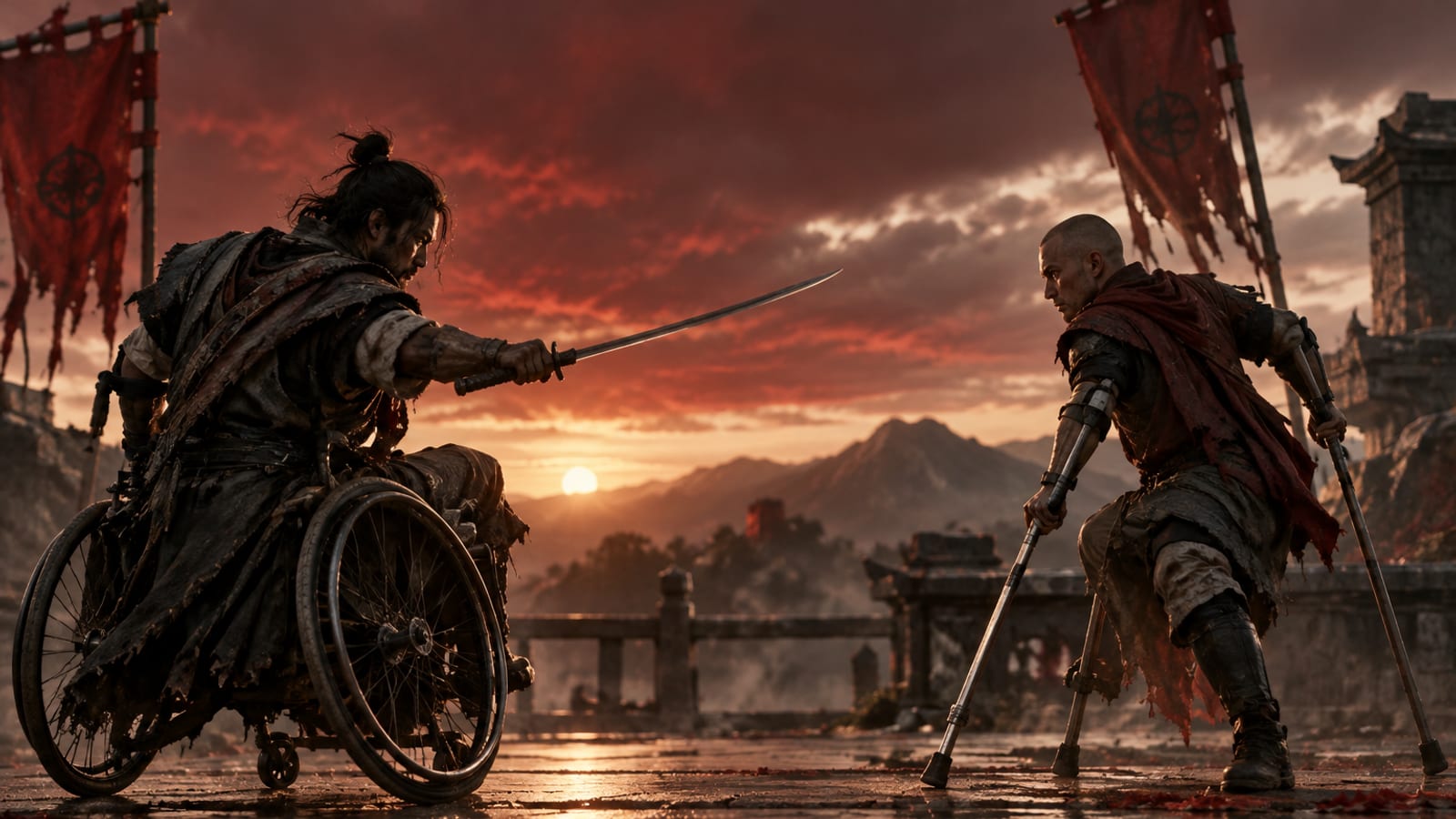
The Final Duel in Crippled Avengers: Solving the Choreography Problem Nobody Else Was Addressing
There is a fight at the end of Crippled Avengers (1977) that could not exist in any other film, because it is solving a problem no other choreographer was even trying to solve. Not a spectacle problem. Not a stunt problem. A dramatic problem — one that required the people making this movie to throw out the standard Shaw Brothers playbook and build something new from the ground up. I have watched this sequence more times than I can count, and it still earns it every time.
What Everyone Else Was Doing (And Why It Wouldn’t Work Here)
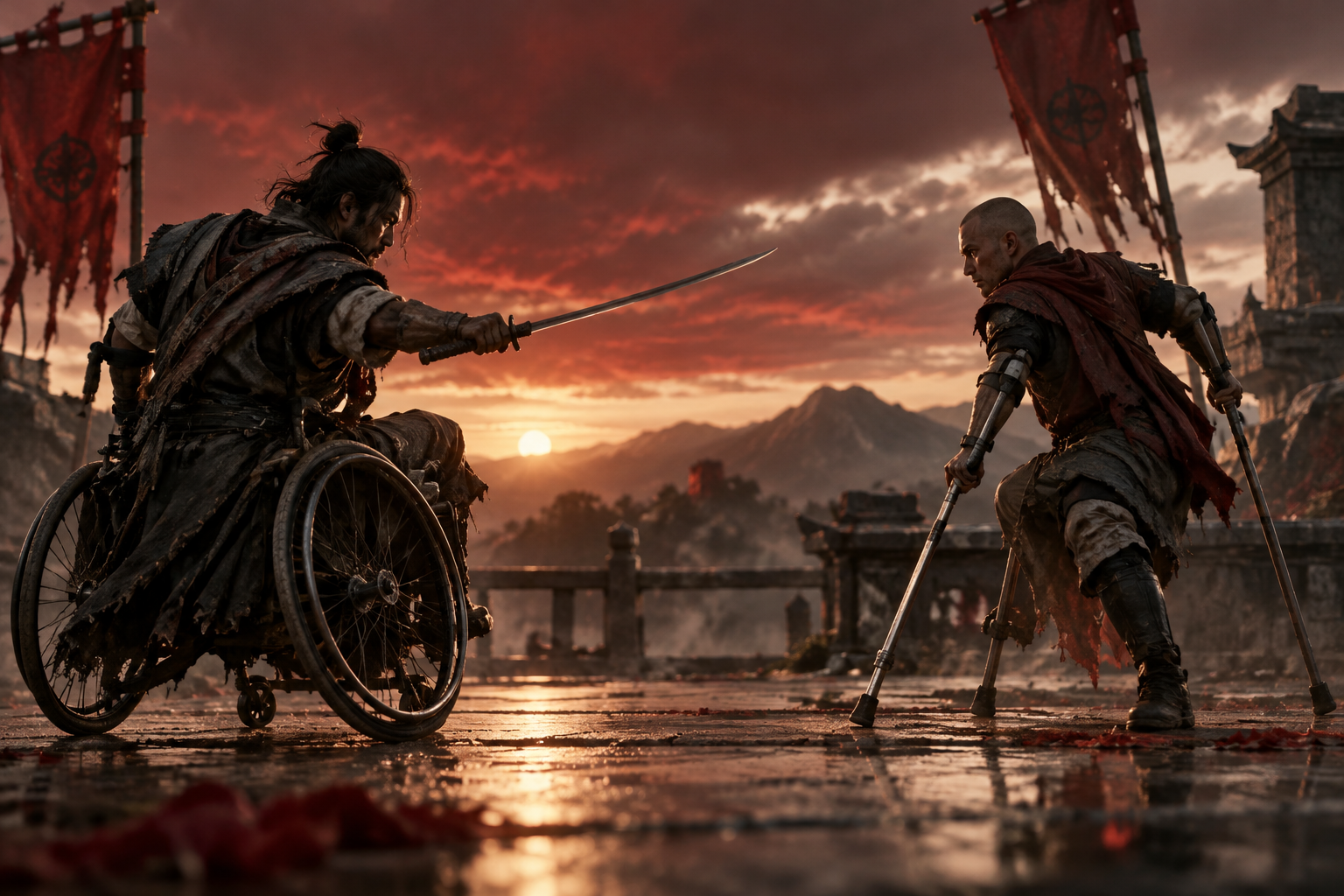
The standard choreography language of the era was built on speed, elevation, and acrobatics. Shaw Brothers productions and Golden Harvest both leaned hard into rapid-fire exchanges, flying kicks, and stunt work that rewarded performers with full range of motion. That approach produced some of the most exciting fight sequences ever put on film. It also depended entirely on bodies that could move without restriction.
The Shaw Brothers’ influence on the genre ran deep — gravity-defying footwork, relentless tempo, the sense that any fighter might leave the ground at any moment. That vocabulary is thrilling when it fits the story. In Crippled Avengers, it would have been a lie. These characters carry real physical constraints as part of who they are. Choreography that ignored those constraints would not just look wrong — it would betray the entire film. The craft here had to start from a completely different place.
The Specific Choreography Problem: Fighting From Stillness
Here is the actual problem the choreographer had to solve: how do you build a fight that is dramatically honest about each character’s limitations while still delivering something that holds an audience? This is not about making disabled fighters look impressive for its own sake. It is about making the fight make sense — about finding a form that grows directly out of who these people are and what their bodies can and cannot do.
Every character’s specific limitation defined what was available to them in the fight. A character without full mobility cannot rely on the swift repositioning that most kung fu choreography takes for granted. So the choreography had to invent a different language entirely — one built around what is achievable from a position of stillness rather than adapting existing forms that require complete freedom of movement. That is a genuinely hard problem, and most filmmakers of the period were not asking it.
How The Sequence Actually Works (The Solution)
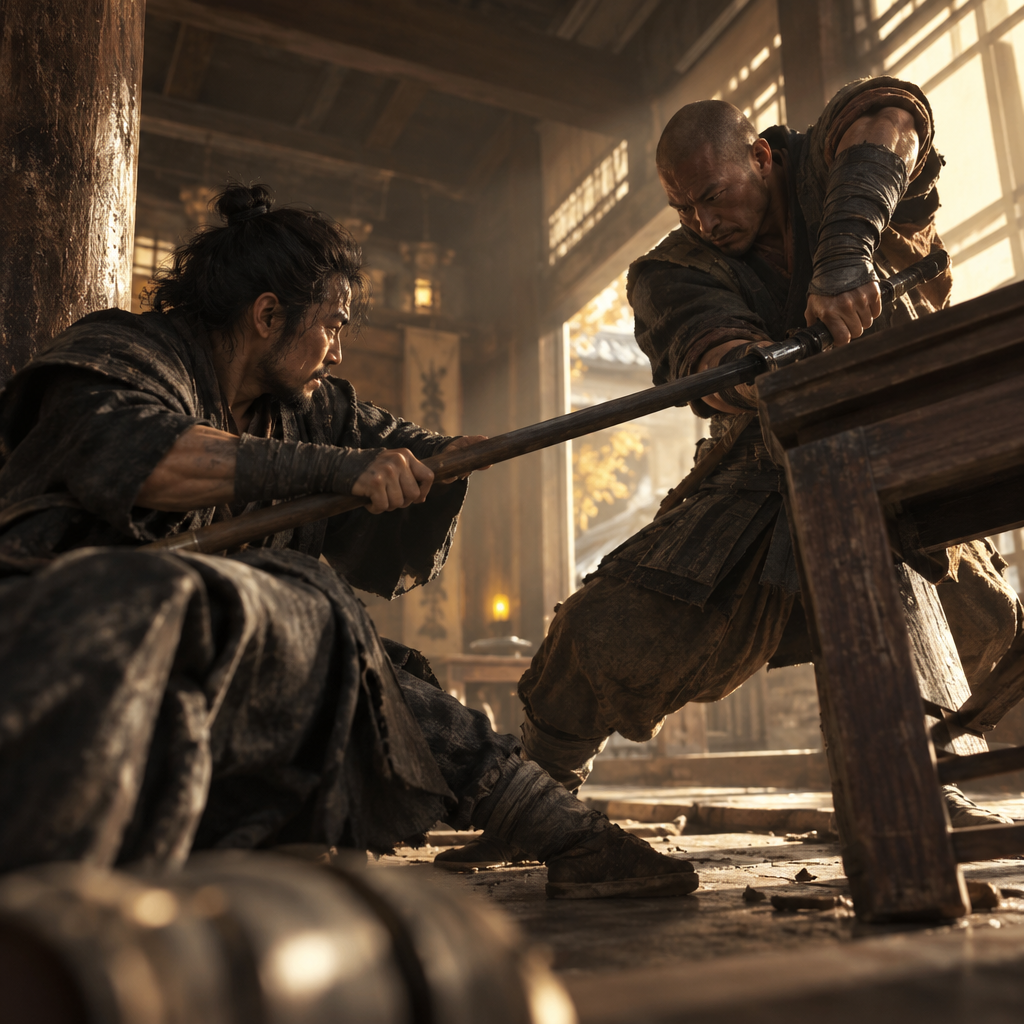
The answer the film lands on is leverage and proximity. Instead of mobility, the fighters use their environment — walls, angles, the space between bodies — as the primary resource. The camera frames immobility not as a weakness to be overcome but as a form of concentrated power. That reframing is everything.
Close-up shots do a lot of the work here, emphasizing each fighter’s control over the immediate space around them rather than their ability to cross a room. Confined settings force direct, creative engagement rather than the circling and repositioning that open-space fights rely on. The tension comes from compression, not velocity. It is the same principle at work in the Ladder Sequence in The 36th Chamber of Shaolin — every movement is load-bearing, nothing is decoration.
The specific moments that stick with me are the ones where a character’s limitation becomes the trap. Conventional choreography would have written around those moments. This film writes through them, and the result is a fight that feels earned in a way that pure stunt work rarely does.
Why This Approach Disappeared (And What That Cost Us)
Action cinema drifted toward spectacle, and character-driven choreography became harder to find. The industry’s appetite for bigger set pieces and faster cutting pushed the craft away from the kind of problem-solving you see in Crippled Avengers — the kind where the fight exists to serve the story rather than the other way around. When the choreography stops asking who these people are, you feel it, even if you cannot name what is missing.
There are plenty of films from the decades that followed where this approach would have made the action sequences genuinely memorable instead of just technically impressive. The emphasis on technically accurate fight scenes that honor the character’s lineage and physical reality is rarer than it should be. What Crippled Avengers understood — that constraints are a creative resource, not an obstacle — is a lesson the industry keeps having to rediscover.
How To See This Sequence (And Where To Find It)
If you are coming to this film for the first time, find a version that keeps the sequence intact. A restoration that preserves the original audio is worth the extra effort — the sound design is part of how the fight communicates. Subtitles help if you are not working from a Mandarin print, but make sure they are synced to the audio track you are actually watching, because a mismatch pulls you out of the scene at exactly the wrong moments.
The duel lands near the film’s climax, so give yourself the full buildup. The choreography’s intelligence only fully registers if you understand what each character is carrying into that final confrontation. The context is not preamble — it is part of the fight. Old School Shaolin and Wu is a good place to keep building your understanding of classic kung fu cinema, with analysis that takes the craft seriously and treats the performers with the respect their work deserves.
What this sequence proves is that the most interesting choreography in the genre was not always the flashiest. Sometimes the most underrated work is the work that solved the hardest problem quietly, without calling attention to the solution. The final duel in Crippled Avengers did exactly that, and it is still worth your full attention.
Technical Breakdown: Reading the Mechanics of the Fight
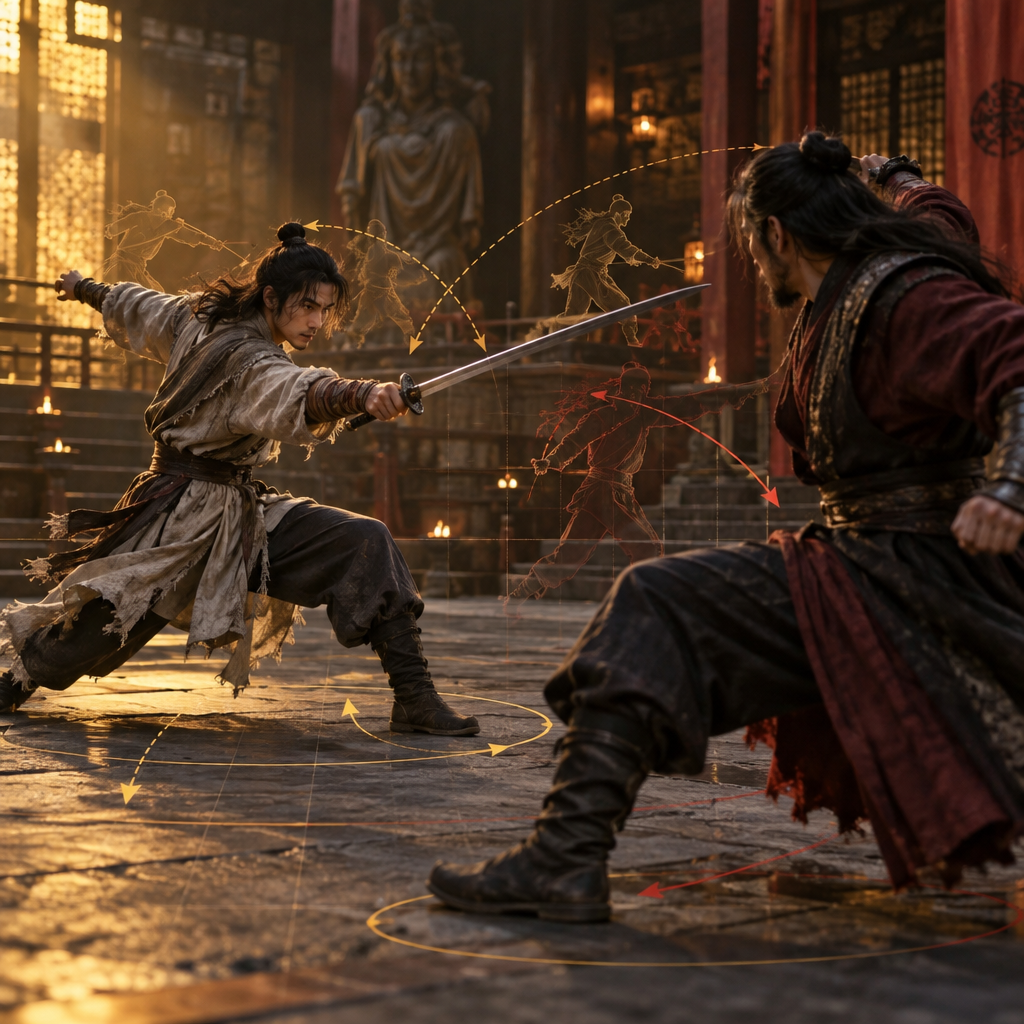
Once you know what to look for, the mechanics of the final duel become readable in a way that rewards repeated viewing. The choreography is operating on three levels simultaneously — timing, spatial awareness, and physical storytelling — and each one is doing specific work.
Timing and Rhythm
The rhythm of this fight is not the rapid-fire tempo most people associate with the genre. It is deliberate, with pauses that carry dramatic weight rather than dead air. Those pauses are where the characters’ strategic thinking lives — where you see them reading the situation and choosing. The choreography treats each beat as a decision, not just a transition between moves, and that is what gives the sequence its tension.
Spatial Awareness
The set design is doing real work here. The fighters navigate their environment with an understanding of exactly what their bodies can and cannot do, and the space is arranged to make those negotiations visible. A wall becomes a support structure and a tactical position at the same time. What looks like a constraint on the choreography is actually the choreography — the limitation and the form are the same thing.
Physical Storytelling
This is where the sequence earns its place in the conversation about great fight choreography. Every movement carries information about who these people are — their resilience, their ingenuity, the specific way each character has learned to live inside their body’s reality. You are not just watching a fight. You are watching a story told through the grammar of physical conflict, and the two things are inseparable.
A Checklist for Analyzing Similar Fight Sequences
- Character Integration: Does the choreography reflect the character’s specific abilities and limitations?
- Environmental Use: How effectively does the scene incorporate the setting as part of the fight?
- Emotional Impact: Does the sequence convey the intended emotions and narrative progression?
- Technical Precision: Are timing and rhythm used to build tension and control the scene’s flow?
- Innovation: Does the choreography introduce something new — a form or approach that the genre had not seen before?
Case Study: What Came After
The approach pioneered in Crippled Avengers found its way into the work of later filmmakers who understood that character-driven choreography and spectacular action are not opposites. Films like The Raid series drew on similar principles — confined spaces, bodies with specific capabilities, action that grows out of who the characters are rather than what looks impressive in isolation. The lineage is real, even when it goes uncredited.
Understanding what the choreography in Crippled Avengers was actually doing — the problem it identified and the solution it built — gives you a sharper eye for everything that came after. The performers who made that final duel work deserved more recognition than they got. The least we can do now is watch closely enough to see what they were actually pulling off.

Leave a Reply