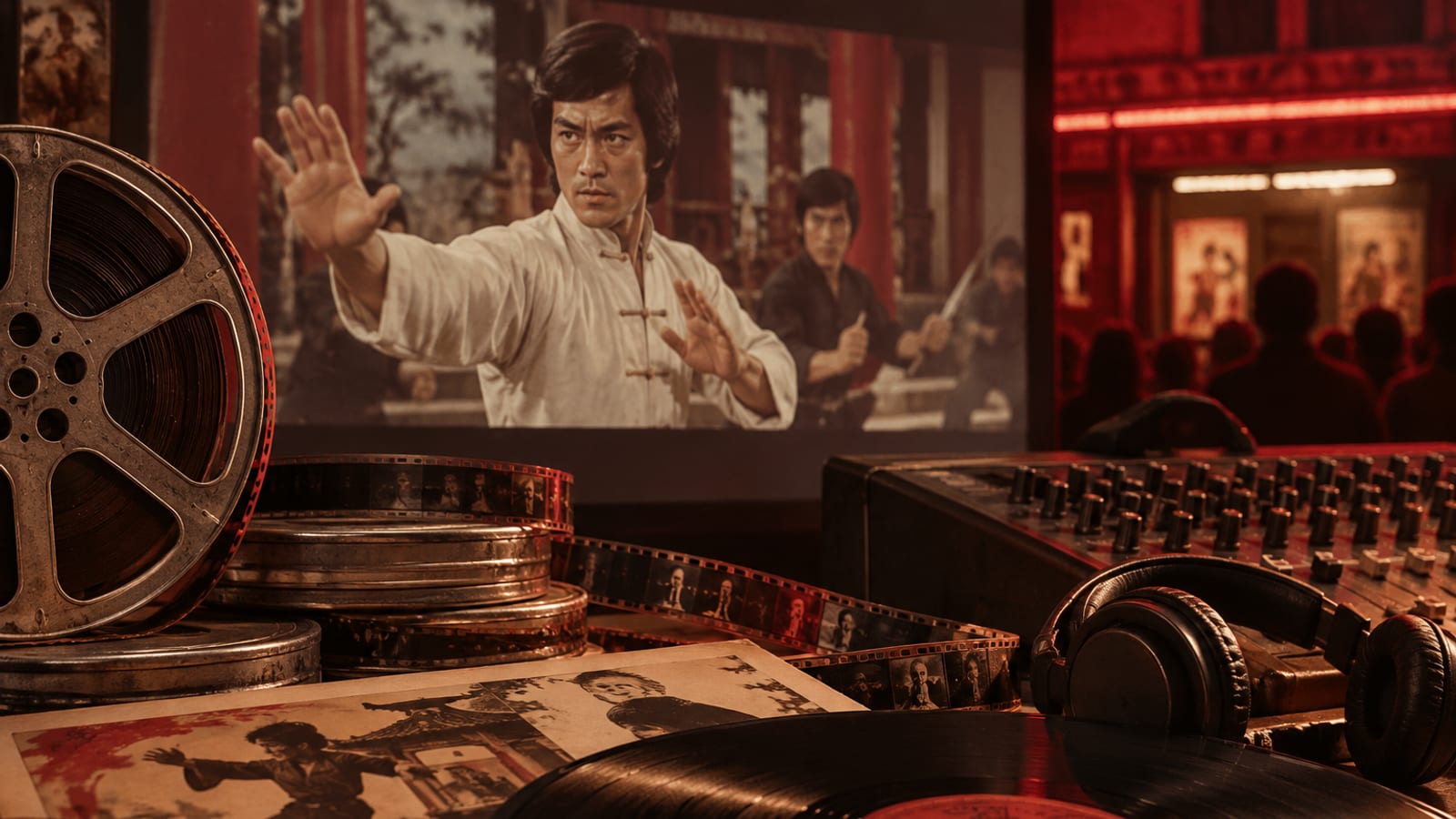
Picture a theater where the projector bulb is running hot, the print has been shipped to four cities before this one, and the dubbing is half a beat behind every punch. Now ask yourself: what keeps the story alive? Not the dialogue. Not the picture quality. The music. The Shaw Brothers scoring system was never built for concert halls. It was built to carry a film through exactly that room, on exactly that night, and still make you feel something when the hero finally moves. Shaw Brothers music was integral to this experience, creating an atmosphere that transcended the limitations of the venue.
Why Shaw Brothers Needed a Different Scoring System
Hollywood films in the 1960s and 70s were scored for first-run houses with calibrated sound systems and audiences sitting in clean seats. Shaw Brothers films were going somewhere else entirely. They were headed for the grindhouse circuit, for dubbed prints crossing language barriers, for regional distributors who would cut whatever they felt like cutting before the film ever reached a projector. The studio knew this. The music had to be built for it.
The dubbing process alone was enough to destroy most scores. Scenes got sliced to satisfy censors in one market, reordered to fit a different runtime in another, and the sync between image and sound rarely survived the journey intact. On top of that, American theater projection in those decades was rough on audio. Worn prints, underpowered speakers, rooms that were never designed for film in the first place. Shaw Brothers needed a scoring system that could absorb all of that punishment and still do its job. So that is what their composers built.
The Architecture of the Shaw Brothers Score
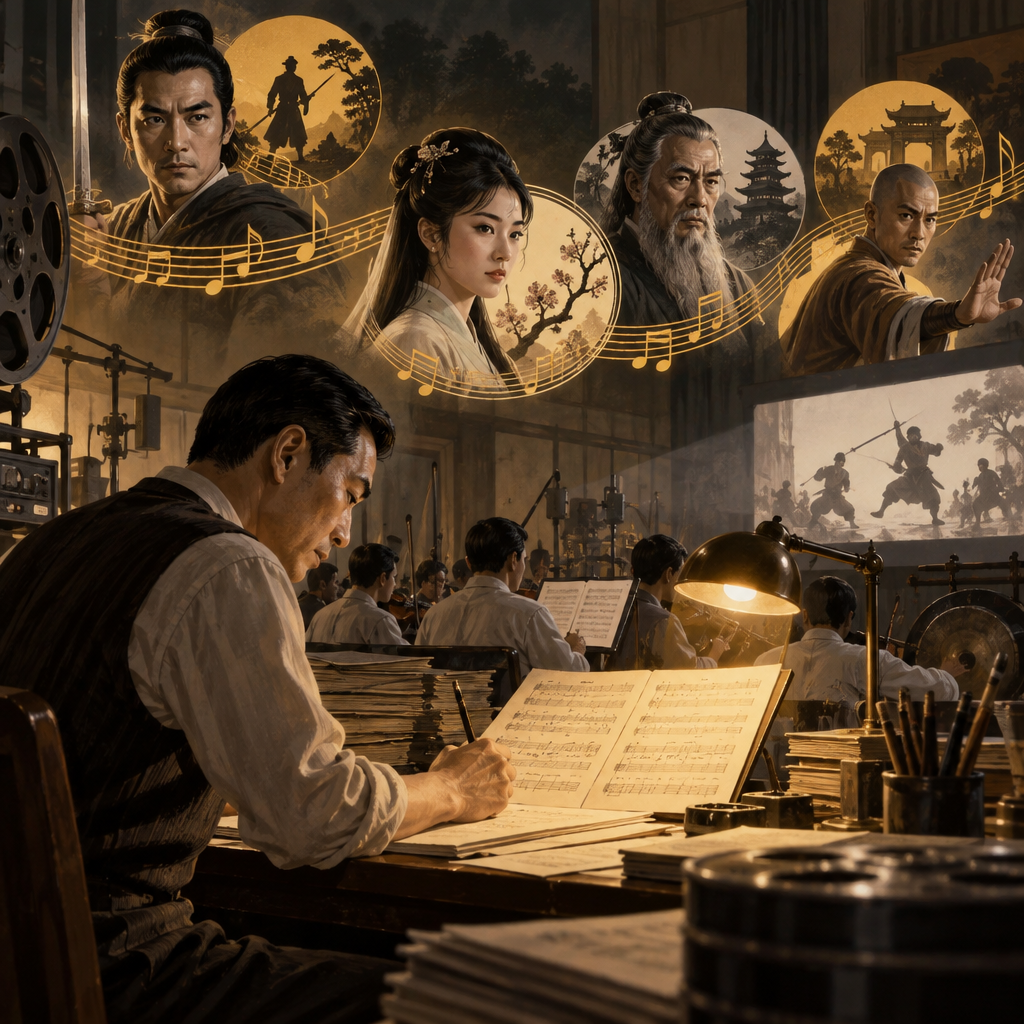
The core of the system was character-based rather than scene-based. Recurring motifs tracked people, not locations or plot beats. That meant when a scene disappeared in the edit, the emotional thread did not disappear with it. The audience still knew who they were following and how to feel about them, because the music had already told them. The instrumentation was chosen specifically to cut through bad dubbing and degraded audio, frequencies that a blown speaker could still reproduce clearly enough to register.
Silence and sparse arrangements did a lot of the heavy lifting too. A score that knows when to pull back gives an editor room to work. Gaps could be trimmed, scenes could be shortened, and the music would still land on the other side without sounding broken. These were not incidental choices. The Shaw Brothers composers were solving a distribution problem with craft, and the solution they arrived at turned out to be genuinely beautiful on its own terms.
The Composers Who Built the System
The people who actually constructed this approach were working under constraints that Western film composers of the same era never had to consider. Their scores needed to function as standalone emotional narratives, because the dialogue might be unintelligible, missing, or delivered by a voice actor who had never seen the film. That is a different creative problem than scoring for a controlled theatrical environment, and it produced a different kind of music.
Wang Fu-ling and Chen Yung-yu were central figures in developing what the Shaw sound became. Their specific contribution was the leitmotif structure, themes assigned to characters that could carry emotional weight across cuts and dubbing sessions without losing coherence. Their scores survived the grindhouse circuit not by accident but because they were engineered to. Understanding the lineage of their work means understanding that these were composers operating at a high level of craft under conditions that demanded ingenuity at every step.
How Grindhouse Projection Changed What We Heard
Seeing a Shaw Brothers film in a first-run theater and seeing it in a grindhouse were genuinely different experiences, not just in comfort but in sound. Grindhouse sound systems had poor frequency response. Certain ranges dropped out entirely, others got pushed forward in ways the composers never intended. What came through the speakers was a filtered version of the original score, and over time that filtered version became the version people associated with the films.
The composers had anticipated some of this. Their instrumentation choices favored frequencies that would survive degraded playback, which meant certain instruments and rhythmic patterns became trademarks of the Shaw sound almost by necessity. The music that reached American grindhouse audiences was shaped by the rooms it played in, and those rooms left a mark on how an entire generation understood what kung fu cinema was supposed to sound like.
The Score as Editing Tool
Here is something that does not get discussed enough: the Shaw Brothers composers were not just scoring scenes, they were providing a structural guide for how those scenes could be cut, reordered, or shortened without the film falling apart. The repetitive motif system meant an editor could trim a sequence and the music would still resolve correctly on the other side. No re-scoring required. The film stayed coherent because the music had built coherence into its own architecture.
Several Shaw films were substantially re-edited for American release, and the ones that held together did so largely because of this system. Music bridged the gaps that censorship and regional cuts left behind. The relationship between composers and editors at Shaw Brothers was genuinely collaborative in a way that the finished films reflect, even if that collaboration has rarely been credited properly. The score was part of the editing process from the beginning, not added afterward.
What Happened When This System Met American Dubbing
American dubbing studios handling Shaw films for domestic release were working fast and working cheap. The results ranged from serviceable to genuinely difficult to sit through. But here is what the scoring system did in those situations: it held the emotional line when the dialogue could not. When a voice performance was flat or a translation missed the point entirely, the music was still telling you what the scene meant and how the character felt. That is not a small thing. That is the difference between a film that loses an audience and one that keeps them.
The technical process of dubbing also degraded the original sound design, compressing and sometimes replacing elements that the Shaw composers had placed carefully. The score was resilient enough to survive that process better than most of what surrounded it. Audiences who never heard a clean print of these films still walked out having experienced something, and a significant part of what they experienced was the music doing its job under difficult conditions.
The Legacy: Why Modern Kung Fu Still Sounds Like Shaw
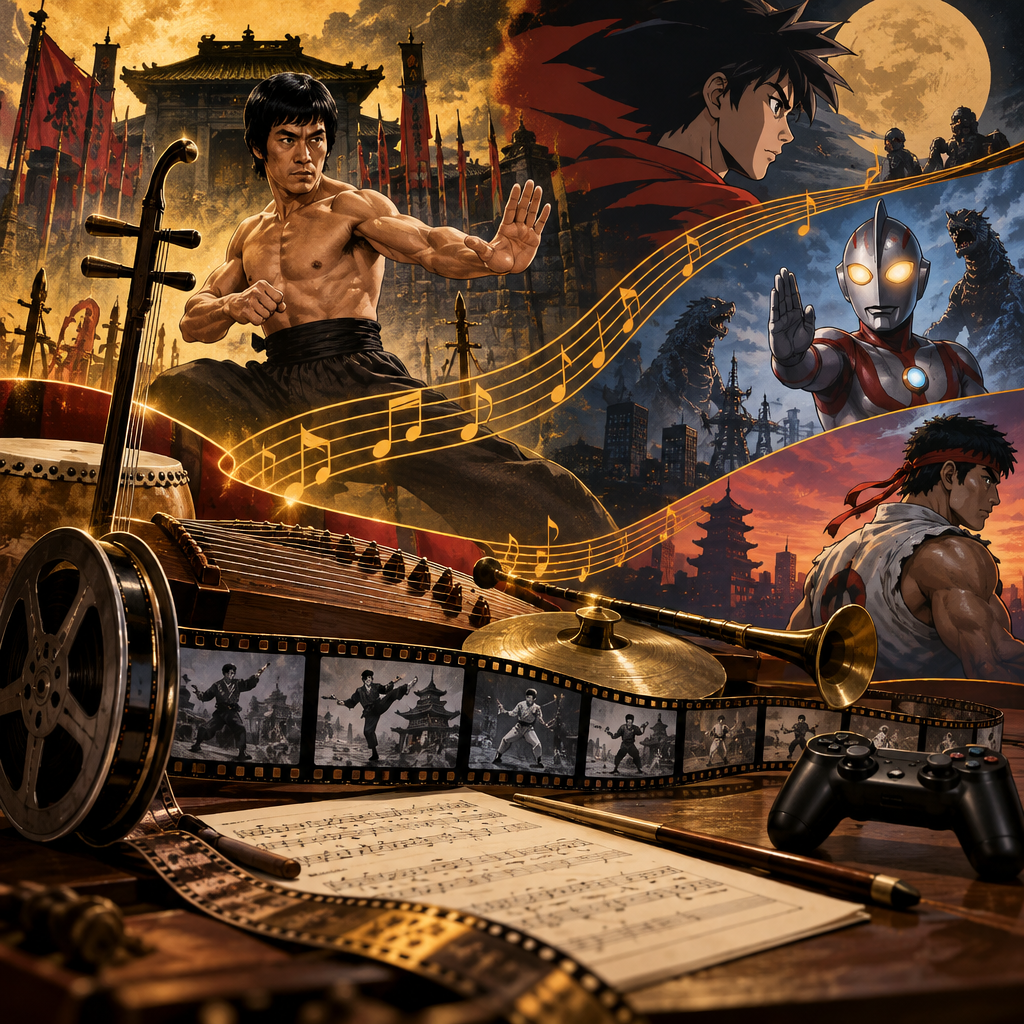
The Shaw Brothers scoring system left a mark that modern composers are still working inside, often without knowing its origin. You can hear it in anime, in tokusatsu, in video game soundtracks that reach for something that feels authentically rooted in martial arts cinema. The specific combination of character-based motifs, sparse arrangement, and instrumentation chosen for durability became the template for what kung fu is supposed to sound like, and that template has been copied so many times that it now reads as natural rather than constructed.
There is an interesting tension that comes up during restoration work. When Shaw prints are restored to their original audio specifications, longtime fans sometimes find them disorienting. The grindhouse version, the degraded version, became the reference point for an entire generation. That is how deep the system’s influence runs. What was engineered to survive bad conditions ended up defining the sound of the genre itself.
Explore our case studies on Shaw Brothers composers and the films that survived the grindhouse circuit intact by visiting Fight Breakdown: What Lau Kar-leung Was Teaching About Wing Chun in Dirty Ho and Why Most People Missed It. For those interested in experiencing these classic films, check out Where to Watch Classic Kung Fu Movies Right Now. Additionally, learn more about the resurgence of these cult classics in the Grindhouse Revival.
How the Shaw Sound Crossed Into Hip-Hop and Electronic Music
The Shaw Brothers scoring techniques did not stay inside martial arts cinema. The repetitive motif structures and strong rhythmic foundations that made these scores so durable turned out to be exactly what hip-hop producers were looking for when they started sampling in the 1980s and 90s. The beats and loops that Wang Fu-ling and his contemporaries built to survive a grindhouse projector were built to loop, and sampling culture recognized that immediately. The lineage runs directly from those Shaw scoring sessions into some of the most recognizable records of the past four decades.
Electronic music found something different in the same material. The unconventional instrumentation and the way Shaw composers used texture and atmosphere as structural elements gave later producers a model for building music that did not rely on conventional harmonic movement. The cross-genre reach of the Shaw scoring system is not a footnote to its film history. It is evidence of how thoroughly the craft behind those scores exceeded the conditions they were made for.
For those looking to dive deeper into the world of Shaw Brothers music and its impact, Old School Shaolin and Wu offers a comprehensive exploration of these timeless scores and their enduring legacy.

Leave a Reply