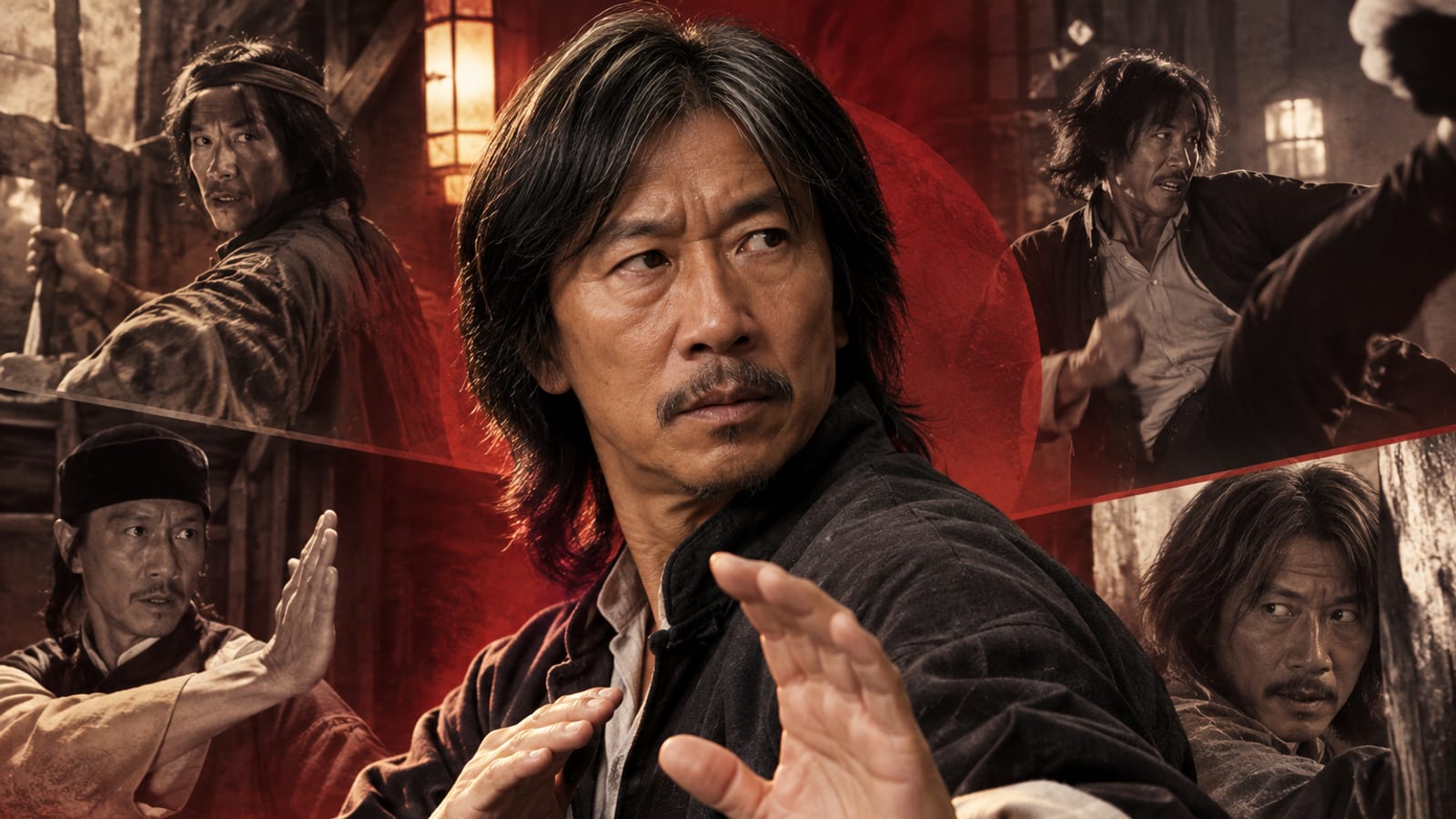
You are watching a crowd scene. There are maybe thirty people on screen. The lead actor is somewhere in the middle of the frame doing what leads do. And then your eye catches someone at the edge of the shot — low stance, deliberate footwork, every movement landing with a weight that the scene does not technically require of him. That was Leung Kar-yan. He never got top billing, but if you watched a Shaw Brothers or Golden Harvest film in the 1970s and 1980s and found yourself suddenly locked onto a minor villain’s footwork, you were watching a master at work.
Who He Was and Why He Mattered
Leung Kar-yan — most people who love these films know him as Beardy, after the signature facial hair he wore through most of his career — was a constant presence in classic kung fu cinema for good reason. He rarely played the leading man. He did not need to. His presence in a supporting role was its own kind of guarantee, a signal that the film you were watching took its craft seriously enough to put a real performer in every corner of the frame. He worked across Shaw Brothers and Golden Harvest productions for decades, and in that time he became one of the genre’s most reliable and underrated figures.
The era had its stars — Bruce Lee, Jackie Chan — and those names pulled audiences into theaters. But the films those stars made were only as good as the performers surrounding them. Supporting fighters gave the leads someone worth fighting. They set the rhythm of the scene, absorbed the choreography, and made the hero’s victory feel earned. Without performers like Leung doing that work with genuine commitment, the genre would have been a series of one-note solos instead of the ensemble craft it actually was at its best.
Leung’s work belongs in the same conversation as other hidden heroes of this lineage, like Angela Mao Ying, who brought the same level of commitment to roles the industry treated as secondary. What they shared was a refusal to phone it in, no matter where the camera was pointed.
The Technical Signature: What Set Him Apart on Screen
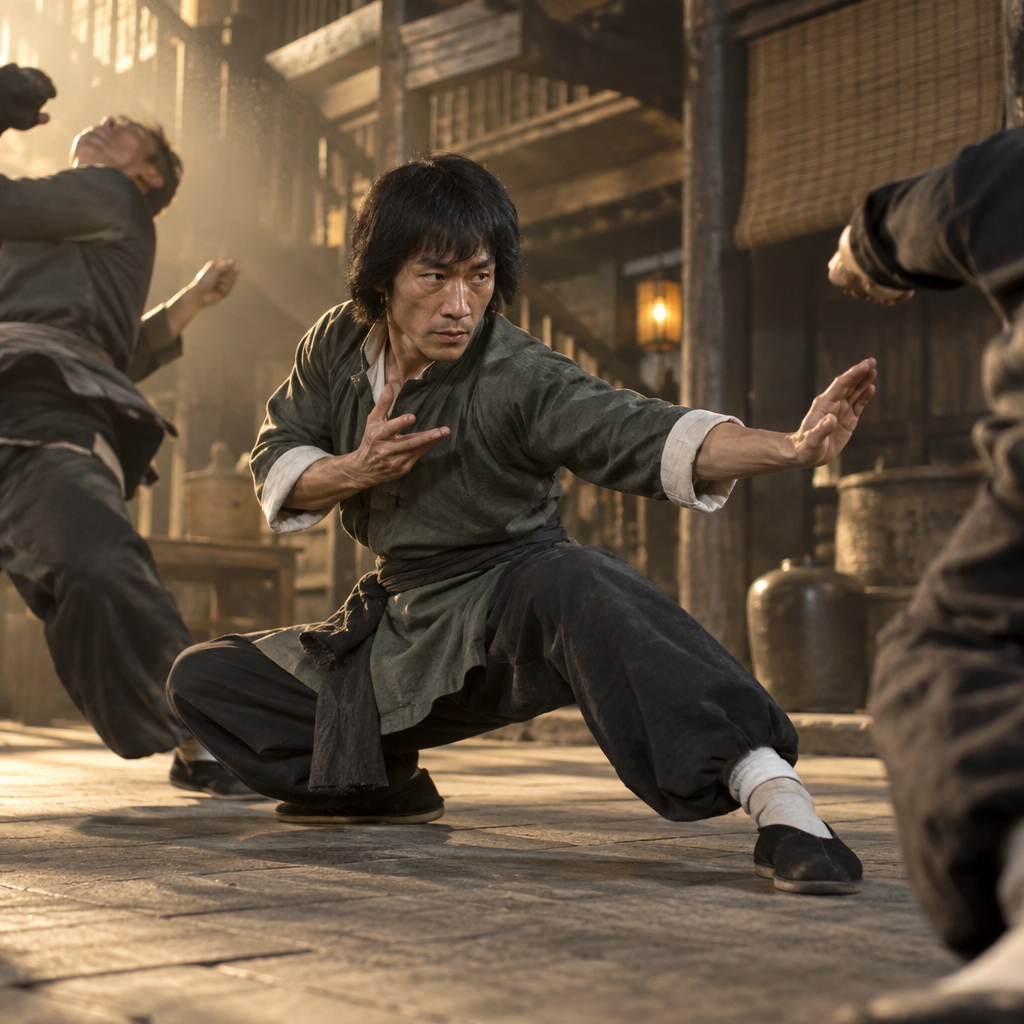
Watch Leung Kar-yan’s stance in any of his fights and the first thing you notice is how low and grounded he stays. That base is not decorative. It lets him shift between offense and defense without telegraphing the transition, which is exactly what makes his movement read as both aggressive and controlled at the same time. The fight never looks like it is waiting for him to catch up to it.
What he did with economy of motion is worth studying on its own. Every punch and kick carries a clear purpose. There is no excess. The choreography he worked within was tight, but Leung had a way of threading improvisation through the planned sequences so that each fight felt alive rather than executed. That combination — disciplined form underneath, spontaneous energy on top — is harder to achieve than it looks, and most performers in supporting roles never bothered trying.
On camera, the result was fights that told you something about the character throwing the punches, not just the stunt work itself. That quality connects him directly to the approach of choreographers like Lau Kar-leung, who built his entire directorial philosophy around the idea that the fight is always also a story.
The Films Where He Shone
If you are coming to Leung Kar-yan for the first time, a few films are essential. The 36th Chamber of Shaolin (1978) is the obvious starting point — it is one of the Shaw Brothers’ finest productions, and watching how Leung operates within that ensemble gives you an immediate sense of what a skilled supporting performer contributes to the whole. Shaolin vs Wu Tang (1983) shows his technical range and the kind of screen presence he could generate without ever demanding the spotlight.
The Victim (1980) is the one I keep coming back to. His character work there, the way the arc of his role tracks alongside the fight scenes rather than separately from them, is a genuine masterclass in making a supporting role stick in your memory long after the credits roll. Each of these films rewards close attention to what he is doing in the frame, not just what the lead is doing.
Tracking down clean prints is its own challenge. Streaming availability shifts constantly, and the version you find matters. Collectors who have been through this before often use resources like the streaming guide for Lau Kar-leung’s films as a model for how to approach the search systematically.
How Supporting Fighters Built the Genre From the Inside Out
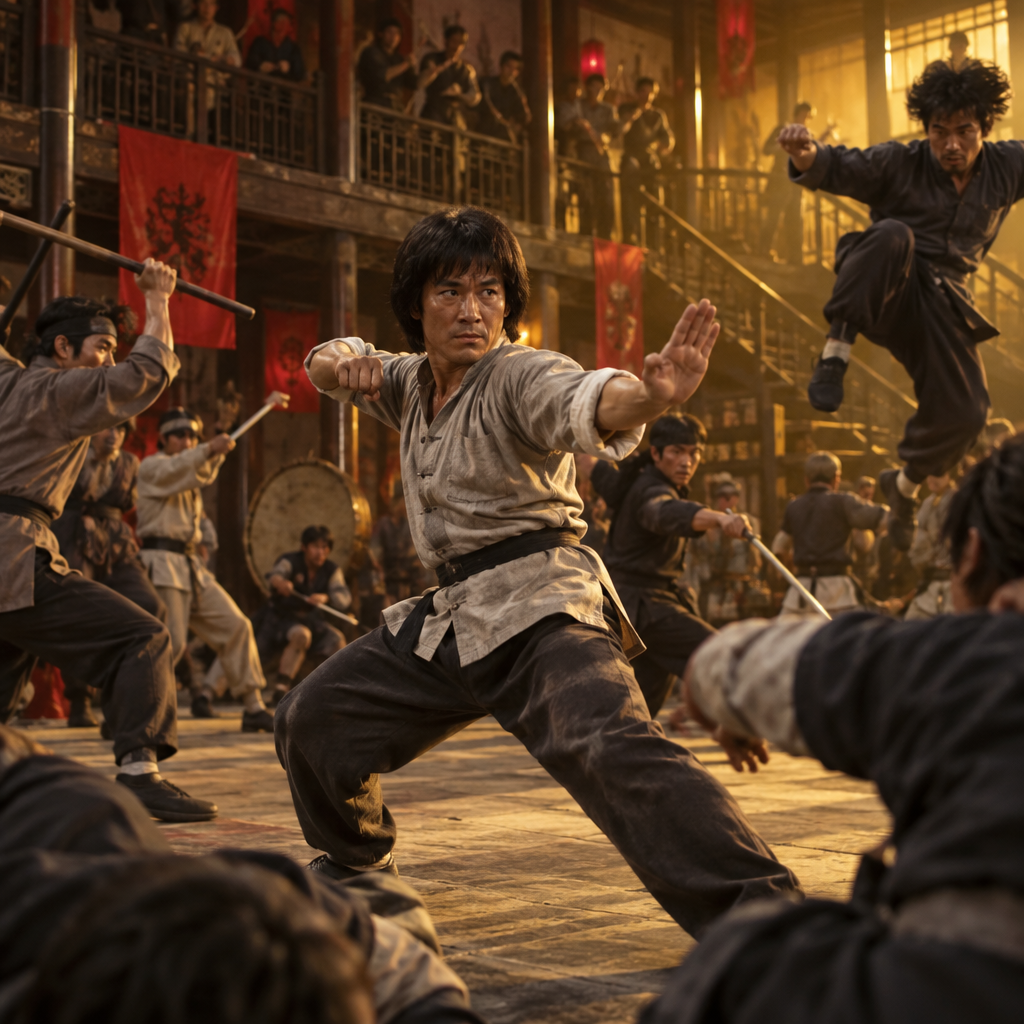
Shaw Brothers and Golden Harvest productions were built on ensemble choreography. That is not a minor detail — it is the structural fact that explains why those films hold up when so many of their contemporaries do not. A lead actor performing against weak opposition looks weak himself. The supporting fighters were the infrastructure that made the whole thing stand.
Performers like Leung Kar-yan did more than fill out the frame. They controlled the pacing of fight scenes, maintained the credibility of the action, and gave the narrative somewhere to go between the moments the lead was carrying the story. When that work is done well, you do not notice it consciously. You just feel the film moving correctly. When it is done badly, every scene drags and every fight feels hollow.
Calling these performers “supporting” has always undersold what they actually were. They were the foundation. The lead stood on top of what they built. Recognizing that does not diminish the stars — it gives you a more honest picture of how the craft actually worked on those sets.
Finding Leung Kar-yan: What Survives and What We’ve Lost
Tracking down Leung Kar-yan’s work in good condition is genuinely difficult. Many of these films were not treated as cultural artifacts worth preserving — they were product, and once the theatrical run ended, the prints were not always handled with care. Restoration efforts have recovered some of what was at risk, but the situation is uneven. Remastered DVDs and Blu-rays are your best option for print quality. Streaming versions vary widely, and the difference between a clean restoration and a degraded dupe is not a minor aesthetic preference — it changes what you can actually see in the choreography.
The dubbed versus subtitled question matters too. Dubbed versions were the grindhouse standard, and there is something historically honest about watching them that way. But subtitled prints preserve the original performances more completely, and for a performer whose craft was as physical and precise as Leung’s, you want every detail intact.
Community forums and archival sources remain the most reliable guides for tracking down specific prints. Old School Shaolin and Wu exists partly for exactly this reason — to keep this lineage documented and accessible for people who care about finding the real thing. What we have lost to deterioration and neglect is real, and it is worth being honest about that. But the passion of the people who refused to let these films disappear entirely has preserved more than you might expect.
Start your rewatch: Pick one of the films mentioned above and watch it with Leung Kar-yan’s footwork in focus. You will see the entire scene differently.
Influence and Legacy: What He Left Behind
Leung Kar-yan’s influence on the performers who came after him is the kind that does not always get credited properly because it moved through practice rather than press. Younger actors and stunt performers studied his films not as entertainment but as technical material — the way a musician transcribes a solo to understand how it was built. His ability to execute complex choreography with what looked like ease set a standard that people in the industry recognized even when audiences did not.
He also mentored. That matters in a genre where so much knowledge was passed down through direct contact rather than formal instruction. The willingness to share technique, to bring younger performers along rather than guard what you knew, shaped the cohort that carried the genre into the next decade. That spirit of transmission is one of the defining characteristics of the martial arts film community at its best — skills and form moving from one generation to the next through the same kind of lineage that the films themselves were always celebrating.
Leung Kar-yan’s Signature Moves: A Checklist for Fans
- Low Stance Transitions: Pay attention to how Leung shifts from defensive to offensive movement without losing his grounded base. The transition is the technique.
- Economy of Motion: Watch for how little he wastes. Every action has a purpose. Nothing is there just to fill the frame.
- Facial Expressions: His face is always doing character work, even mid-fight. That is what separates a performer from a stunt person.
- Improvisational Flair: Look for the moments that feel slightly unplanned — the spontaneous adjustments that keep the choreography from feeling mechanical.
Sitting with these details changes how you watch the films. Leung Kar-yan’s legacy lives in the techniques he practiced and passed on, in the performers he influenced, and in every scene where a supporting role landed harder than it had any obligation to. That is the work. That is what endures.

Leave a Reply