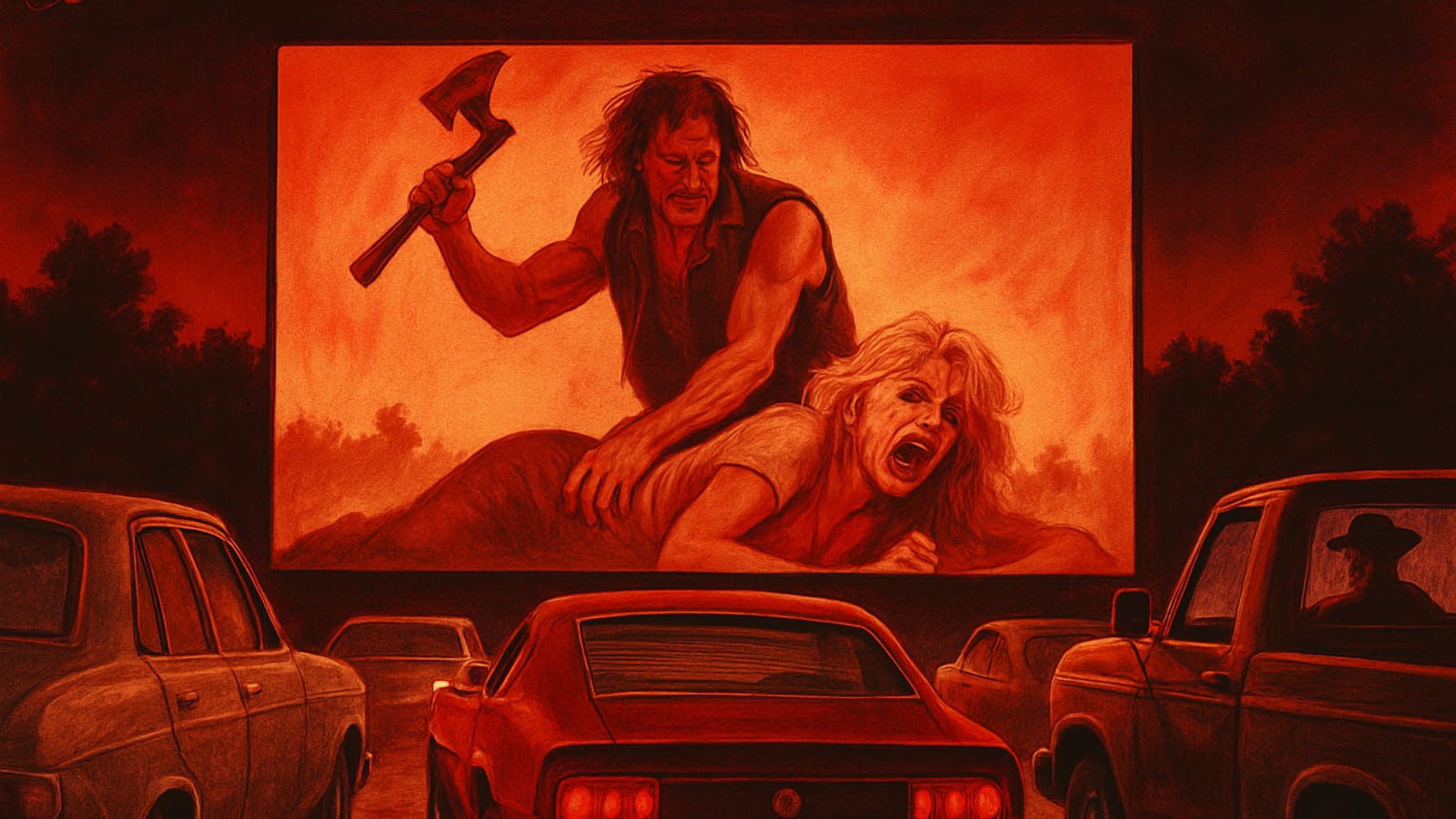
Summer of 1975. You are in the back seat of your family’s car, the speaker hooked over the half-rolled window, and the programmer who put together tonight’s double bill was not thinking about your film education. He was thinking about keeping bodies in those cars. What he could not have known is that the film he slotted into the second position—the one that started after ten o’clock, the one nobody drove out specifically to see—would turn out to be more interesting than the feature. That is how grindhouse worked. That is how a lot of us got here. These five films played American drive-ins in 1975, got used up, and got forgotten. They deserve better than that. Grindhouse kung fu films were a significant part of this era, captivating audiences with their raw energy and unique style.
Why Drive-In Programming in 1975 Still Shapes How We Watch These Films
Drive-in theaters in 1975 were not a niche venue. They were where a significant portion of American audiences encountered martial arts cinema for the first time, and the conditions of that encounter matter. The economics were simple: exhibitors needed films that could hold a crowd through a second screening, often starting late, often competing with the noise of a parking lot full of people who came for the other movie. Martial arts films held that crowd. The action read clearly at a distance. The stakes were physical and immediate. You did not need to catch every line of dialogue to follow the fight.
Dubbing gets dismissed constantly, and I want to push back on that. The dubbing on these films was a creative decision made by people who understood their audience. It was not always elegant, but it was functional, and sometimes it added something the original did not have—a harder edge, a stranger rhythm, a line reading that stuck in your head for forty years. The prints were often worn by the time they reached a given drive-in, colors shifted, frames occasionally jumped. None of that made the choreography less real. It just meant you were watching craft survive difficult conditions, which is its own kind of argument for how good the craft was.
Film One: The Performer Nobody Remembers
The first film on this list is built around a performer whose name most people cannot place, which is a genuine loss. The lineage is visible in every sequence—this is someone whose training predates the film industry, whose body already knew what it was doing before a camera was ever pointed at it. There is a duel midway through that I keep coming back to. The footwork is unhurried. The strikes land with a specificity that tells you exactly which form they came out of. You are not watching a stunt. You are watching someone demonstrate something they have spent years earning the right to demonstrate.
Finding this one takes some effort. Physical media is your best entry point—look at import labels that have been doing restoration work on this era. The stunt work alone justifies the search, and once you have seen this performer move, you will start noticing their absence from every conversation about the genre.
Film Two: The Dubbed Narrative That Actually Works
I know what you are thinking, and I am telling you to set it aside. The second film on this list is a case where the English dubbing script diverged from the source material in ways that genuinely serve the story. The voice cast—many of them working across a dozen productions in this period—understood the drive-in audience they were writing for. The pacing they built into the dialogue matches the episodic structure of the film itself, which was designed to let you step away for concessions and step back in without losing the thread.
What makes this one worth revisiting is how clearly you can see the collaboration between the dubbing team and the original choreography. The fights are not interrupted by the dubbed scenes. They are set up by them. That is not an accident. The people who put this version together were paying attention to the craft on screen, and they respected it enough to work around it rather than over it. That earns some credit.
Film Three: The Choreographer’s Signature
The third film is the one I would show someone who wanted to understand what a choreographer’s signature actually looks like. Every fight sequence here carries the same set of decisions: wide framing, long takes, a preference for showing the full body rather than cutting to close-ups of impact. Those are not default choices. They are a specific argument about where the meaning lives in a fight—not in the hit, but in the distance closed before the hit, the weight shift, the recovery. That argument is made consistently across every sequence in the film.
This approach set a standard that later productions were measured against, whether they knew it or not. The choreographer’s influence moved through the genre the way a teacher’s influence moves through students—you can trace the lineage if you watch carefully enough. This film is where that lineage is clearest, and it holds up under the kind of close attention that restoration-quality viewing now makes possible.
Film Four: The Crossover That Didn’t Get Remembered
The fourth film tried something that the genre mostly did not try again, which is probably why it got forgotten. It folded martial arts fight sequences into the structure of another popular genre entirely, and it did it without treating either half as the lesser element. The fights are integrated into the larger narrative rather than dropped into it. They mean something to the story. They change what happens next.
That hybrid approach did not catch on. Later productions moved back toward more conventional structures, and this film ended up looking like an experiment rather than a direction. But experiments are worth examining, especially when they work as well as this one does. The stunt work here is underrated specifically because the genre context kept people from looking at it straight. Watch it without the label and you will see what I mean.
Film Five: The One That Played Everywhere and Nobody Talks About
The fifth film was everywhere in 1975. Box office records from that summer show it running in drive-ins across multiple regions simultaneously, which means it was doing something right for a very broad audience. And then it disappeared from the conversation almost completely, overtaken by films that arrived later with better distribution and better-connected champions.
That disappearance is worth thinking about. We tend to treat the films that got written about as the films that mattered, but the films that actually played—that actually put people in seats, that actually introduced audiences to this form—those are a different list. This film is on that list. It deserves to be on the other one too.
How to Actually Watch These Films
Some of these are on streaming services that specialize in classic cinema. Others are going to require physical media, and for those I would strongly recommend import releases that have done restoration work rather than settling for whatever transfer happened to be available. The dubbing is part of the experience—find versions that preserve the original English dub where it exists, because that is what the drive-in audience heard, and it shapes the film in ways a new translation does not replicate.
Fan communities are genuinely useful here. The people who have been tracking down these titles for decades know which releases are worth owning and which ones to avoid. Degraded prints are sometimes unavoidable, and I would rather watch a worn print of the real film than a clean transfer of a compromised version. The craft survives the grain. It does not always survive a bad restoration.
For a comprehensive guide on where to start, check out Where to Watch Lau Kar-leung’s Directorial Catalog in 2024: A Complete Streaming and Import Guide.
Pick one of these five and watch it this week. Use whatever format you can get your hands on. Watch it the way a 1975 drive-in audience did—without apology for what it is, without ironic distance, without waiting for permission to take it seriously.
What These Films Actually Did to American Pop Culture
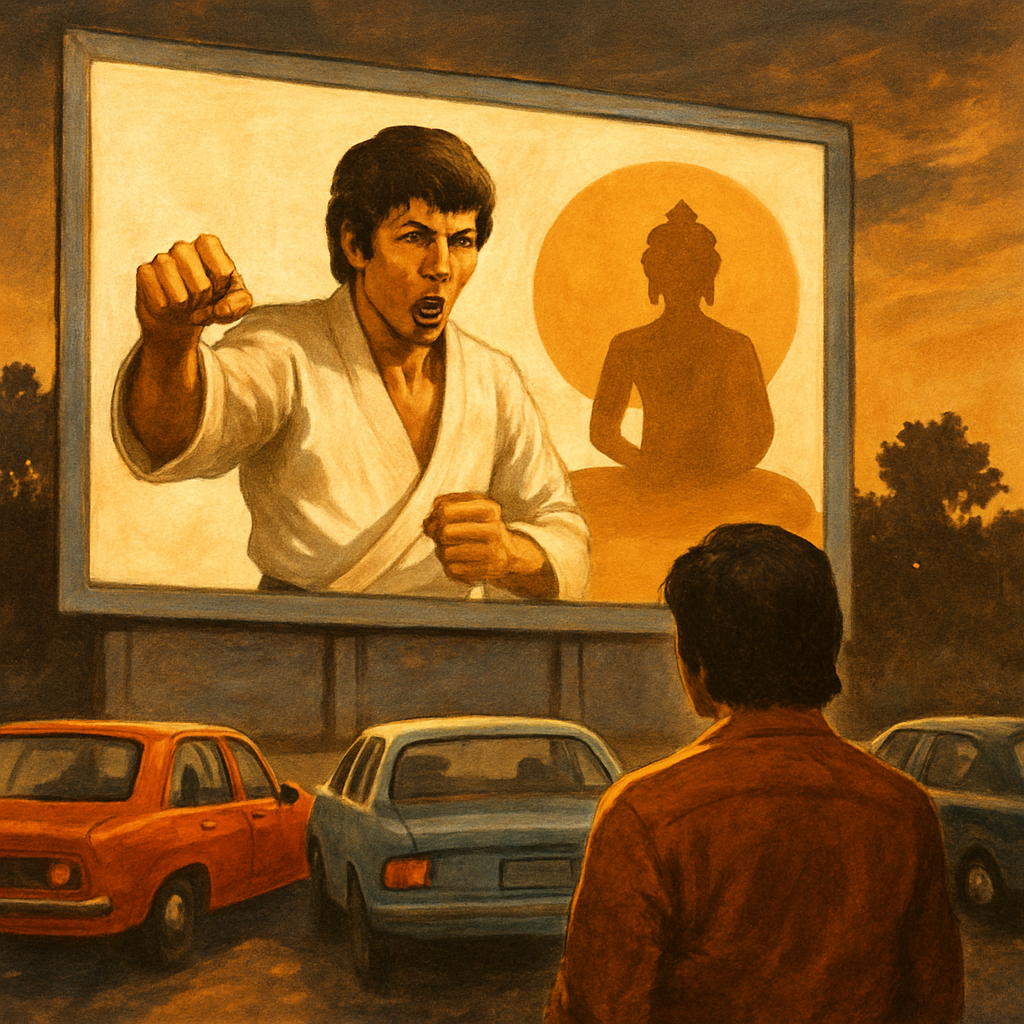
The martial arts films that ran on drive-in screens in 1975 were doing cultural work that nobody was formally crediting them for. American audiences who had never encountered the philosophy behind a particular form, who had no frame of reference for the training systems these performers came out of, were absorbing it anyway—through the fights, through the narrative structures, through the values that kept showing up in story after story. Honor. Discipline. The cost of skill. The obligation that lineage creates. These were not exotic concepts being imported for novelty. They were landing because they spoke to something real.
The performers in these films were treated as disposable by the distribution system that brought them to American screens. Their names were frequently dropped from marketing materials, their faces replaced on posters by drawings, their voices replaced entirely. And yet their work opened doors—for Asian actors, for Asian filmmakers, for a generation of American directors and choreographers who grew up watching these films and carried what they learned into everything they made afterward. The influence moved through fashion, through music, through the visual language of action cinema globally. It started in a parking lot in 1975, with a speaker hooked over a car window, and it has not stopped.
Setting Up a 1975 Drive-In Film Night: What You Actually Need
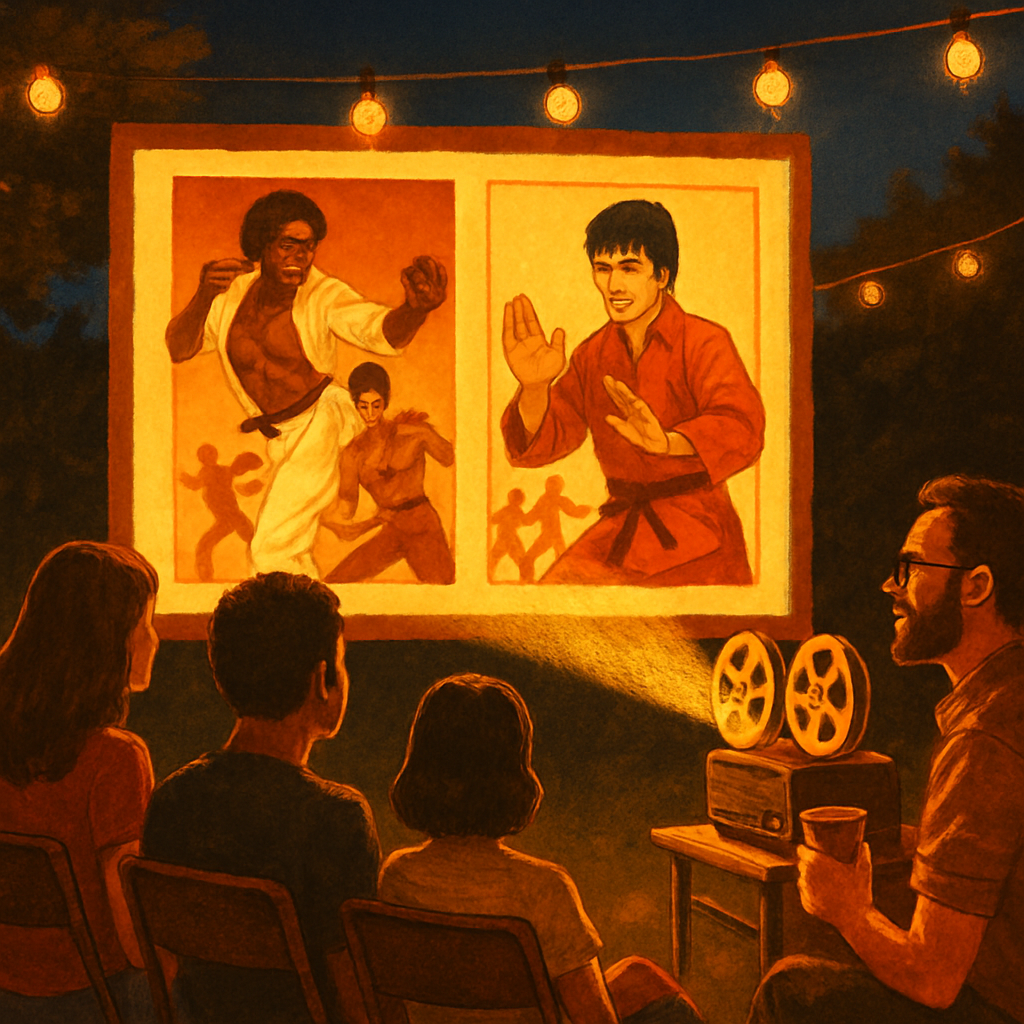
- Choose titles that actually played drive-ins in 1975: The specificity matters. You are recreating a real context, not a general vibe.
- Get outside if you can: A projector, outdoor seating, and ambient darkness do more for these films than any home theater setup.
- Use period-appropriate sound between screenings: The music that played before and after these films was part of the experience and set the tone before a single frame appeared.
- Classic concessions: Popcorn, hot dogs, soda. The drive-in diet was part of the ritual and it holds up.
- Come prepared to talk about the choreography: Have a few specific sequences in mind—long takes, form-based movement, stunt work that the camera trusted enough not to cut away from.
- Invite people who remember watching these films in the seventies: That memory is primary source material and it belongs in the room.
The point of doing this right is not nostalgia for its own sake. It is about giving these films the context they were made for, so you can see what they were actually doing rather than what they look like stripped of that context.
How to Know If Your Film Night Worked
You do not need a formal evaluation framework to know whether a film night landed. But if you are planning to do this more than once—and I hope you are—it helps to pay attention to a few specific things so you can make the next one better.
- Did people stay for the whole film: Drive-in audiences voted with their headlights. If people are still there at the end, the film held them.
- Did the conversation after go past surface reactions: If people are talking about specific sequences, specific performers, specific choices the choreographer made, you got somewhere real.
- Did anyone ask where to find more: That is the best outcome. Someone walked in not knowing this world and walked out wanting to go deeper into it.
- What did people say about the dubbing: Whether they loved it or found it distracting tells you something about how to frame the next screening.
- Did anyone come back: Repeat attendance is the only metric that actually matters for something like this. If people return, you are building something worth building.
Run these screenings long enough and you will find yourself with a room full of people who take this cinema seriously. That is the goal. The films earned it fifty years ago. We are just catching up. For those looking to dive deeper into the world of grindhouse kung fu, Old School Shaolin and Wu offers an excellent starting point with their curated selections and insightful commentary.

Leave a Reply