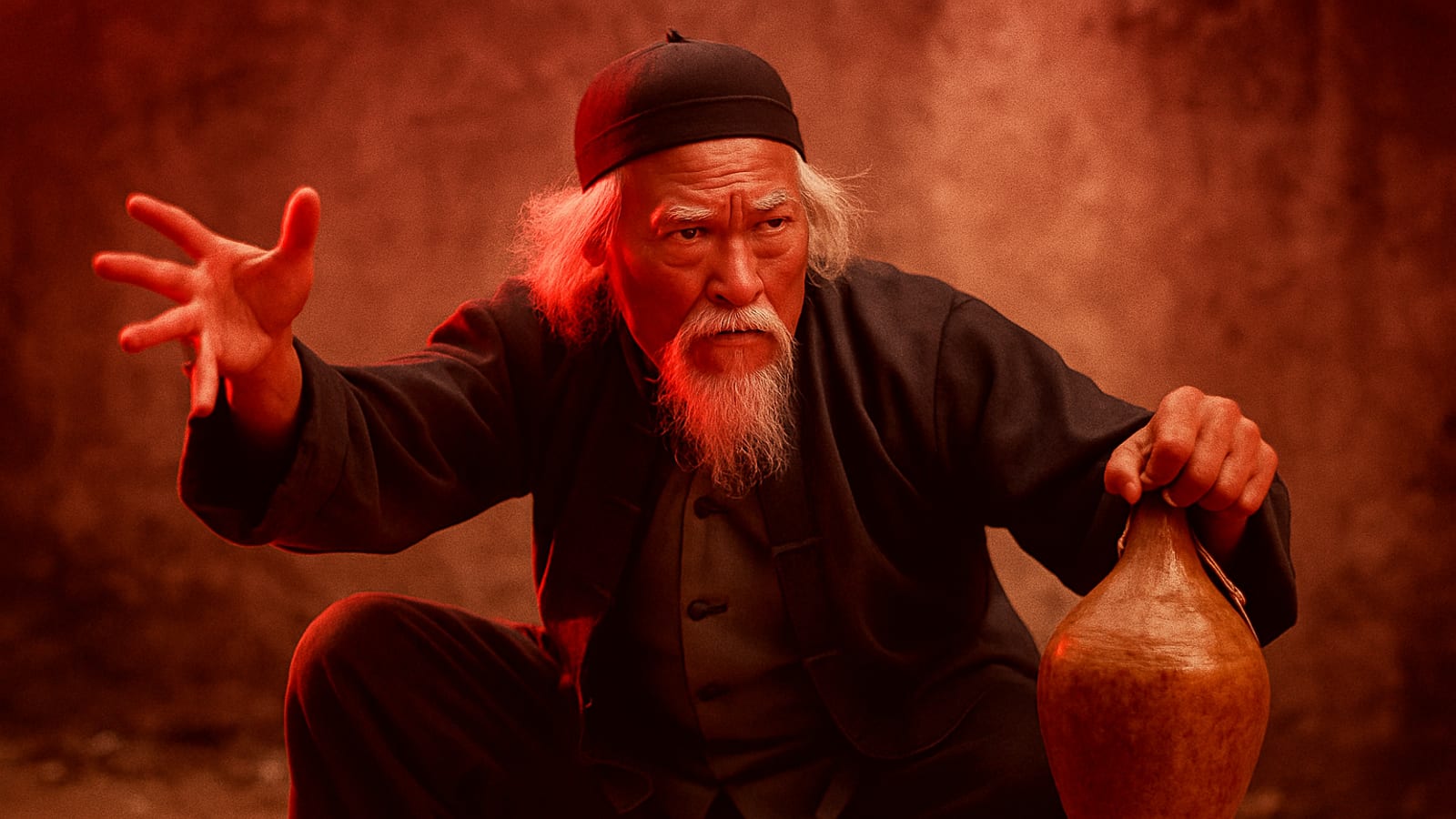
Here is what I keep coming back to: Yuen Siu-Tien built the whole thing, and most people who love these films have never said his name out loud. Jackie Chan got the marquee, the posters, the global distribution. Yuen got the credits, if you were reading carefully. His story is about what happens when genuine innovation moves faster than recognition, and it is worth slowing down to look at what he actually did.
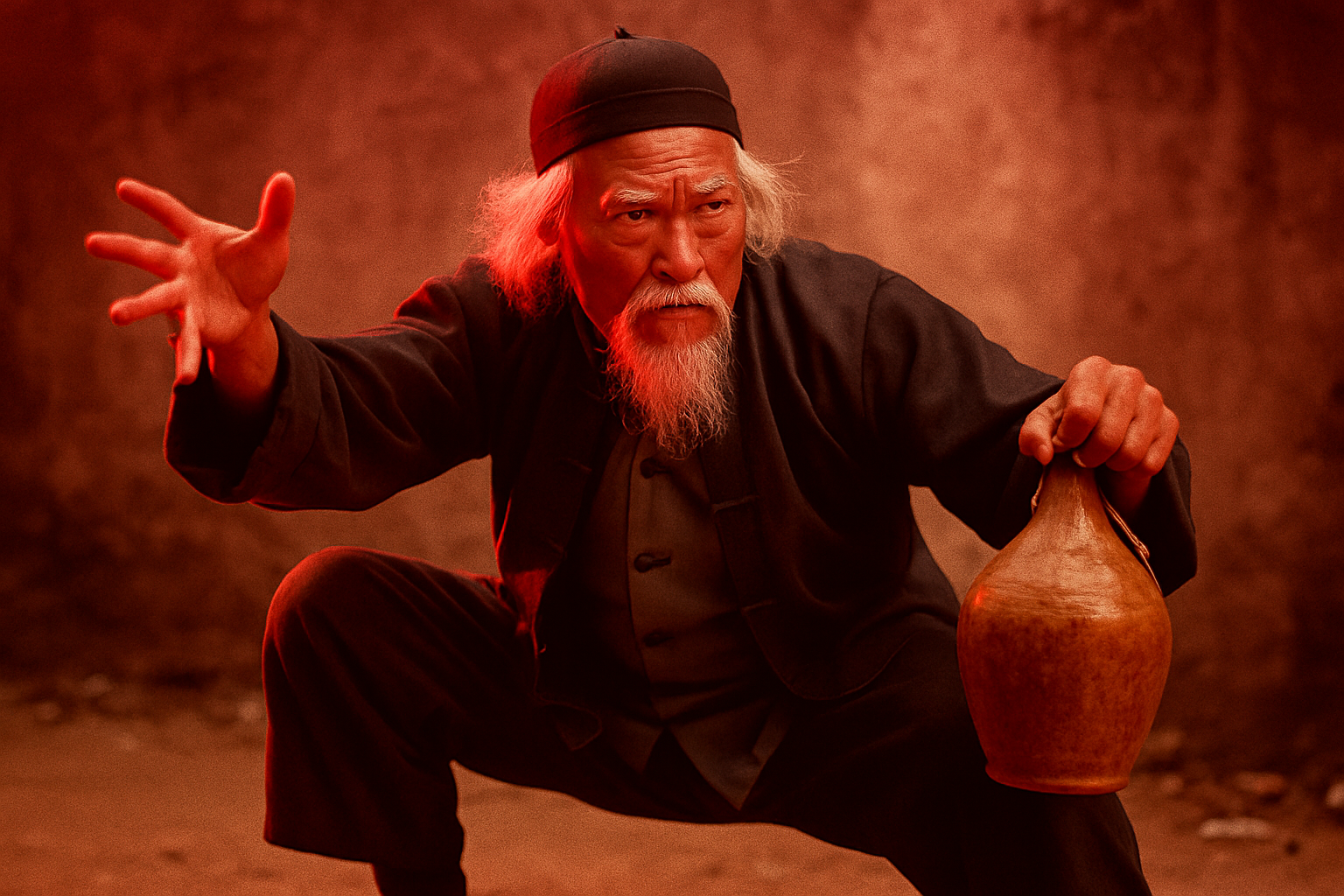
The Man Behind the Style (And Why His Name Never Traveled)
Yuen Siu-Tien was not a background figure who happened to wander into frame. He came from a family with deep martial arts roots, trained hard from early on, and brought that lineage directly into his work as both a choreographer and a performer. He was operating during the period when Hong Kong cinema was producing some of its most inventive work, before the international market had figured out it should be paying attention.
His credits include the films that matter most to this conversation: Drunken Master (1978) and Dance of the Drunk Mantis (1979). He was not just passing through those productions. He was shaping them. The era he worked in valued collective craft over individual celebrity, which is exactly the kind of environment where someone like Yuen could do extraordinary work and still end up underrated in the historical record.
That is not an accident of history. It is a pattern. The people who build the form rarely get the same credit as the people who popularize it. Yuen built the form.
What the Choreography Is Actually Doing (The Technical Innovation)
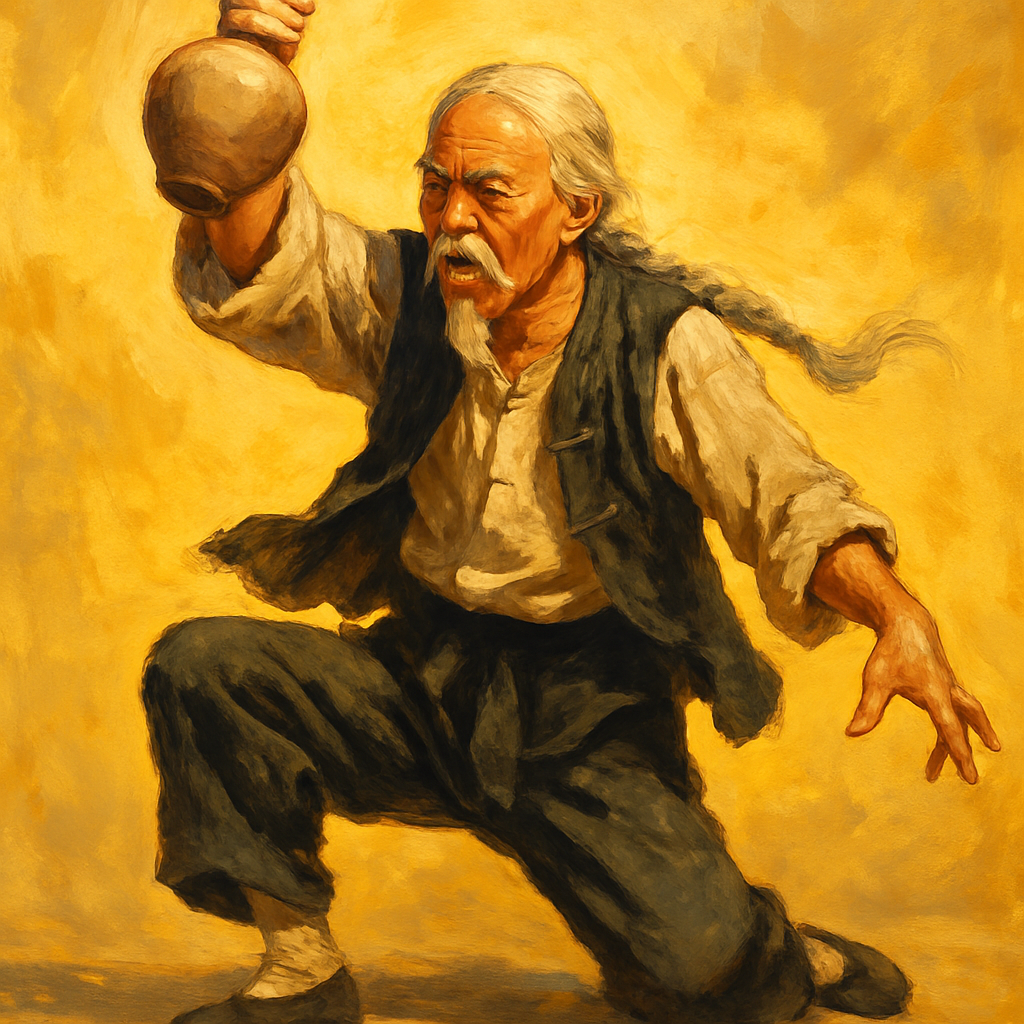
The drunken-master style looks like chaos. That is the point, and that is also the trap, because if you watch it as chaos you will miss everything Yuen Siu-Tien was doing. Underneath the staggering gait and the lurching weight shifts is a deeply precise technical system. The apparent disorder is constructed. Every stumble is calculated. Every moment of apparent vulnerability is a setup.
What Yuen developed were specific techniques built around sudden, unexpected shifts in balance and direction. The fighter appears to be losing control right up until the moment the opponent commits, and then the control was always there. This required a different approach to camera work and editing than the genre had been using. You need longer takes to let the fluidity read. You cannot cut your way through drunken-master choreography the way you can through a more linear exchange. The camera has to stay with the body long enough for the audience to feel the rhythm before the rhythm breaks.
Yuen was not adapting an existing cinematic martial art. He was inventing a visual language. The problem he solved was a real one: how do you film a style that is simultaneously comedic and genuinely combat-effective, without losing either quality? His answer is in those films, if you watch them with that question in mind.
The Films That Built the Template (Before Jackie Chan)
The lineage runs through two films in particular, and both of them deserve your time. Drunken Master (1978) is where the foundation gets laid. The choreography establishes the vocabulary: the weight shifts, the misdirection, the way the form uses apparent weakness as its primary weapon. Dance of the Drunk Mantis (1979) is the sequel, and it pushes further, expanding the technique and giving it more narrative room to breathe.
These are not just historical documents. They are good films that happen to be essential:
- Drunken Master (1978): Start here. This is where the style finds its cinematic shape, and watching it before you watch anything else in this lineage will change how you see everything that came after.
- Dance of the Drunk Mantis (1979): The follow-up that deepens the choreography and shows how much room Yuen had left to explore within the form he created.
Both films are available through streaming platforms and physical media. If you can find a restoration, take it. These films deserve to be seen clearly, not through the grain of a third-generation dub on a worn tape. They matter not just as history but as craft that still holds up.
Why Jackie Chan’s Version Became the One Everyone Remembers
Jackie Chan’s version of the drunken-master style reached a global audience in a way Yuen Siu-Tien’s work did not, and it is worth being honest about why without diminishing either man. Chan brought a more pronounced comedic energy to the style, and his films arrived at a moment when Hong Kong cinema’s international distribution was expanding rapidly. The late 1970s and early 1980s were when Western markets started paying real attention, and Chan’s work was positioned to meet that attention.
What Chan did was legitimate. He took the foundation Yuen built and made it accessible to audiences who had no prior context for the form. That is a real skill. But the version that became canonical in Western memory is not the original, and collapsing the two means losing something important about how the style actually developed.
Yuen’s choreography was more focused on the technical artistry of the form itself. Chan’s version was shaped by what a broader market would receive. Both are real expressions of the same lineage. Understanding the difference between them is how you start to understand the craft at a deeper level.
How to Watch Yuen Siu-Tien’s Work Now
Start with Drunken Master. It is the most accessible entry point and the one that will orient you fastest. From there, Dance of the Drunk Mantis gives you a sense of how Yuen developed and extended what he had already built.
For finding these films:
- Streaming: Amazon Prime and Netflix carry classic martial arts titles on a rotating basis. Check their catalogs and set alerts if a title is not currently available.
- Physical Media: Special edition DVDs and Blu-rays with restored footage are worth the investment. The stunt work and choreography in these films reward a clean image.
- Imports: For collectors who want to go deeper, regional imports from archives with strong martial arts holdings can surface versions and supplementary material you will not find domestically.
When you watch, pay attention to the footwork. Specifically, watch the weight shifts. That is where the innovation lives. The footwork is doing the storytelling that the dialogue is not, and once you start seeing it you cannot stop. That is the mark of choreography that was built by someone who understood both the martial art and the camera simultaneously.
Appreciating Yuen Siu-Tien’s work is how you start to understand the real lineage behind martial arts cinema. Old School Shaolin and Wu exists to honor exactly these figures — the ones who built the craft and never got the marquee. For more on the people who shaped this genre without getting their due, read How Five Deadly Venoms Got Its English Dub: The Voices Nobody Credits and The Forgotten Fists of Chan Wai-man: Shaw Brothers’ Most Underrated Villain.
Taking the Style Into the Training Hall
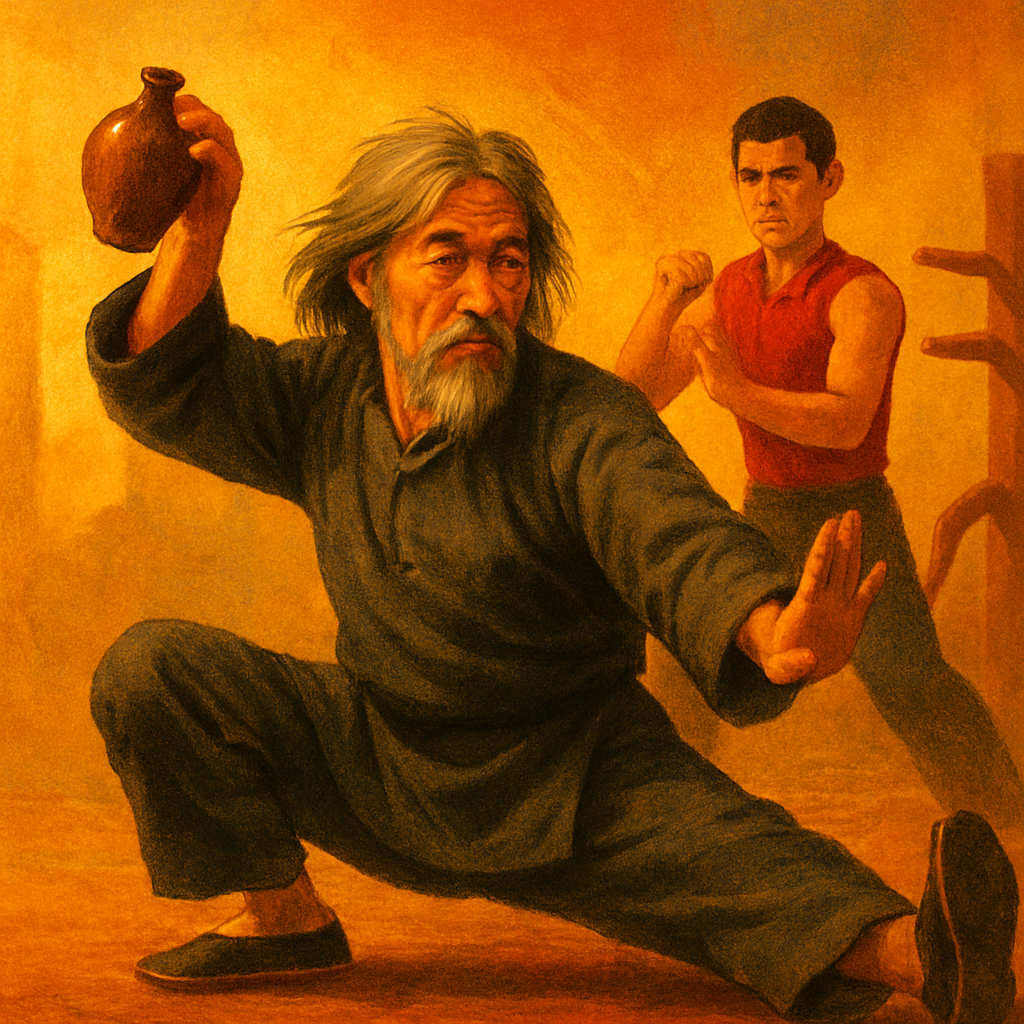
Yuen Siu-Tien’s contributions did not stop at the screen. The principles underneath the drunken-master style — fluidity, misdirection, controlled imbalance — translate directly into training, and modern practitioners have been pulling from this well for decades.
What It Looks Like in Practice
Bringing drunken-master principles into a training regimen means working from the ground up on the foundational ideas: fluidity, balance, and misdirection. Here are the places to start:
- Balance Drills: Training on uneven surfaces builds the core strength and stability that makes controlled imbalance possible. You cannot fake the weight shift. You have to earn it.
- Improvisational Sparring: Sessions where movement is not pre-planned force the kind of spontaneity and adaptability that the drunken-master form demands. The style does not work if you are running a script.
- Core Flexibility Work: The sudden directional shifts require real flexibility. Yoga and pilates complement martial arts training here in ways that are worth taking seriously, not as alternatives but as support.
What Makes It Hard
The difficulty is real. The apparent randomness of the movements asks practitioners to unlearn some of what traditional stances have built into them. The goal is to maintain genuine control while projecting the opposite, and that gap between appearance and reality is where the training lives. Instructors need to be clear about the controlled nature of these techniques. The style looks loose. The execution cannot be. Gradual integration into existing routines gives practitioners the best chance of adapting without picking up bad habits or injuries.
What Yuen Siu-Tien built offers something genuinely useful to anyone serious about martial arts training — a dynamic approach that sharpens agility, unpredictability, and presence. Engaging with it seriously is its own form of respect for the man who invented it.
The Cultural Ground the Style Grew From
You cannot fully read Yuen Siu-Tien’s choreography without understanding where it came from. The Hong Kong film industry of the 1970s was drawing simultaneously from traditional Chinese opera and from the evolving language of cinema, and Yuen sat at that intersection. He was a trained opera performer. That training is visible in the theatricality of his work, in the way movement carries meaning beyond the purely physical.
The characters in these films are not just fighters. They embody values that run deep in Chinese folklore — resilience, cleverness, the ability to appear weaker than you are until the moment it matters. Yuen’s choreography carries those values in the body itself, not just in the story around it. That is why the films resonated with audiences beyond pure entertainment. There was a cultural layer underneath the fight, and Yuen knew how to put it there.

Leave a Reply